
What Are Shift Register Logic ICs?


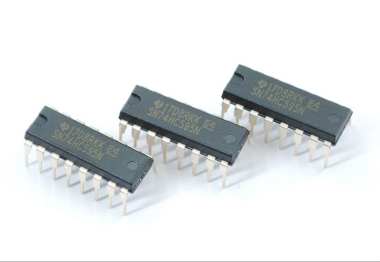
In the realm of electronic components, Shift Register Logic ICs play a pivotal role as a fundamental component of digital circuits. This article aims to delve into the definition, characteristics, advantages, applications, and packaging of Shift Register Logic ICs.
I. What are Shift Register Logic ICs?
Shift Register Logic ICs are a class of devices widely used in digital circuits. The fundamental principle involves the movement and storage of data by bit under the guidance of clock pulses. The core of this technology lies in achieving both serial data transmission and parallel storage, providing a foundational support for the efficient operation of various electronic devices.
II. Characteristics and Advantages
· High Integration: Shift Register Logic ICs exhibit high integration, allowing for the implementation of numerous storage units within a compact size. This widespread application is particularly valuable in electronic devices with limited space.
· Switchable Serial and Parallel Flexibility: These ICs possess the capability of both serial and parallel data transmission, adapting to the diverse requirements of different application scenarios. This flexibility shines in various communication, control, and processing tasks.
· Cascade and Expandability: Shift Register Logic ICs support cascade connections, enabling multiple devices to work collaboratively to expand storage capacity or achieve more complex functionalities. This scalability makes them suitable for diverse engineering designs.
III. Applications
Shift Register Logic ICs play a crucial role in various electronic device domains:
· Computer Systems: Used for register files, memory, and other key components, supporting the fundamental operations and data storage in computer systems. For instance, Intel's processor series, such as the Intel Core i9, utilizes Shift Register Logic for high-speed register operations, accelerating data reading, writing, and computation.
· Communication Devices: Applied in data transmission, signal modulation, and demodulation to ensure the stability of communication systems. A common model is Cisco's Catalyst series switches, where Shift Register Logic ensures efficient data transfer and exchange within networks.
· Digital Displays: Supporting pixel data through serial transmission to achieve high resolution and refresh rates in displays. LG's OLED TVs, for example, employ Shift Register Logic technology for efficient serial transmission, ensuring precise control of each pixel and delivering impressive image quality.
· Control Systems: Utilized in automation and control fields to achieve precise timing control and data storage. Microchip's PIC series microcontrollers are a typical example, with internal Shift Register Logic supporting precise timing control for efficient embedded applications.
IV. Packaging
These ICs employ various packaging techniques, such as DIP, SOP, QFN, etc., to adapt to different application scenarios and circuit board design requirements.
V. Conclusion
The introduction of Shift Register Logic ICs brings about a new technological innovation in the electronics component industry. Their high integration, flexibility, and scalability make them a vital component in the design of digital circuits.


