
What Are Triggers and Registers ICs?


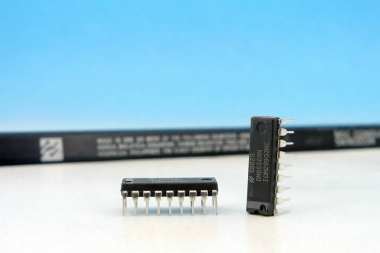
In the realm of electronic components, Triggers and Registers ICs stand out as crucial components in digital circuit design. This article delves into the definition, characteristics, advantages, applications, and packaging aspects of these two integral types of integrated circuits.
I. What are Triggers and Registers ICs?
· Triggers: Triggers are circuit components capable of altering output states under specific conditions. Common types include SR triggers, D triggers, JK triggers, and T triggers. They play a role in storing individual bits of information in digital systems, undergoing state transitions guided by clock signals.
· Registers: Registers consist of multiple storage units designed to store binary data. Widely used in digital systems, they serve purposes such as storing temporary data, addresses, or control information. The bit count indicates the binary data they can store, such as 8-bit, 16-bit, or 32-bit registers.
II. Characteristics & Advantages
· High Flexibility: Triggers and registers offer highly flexible digital storage and processing capabilities, making them an ideal choice for digital circuit design.
· Synchronization and Sequential Logic: These ICs play a crucial role in sequential logic, ensuring circuit synchronization through clock signals. This is essential for stable signal transmission.
· Data Storage: Registers, serving as multi-bit storage units, efficiently store significant amounts of binary data. This is particularly important in applications like microprocessors and microcontrollers.
· Stability and Reliability: The design of triggers and registers emphasizes stability and reliability, ensuring prolonged stable operation in diverse applications.
III. Applications
These ICs find extensive applications in various electronic systems, including but not limited to:
· Microprocessors and Microcontrollers: Triggers and registers are fundamental building blocks for core electronic components, providing storage and processing capabilities. Examples include Intel's microprocessor series like Intel Core i7 and Microchip's PIC series microcontrollers like PIC16F877A.
· Memory Systems: Triggers and registers play a critical role in memory systems such as Dynamic Random-Access Memory (DRAM) and Static Random-Access Memory (SRAM). For instance, Micron's DDR4 memory modules, like Micron Crucial Ballistix series, utilize advanced register designs, offering high-speed, high-density data storage.
· Control Systems: In digital control systems, these ICs are employed to store and manage control information, ensuring the system's normal operation. Texas Instruments' Digital Signal Processor (DSP) series, such as TMS320C6000, finds wide applications in digital control systems.
· Clocks and Timers: Clock triggers are commonly used in clock and timer circuits, ensuring precise time control. For example, Maxim Integrated's Real-Time Clock (RTC) ICs, like DS3231, feature built-in temperature-compensated crystal oscillators (TCXO) and triggers, providing high-precision timekeeping.
IV. Packaging
These ICs are typically provided in compact packaging for easy integration onto circuit boards. Common packaging types include Dual In-line Package (DIP) and Surface Mount Device (SMD).
V. Conclusion
Triggers and Registers ICs are indispensable elements in digital circuit design, playing pivotal roles in various applications. Their flexibility, synchronization, and reliability make them key technologies garnering attention in the electronic components industry.


