
DIY Solar Bike USB Charger Guide


If you're interested in DIY solar charging boards for bikes, you might want to check out this article.
First, you'll need a charging board, a bike photovoltaic solar panel, and a portable foldable solar panel charger with a corresponding USB port for your phone.
You'll also need a power SMD inductor CD74 15µH and a power IC chip TD1410. Additionally, you'll need SMD resistors. There are many types of SMD resistors; if you don't have 622 and 28b (1.91k) resistors, you can also use 5.1k + 1k as a replacement. In the circuit diagram below, R2 uses a 2k resistor.
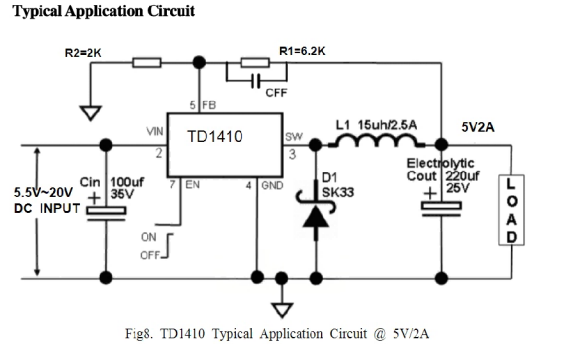
Next, you can start replicating the circuit.
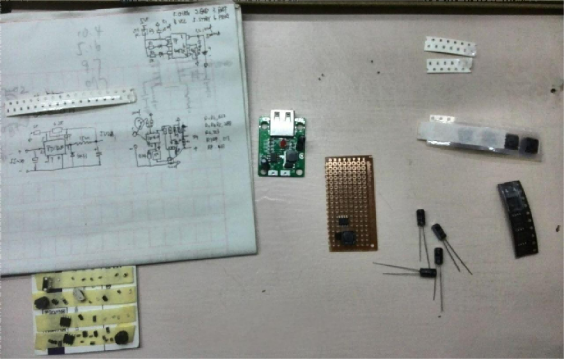
The TD1410 chip, two 25V 22µF electrolytic capacitors, feedback resistors are 622 and 28b, pins 5 and 7 each use a set, 15µH inductor, SS34 diode, the diode drive resistor is also 28b, and there are four USB identification resistors.
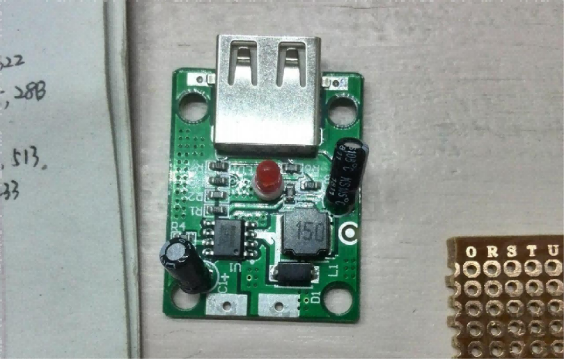
Make a simple diagram by referring to this board.
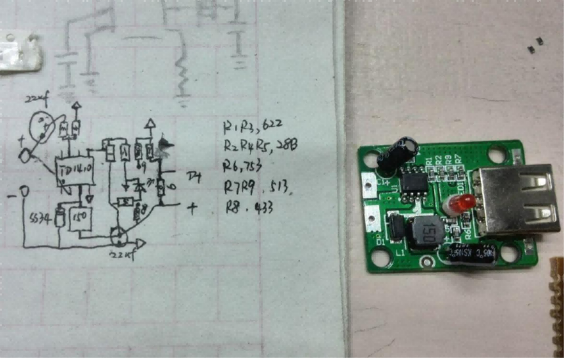
Then you can place the components. For the SMD LED drive resistor, use 2k. Everything else is the same as the original board, although the inductor is slightly larger than the original.
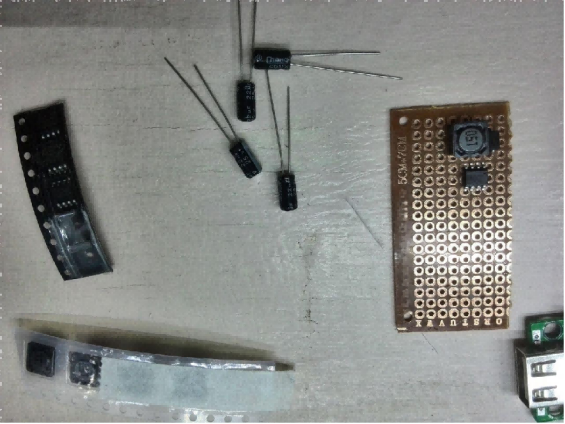
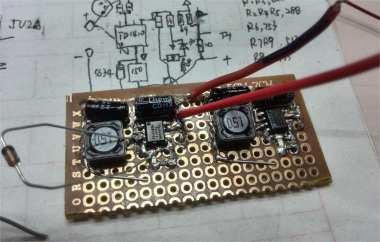
Once arranged, it should look like the picture below.
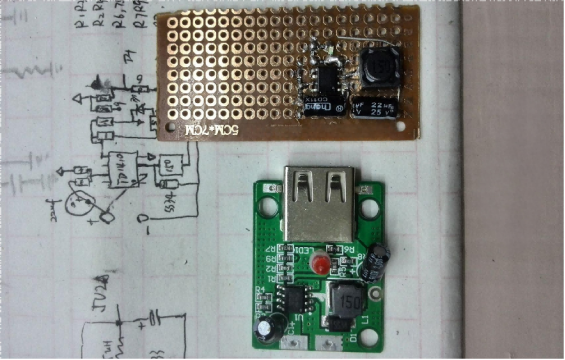
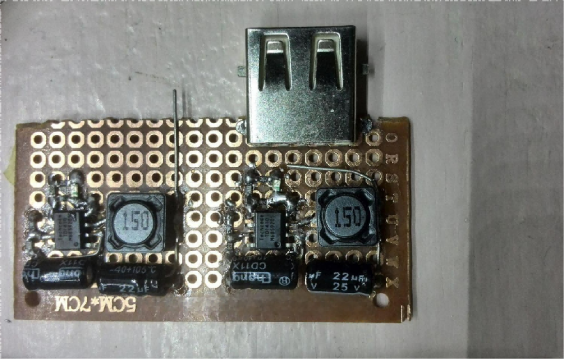
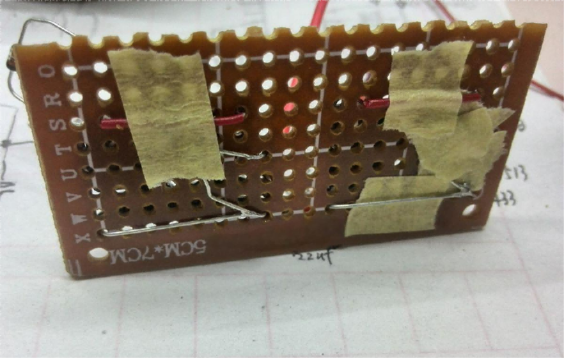
The traces on the back are the negative side.
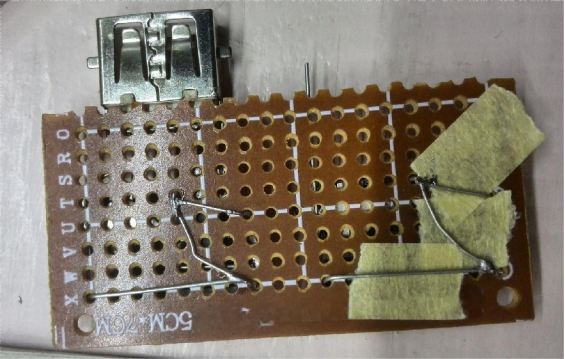
Next, you can power it on for testing. If you don't have an SS34, you can also use a 1N4148.
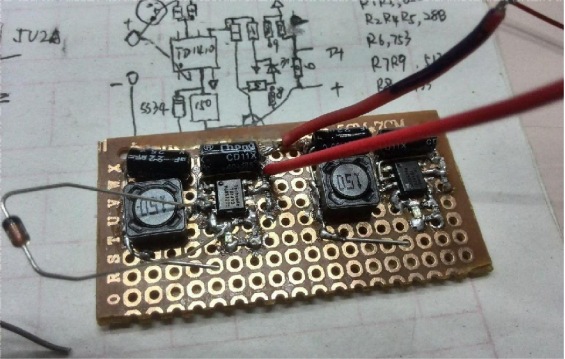
Backside view.
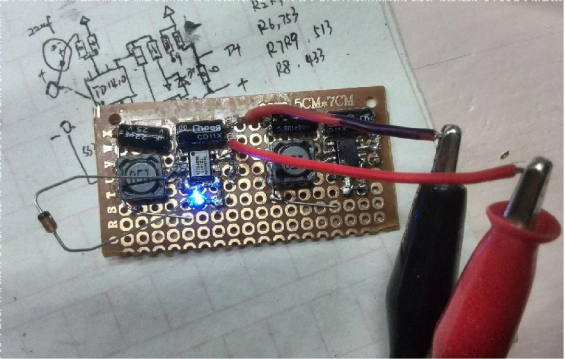
The voltage reads 5.22V, which is about the same as the original board.
You can replicate a few more, as shown in the picture. The two car chargers in the top-left corner are QC2.0, the one in the middle cost 0.8 yuan, and its input voltage needs to be at least 8V, so it can't be used in parallel. The low-voltage one on the far right is usable too, but unfortunately, it's broken. The car charger boards bought later are still pretty cheap.
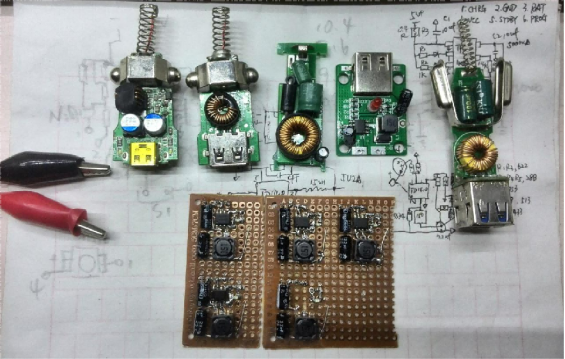
Overall, the replication was quite successful.
The end.


