
Intel Xeon 6 Powers NVIDIA DGX Rubin NVL8


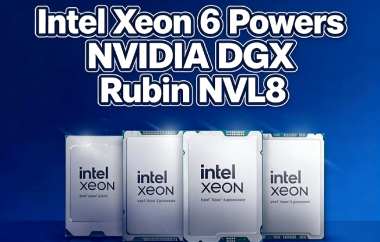
According to Intel, its latest Intel Xeon 6 processors have been selected as the host CPU for NVIDIA's next-generation flagship AI server platform, the NVIDIA DGX Rubin NVL8. The move signals that cooperation between the two companies in the AI server ecosystem is shifting from strategy to real deployment, potentially creating new product opportunities and revenue growth in the coming cycles.
Jeff McVeigh, Corporate Vice President and General Manager of Data Center Strategy Projects at Intel, noted that the AI industry is rapidly evolving from large-scale model training toward “real-time inference everywhere.” This shift is being driven by agentic AI systems and large-scale inference workloads, which place new demands on data center infrastructure.
In this environment, the host CPU plays a critical role inside GPU-accelerated systems. It directly affects system orchestration, memory access efficiency, model security, and overall throughput. Intel highlighted that Xeon 6 processors deliver strong performance, improved power efficiency, and seamless compatibility with the established x86 software ecosystem, allowing organizations to scale inference workloads more efficiently.
The architecture behind DGX Rubin NVL8 continues the same platform foundation used in the NVIDIA DGX B300 system, ensuring continuity between the NVIDIA Blackwell and NVIDIA Rubin GPU generations. According to Intel, this design consistency allows existing performance advantages and system-level experience to transition smoothly into next-generation AI infrastructure, accelerating the deployment of AI inference across data centers, cloud environments, and edge computing scenarios.
Intel also emphasized that Xeon 6 supports NVIDIA Dynamo, enabling heterogeneous inference between CPUs and upcoming GPU architectures while maintaining high reliability for mission-critical workloads. Additional strengths include high-speed memory support, balanced performance across diverse workloads, lower long-term total cost of ownership, and a mature enterprise software ecosystem.
The DGX Rubin NVL8 platform is designed for emerging workloads such as agentic AI and large-scale inference systems, which increasingly demand higher single-core performance and greater memory bandwidth. By powering the host CPU in this platform, Intel further strengthens its position in the AI server landscape while reinforcing its long-standing collaboration with NVIDIA around x86-based computing platforms.


