
DIY Belt Sander: Simple Build for Grinding Freedom


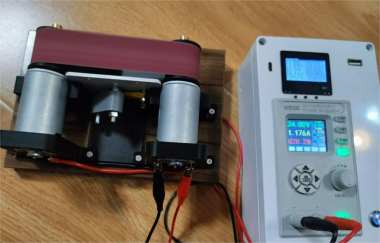
If you are interested in a DIY belt sander, you might want to take a look at this article.
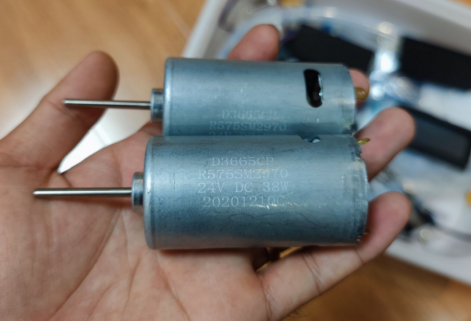
If you have an angle grinder at home, but find it inconvenient for small tasks and difficult to grind flat surfaces, this can be very frustrating for you. At this point, you suddenly find two 575 DC motors at home, rated at 24V 38W, and you come up with the idea of building a belt sander. Since typical belt sanders are usually rated at over 100 watts, you decide to use both DC motors directly.
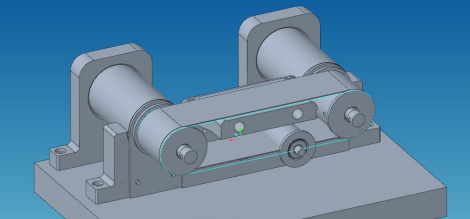
First, you simply draw a sketch, and choose a commonly used 330×30mm sanding belt. You calculate the shaft spacing and add a tensioning wheel to make belt replacement easier.
You 3D print the parts and choose black material so it is more dirt-resistant.
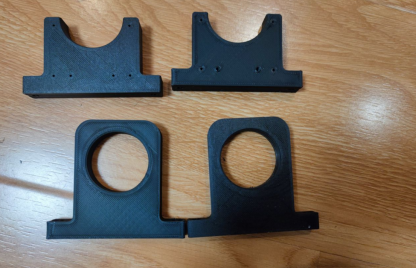
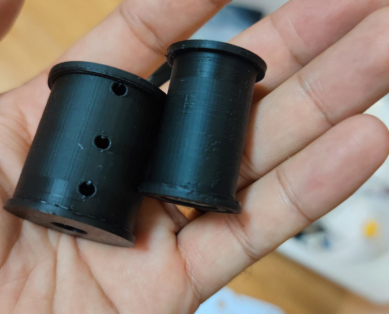
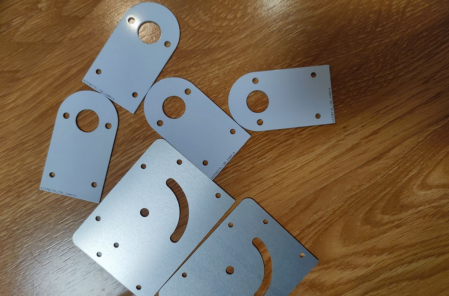
For the load-bearing structural parts, you use a 1.6mm aluminum substrate processed by JLC.
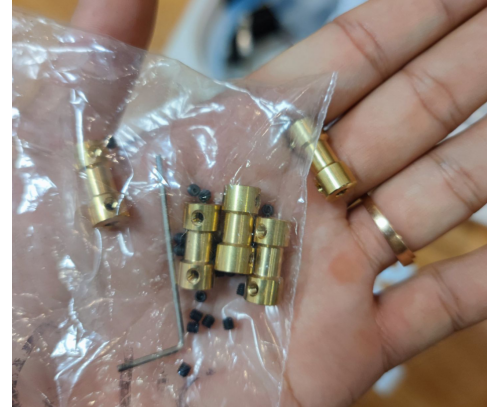
Coupling.
Then you can start assembling.
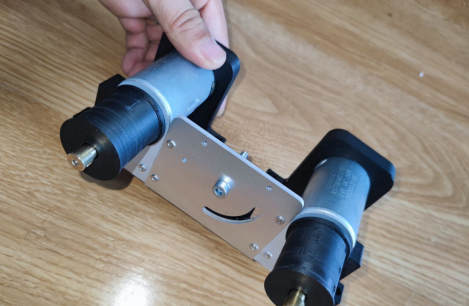
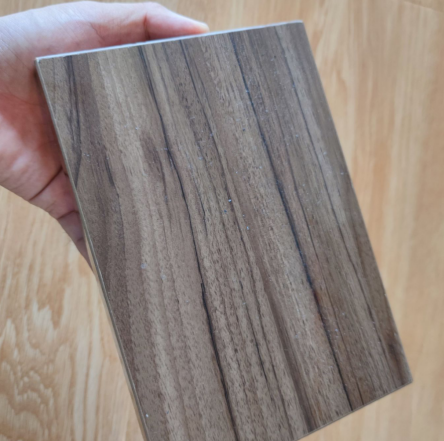
Next, you find a suitable wooden board.
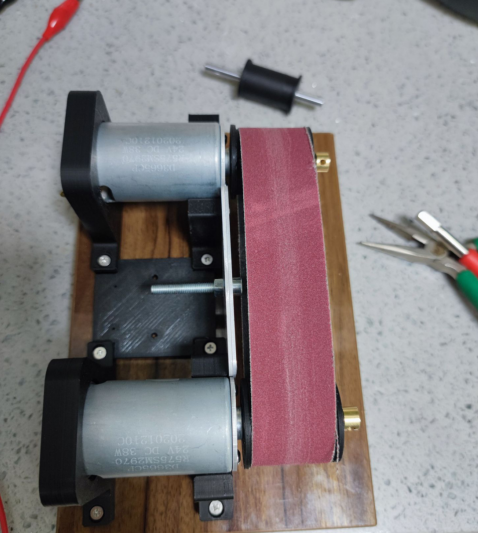
You fix everything with screws.
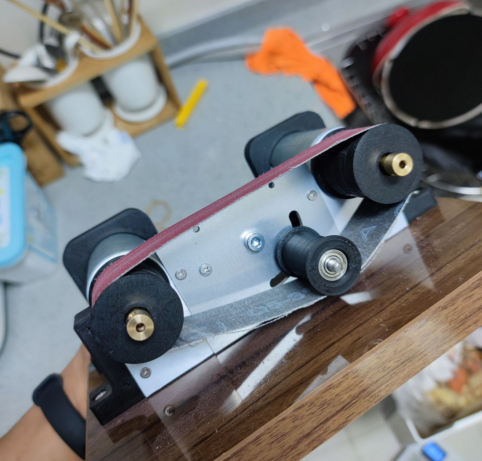
The tensioning wheel can be directly made using a rubber band.
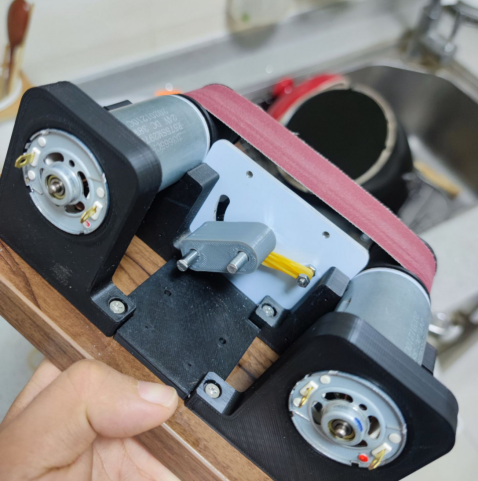
At this stage, you can first power it on for a test. You only power a single motor, and you can see the other one being dragged along. At around 12V, it is roughly 15W, and you try grinding an M5 screw, and it quickly removes a corner. It is still very powerful.
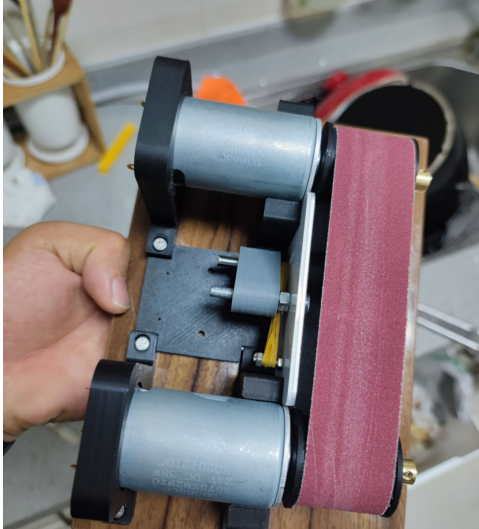
When you connect the motors in parallel, when one motor rotates, the other motor also rotates together, and they basically follow each other, successfully achieving an electrical transmission system.
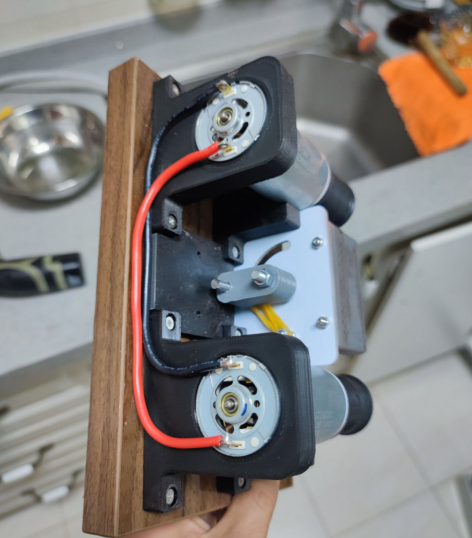
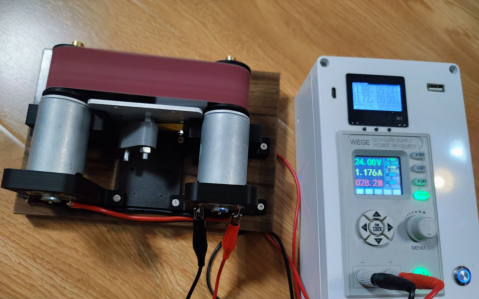
No-load power at 24V is 28W, and at this point the actual belt speed is extremely aggressive.
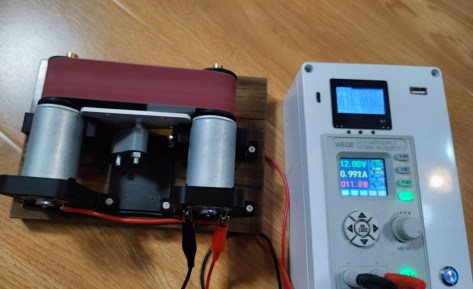
At 12V, the power is 12W. Compared with a single motor, the power is even lower, and there is no dragging effect anymore. The overall efficiency is improved.
If you happen to have a copper busbar, you can try using it to see the effect.
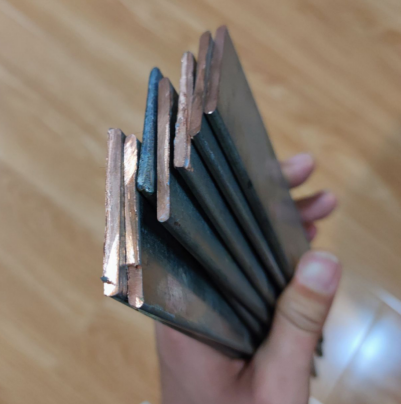
Galvanized copper busbar.
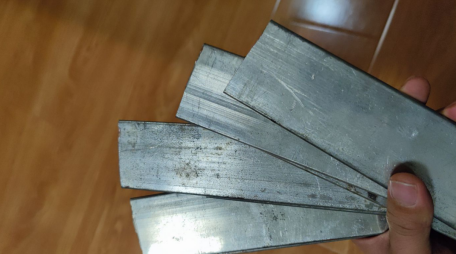
After you used the belt sander for about three to four minutes, it becomes shiny. The sanding belt is 320 grit. The grit is not very high, so this is currently the best finish you can get, but the performance is still very good.
The grinding power is roughly 70–80 watts, with peak instantaneous power exceeding 100 watts.
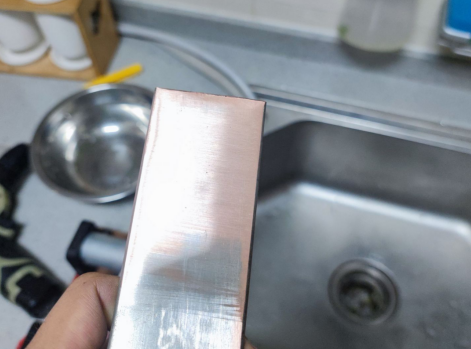
The only downside is that it produces a lot of dust, and in an enclosed space the room quickly fills with a metallic smell.
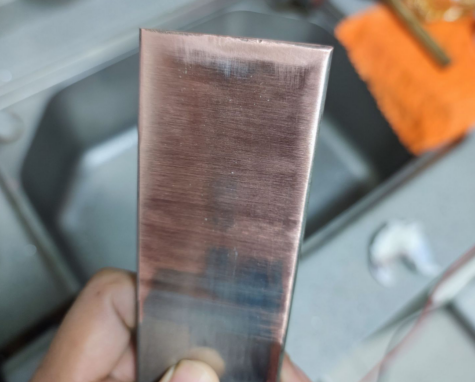
You have now connected it to an adjustable power supply and it is already usable. Next step is to add an XT60 connector and implement PWM speed control.
Finished. A belt sander made from small motors still performs quite well, and you can use it for polishing plastics, wood, and stone in daily applications.


