
TSMC Capacity Tight, 3nm Demand Surges


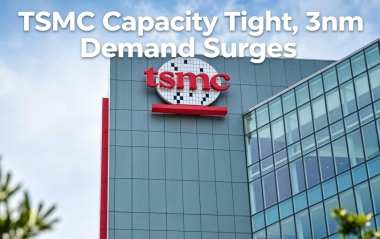
According to industry reports, C.C. Wei, Chairman of TSMC, recently stated that the company is currently facing tight capacity constraints but will not deliberately prioritize or favor any specific customers. TSMC continues to expand its fabrication facilities to meet growing market demand; however, due to the long construction cycles of semiconductor fabs, supply is expected to remain limited in the near term.
Addressing competition in advanced packaging, Wei noted that TSMC has already introduced large-format CoWoS (Chip-on-Wafer-on-Substrate) technology and is actively developing CoPoS (Chip-on-Panel-on-Substrate), which is expected to enter mass production in the coming years. The company is also advancing system-on-wafer technologies to deliver more cost-efficient solutions for customers. Regarding technological developments from competitors such as Intel, TSMC maintains an open stance while continuing to strengthen its own technological capabilities.
In the artificial intelligence segment, Wei explained that current AI revenue definitions do not include CPUs, as it remains difficult to clearly distinguish whether CPUs are used for PCs or AI data centers. However, as demand for CPUs in AI servers continues to grow, TSMC may consider incorporating CPUs into its AI revenue classification in the future.
Looking ahead, TSMC remains highly confident in the long-term growth of AI, viewing semiconductor demand as fundamentally driven. Supported by strong technological differentiation and a broad customer base, the company expects its full-year revenue to grow by more than 30% in 2026. In line with this outlook, TSMC plans to further increase investment, with capital expenditures projected to approach the upper end of the US$52 billion to US$56 billion range.
In terms of capacity planning, TSMC is shifting away from its previous node-based capacity targets and is significantly expanding investment to increase production of 3nm process technology. The additional capacity will primarily support applications in smartphones, high-performance computing (HPC), artificial intelligence, automotive electronics, and the Internet of Things (IoT). At the same time, TSMC plans to gradually scale down its 6-inch wafer fabs and its 8-inch fab dedicated to gallium nitride (GaN), reallocating resources to advanced applications while ensuring sufficient capacity for existing customers.
Wei also highlighted that the rapid development of generative AI and agentic AI is driving increasing computational demands from large language models (LLMs), further accelerating demand for advanced semiconductors. TSMC’s customers—and their end customers, primarily cloud service providers—continue to signal strong growth momentum.
TSMC emphasized that it will continue to capitalize on long-term structural demand driven by major industry trends such as 5G, AI, and HPC, while supporting customer innovation and growth. The company is expected to provide further updates on its strategic roadmap during its earnings conference in July 2026.


