
DIY Battery T12 Soldering Station: Portable Build Guide


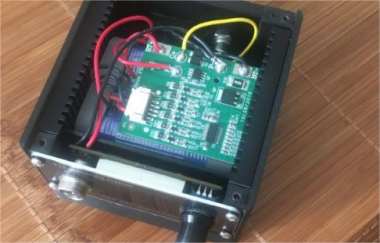
If you are interested in a DIY T12 soldering station, you may want to read this article.
If you happen to have six 18650 batteries on hand and you test them to find that their internal resistance is over 60 mΩ, these batteries are no longer suitable for high-power applications, but you do not need to throw them away immediately. At this point, you may also have an early version of a T12 soldering station with a two-wire interface that is not grounded, where the soldering tip may have some induced voltage, but this usually does not cause any noticeable impact on components during normal soldering. Then you might get an idea to combine them and turn them into a battery-powered T12 soldering station.
For the control section, you can use a control module with a digital display. Although this type of module may have some deviation in the displayed values, it is sufficient for observing and roughly adjusting the temperature control, and you only need to make small adjustments based on actual operating conditions during use.
If you also have a battery protection board, silicone wires, a handle, soldering tips, and a housing, and all these materials are ready, you can start the build.
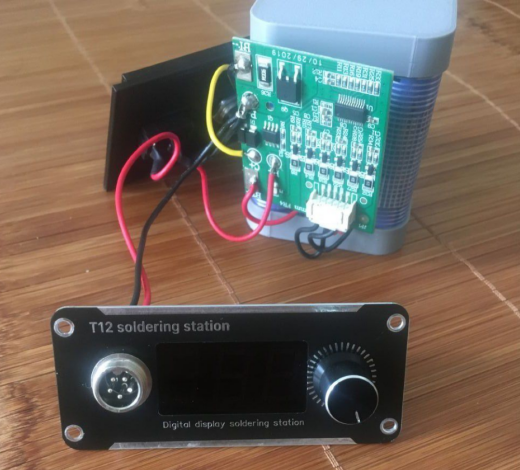
First, you connect the control board and the assembled battery pack in a simple way.
Then you measure the dimensions of the control board and battery pack and create a model using SolidWorks.
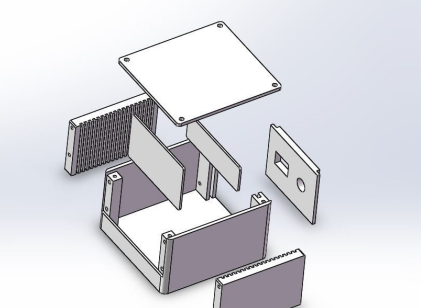
Model diagram
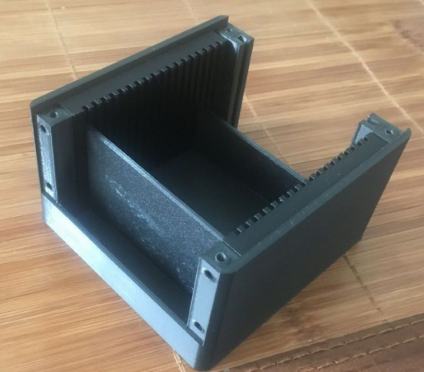
This is the printed enclosure.
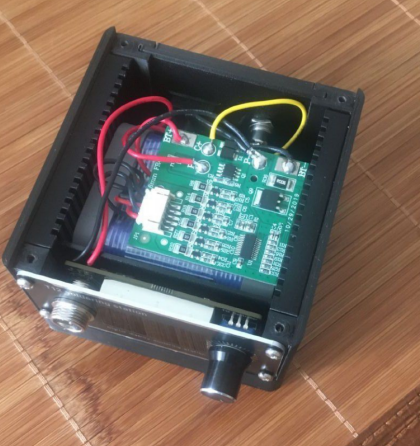
Then you install the control board and the battery pack inside the enclosure.
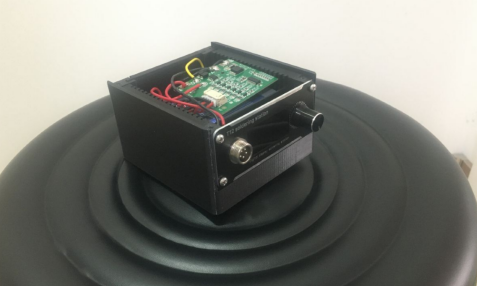
Front view
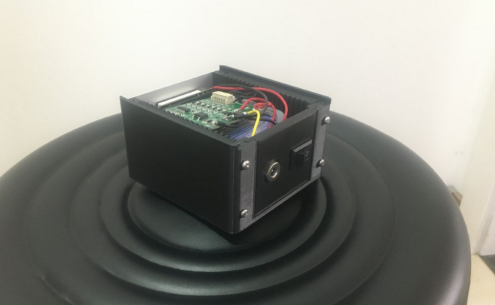
Rear view
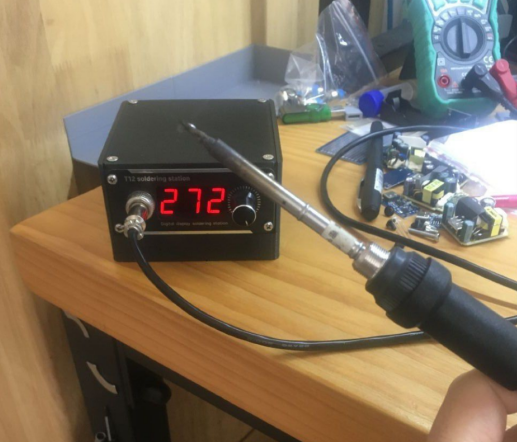
Finally, you assemble the cover, perform a test, and use a multimeter to measure that the induced voltage is less than 1V.
Finished.


