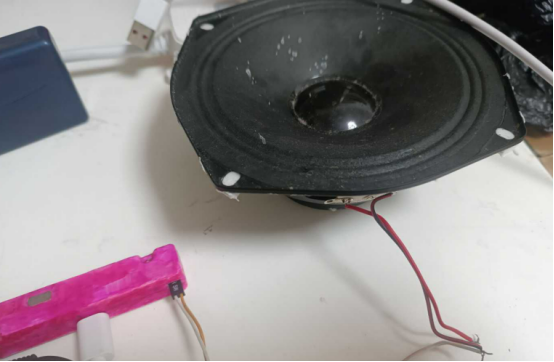
DIY Mini Power Amplifier: Compact TDA2030 Build Guide


If you are interested in DIY mini power amplifiers, you may want to read this article.
If you are struggling because you have a speaker but no power amplifier while you are out, you might suddenly come up with the idea of using spare materials to build a mini power amplifier yourself.
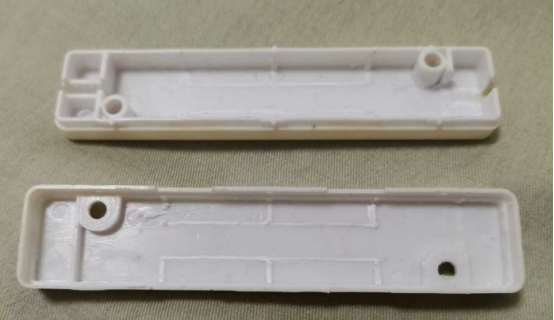
If you happen to have a protective box for a fiber optic connector, which is very compact and suitable for making an amplifier enclosure.
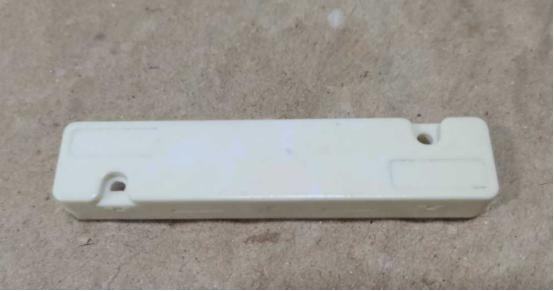
After opening it, there is some space inside for placing electronic components.
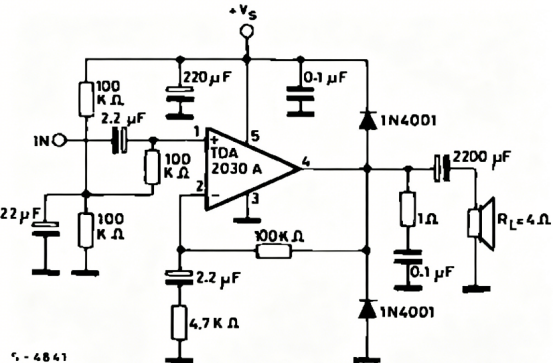
The amplifier uses a TDA2030 single-supply circuit, powered by 12V, with an output power of within 4W:
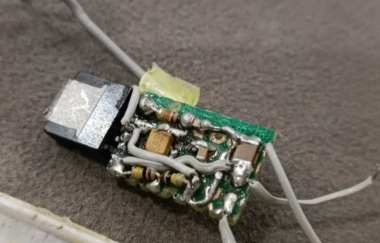
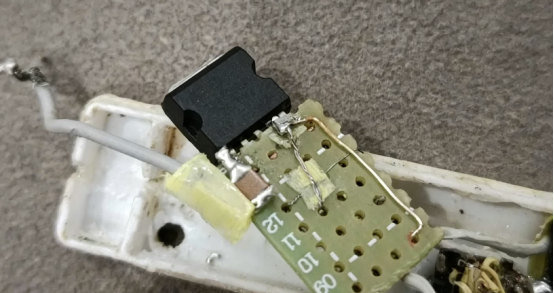
If you happen to have a small piece of perfboard, solder it up. The black square is the TDA2030. Remove the head to save space, and solder both SMD and through-hole components onto one side of the board:
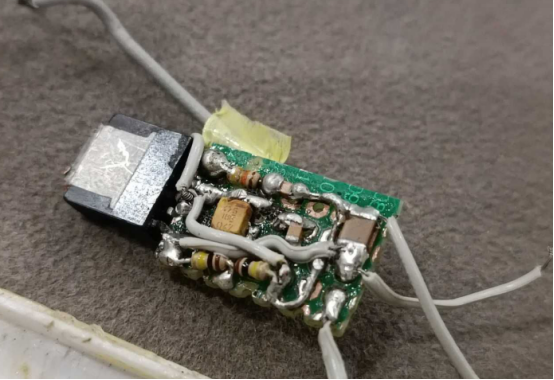
After the amplifier board is soldered, first apply a layer of insulation, then wrap it with two layers of copper foil as heat dissipation. At low voltage, the TDA2030 generates up to a little over 1W of heat, and this level of cooling should be sufficient.
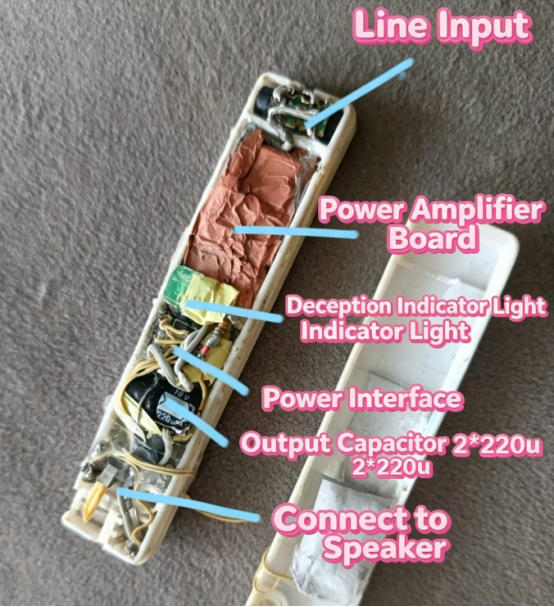
Inside the fiber optic protection box, you install a 3.5mm jack, the amplifier board, a Type-C port, output capacitors, a trigger module, and speaker interfaces, and assemble everything:
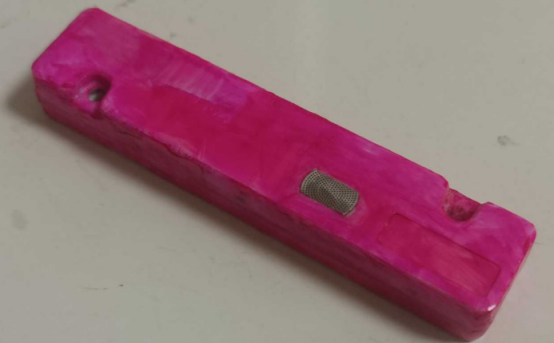
Close the cover, and you can paint it with your favorite color:
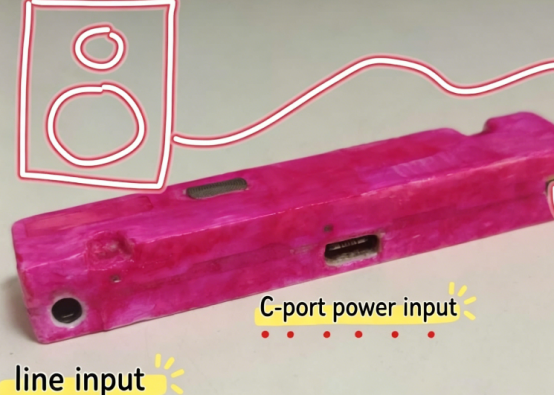
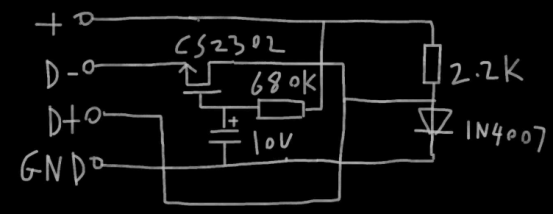
The trigger module can automatically adjust the voltage to 12V after you plug in a phone charger. A simple schematic of the trigger module is shown below:
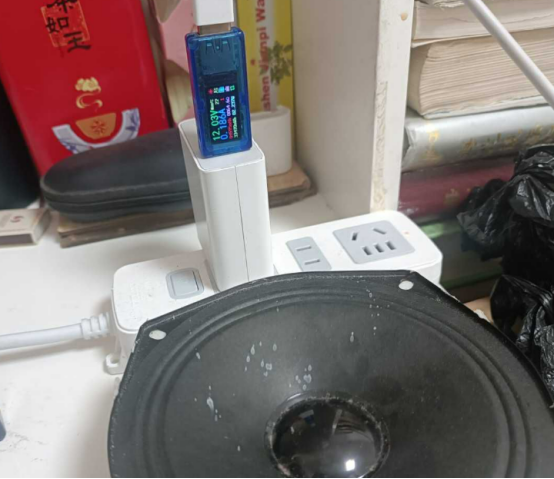
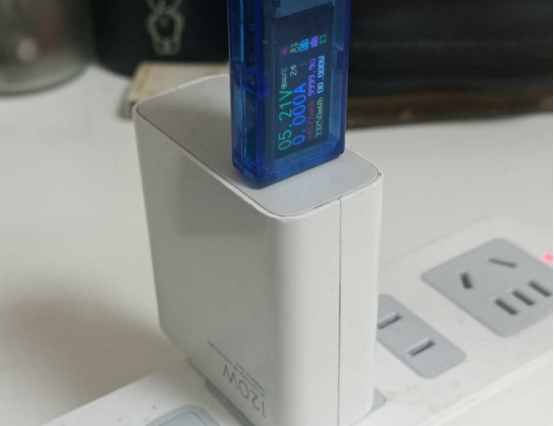
The phone charger outputs 5V when under no load:
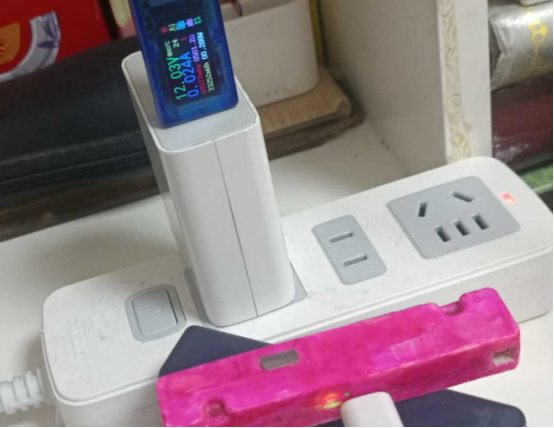
When you plug in the amplifier for testing, the operating voltage is 12V, and the no-load current is 24 mA:
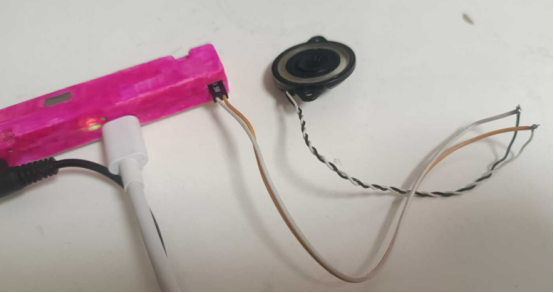
The input uses a 3.5mm cable, and the output interface is compatible with DuPont wires:
When connected to a large speaker and playing music, the current is over 180 mA, and the power is 2.3W.
Completed. The sound is strong and powerful, with relatively good audio quality and is sufficient for daily use.