
What Are the Factors Affecting the Response Speed of Avalanche Diodes?


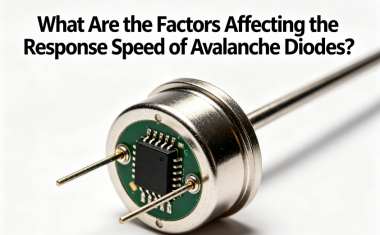
In the electronics industry, the avalanche diode is a type of semiconductor device that utilizes the impact ionization effect of charge carriers under a high electric field to achieve carrier multiplication. It is widely used in microwave oscillators, high-speed switching circuits, and high-power RF systems. In the electronics components industry, its performance is typically evaluated based on breakdown characteristics, noise level, and response speed, among which response speed directly determines its suitability for high-speed and high-frequency applications. With the development of 5G communications, radar systems, and high-speed signal processing technologies, higher requirements have been placed on the dynamic response capability of avalanche diodes.
I. What is the Response Speed of an Avalanche Diode?
The response speed of an avalanche diode refers to the time required for the device to transition from its initial state to a stable conduction or cutoff state when the applied voltage or input signal changes. This process essentially reflects the overall dynamic behavior of charge carriers as they undergo acceleration, impact ionization, and multiplication transport in a strong electric field. For microwave devices such as IMPATT structure avalanche diodes, response speed includes not only the generation and recombination of carriers but also the build-up and decay of space charge regions. Therefore, it is a typical multi-physics coupled dynamic parameter.
II. Working Principle of Avalanche Diodes
The operation of an avalanche diode is based on the avalanche multiplication effect triggered by impact ionization. When the reverse bias voltage exceeds the breakdown threshold, free carriers in the depletion region are rapidly accelerated under a strong electric field and collide with the crystal lattice, generating additional electron-hole pairs. These newly generated carriers are further accelerated and participate in subsequent collisions, forming a chain reaction of exponentially increasing carriers, known as the “avalanche process.” During this process, the generation, transport, and recombination rates of carriers collectively determine the dynamic establishment time of the device, enabling it to respond to external signal changes within the nanosecond or even shorter time scale.
III. Main Factors Affecting the Response Speed of Avalanche Diodes
The factors influencing the response speed of avalanche diodes are complex, involving both internal material properties and external device structure and circuit environment. First, carrier lifetime is a key factor; a longer lifetime increases charge storage effects, thereby extending response time, while an excessively short lifetime may reduce avalanche multiplication efficiency. Second, semiconductor material properties such as carrier mobility and band structure directly affect carrier acceleration capability; materials with higher mobility generally exhibit faster response characteristics.
Electric field strength is also crucial. An appropriately enhanced electric field can increase impact ionization probability and accelerate avalanche build-up, but excessively high fields may cause thermal effects and breakdown instability, thereby degrading dynamic performance. Temperature variations alter carrier scattering mechanisms; high temperatures typically reduce mobility and increase noise, leading to slower response speed. In addition, doping concentration distribution determines the uniformity of the junction electric field; non-uniform doping can create local high-field regions, resulting in inconsistent or delayed response.
At the device level, structural design has a direct impact on response speed. Parameters such as junction depth, drift region length, and electrode layout influence parasitic capacitance and inductance, thereby limiting high-frequency response capability. At the system level, external circuit impedance matching, capacitive loading, and inductive distribution significantly affect overall switching speed. Finally, higher input signal frequency imposes stricter requirements on carrier dynamic response; when the frequency approaches the device limit, carriers cannot fully follow signal variations, leading to a reduction in effective response speed.
IV. Conclusion
In summary, the response speed of avalanche diodes is a comprehensive parameter determined jointly by material properties, device structure, and external circuitry. In practical engineering applications, improving high-speed response performance requires systematic optimization from multiple aspects, including the selection of high-mobility semiconductor materials, proper control of carrier lifetime, optimized doping profile design, improved device geometry, and enhanced circuit matching performance. With the advancement of high-frequency communication and high-speed electronic systems, research on the dynamic performance of avalanche diodes will continue to deepen, and response speed optimization will remain an important direction in the design of advanced semiconductor devices.


