
What Are the Common Faults of Inductors?


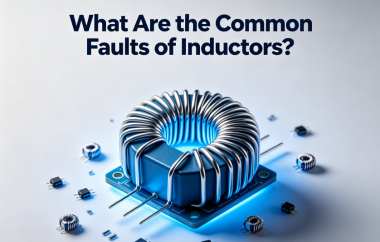
In the electronic components industry, inductors are one of the fundamental and critical passive components. They are widely used in power management, signal filtering, radio frequency (RF) circuits, and energy storage applications. With the development of electronic devices toward higher frequency, miniaturization, and higher reliability, the performance stability of inductors plays a vital role in ensuring the reliable operation of entire electronic systems. However, in practical applications, inductors may experience various failure issues due to electrical stress, environmental factors, or material aging. Therefore, understanding their working principles and failure modes is of great engineering significance.
I. What Is an Inductor?
An inductor is an electronic component that operates based on the principle of electromagnetic induction. Its core function is to generate an induced electromotive force when the current changes, thereby resisting sudden changes in current and storing energy in a magnetic field.
A typical inductor consists of a coil, a magnetic core material, and terminal leads. The coil is the primary structure responsible for electromagnetic conversion, while the magnetic core is used to enhance the magnetic field strength and increase the inductance value.
The basic unit of inductance is the Henry (H). Its physical meaning is that when the rate of current change is 1 ampere per second, an induced voltage of 1 volt is generated across the inductor. In circuit characteristics, inductors and capacitors are complementary components: inductors store energy in a magnetic field, while capacitors store energy in an electric field. Therefore, they are often used together in filtering and resonant circuit designs.
II. Common Faults of Inductors
During long-term operation or under poor working conditions, inductors may develop various failure modes. These faults not only affect the performance of the inductor itself but may also cause abnormal operation or failure of the entire circuit system.
1. Short Circuit Fault
Short circuit faults in inductors are usually caused by insulation breakdown of the winding, enamel wire breakdown, or manufacturing defects. When an internal short occurs in the coil, the inductance value drops significantly or even approaches zero, resulting in failure of filtering and energy storage functions.
In engineering practice, a multimeter is used to measure the resistance between terminals. If the resistance is close to 0Ω, a short circuit fault is indicated.
2. Open Circuit Fault
Open circuit faults are mainly caused by broken windings, disconnected solder joints, or mechanical stress that breaks the conductor. When an inductor becomes open-circuited, current cannot pass through the coil, resulting in complete circuit failure.
By measuring the resistance between terminals, if the reading shows infinity or “OL,” it is generally considered an open circuit fault.
3. Inductance Drift or Loss Fault
When inductors operate under long-term high temperature or high-frequency conditions, the magnetic core material may age or degrade magnetically, leading to a decrease in inductance value, known as inductive loss or parameter drift.
This issue is typically detected using an LCR meter. If the measured inductance value is significantly lower than the rated value, performance degradation is present.
4. Dielectric Withstand and Insulation Failure
Under high voltage or surge conditions, the insulation material inside the inductor may break down, resulting in reduced insulation performance or even short circuits. This type of failure is highly dangerous and may lead to circuit damage or safety hazards.
A withstand voltage tester is usually used for detection. If the insulation strength is lower than the design specification, the inductor is considered to have insulation failure.
III. Preventive Measures for Inductors
To improve the reliability of inductors in practical applications, comprehensive control should be implemented from multiple aspects, including design selection, operating environment, and maintenance testing.
1. Optimize Operating Environmental Conditions
Inductors are relatively sensitive to environmental factors. They should be kept away from high humidity, high temperature, or strong electromagnetic interference environments. Additionally, exposure to dust and corrosive gases should be minimized to extend service life.
2. Proper Selection and Design Matching
During circuit design, appropriate inductors should be selected based on current rating, voltage requirements, operating frequency, and thermal conditions. For high-voltage or high-frequency applications, inductors with high withstand voltage and high saturation current capability should be preferred to reduce failure risk.
3. Enhance Circuit Protection Design
In practical applications, overcurrent protection, overvoltage protection, and surge suppression circuits should be implemented to reduce electrical stress on inductors and improve overall system reliability.
4. Regular Inspection and Maintenance
For critical electronic systems, inductors should be regularly tested using LCR meters and high-voltage insulation testers. Key parameters such as inductance value, insulation performance, and temperature rise should be monitored to enable early detection and timely corrective action.
IV. Conclusion
As a fundamental passive component in electronic systems, the performance stability of inductors directly affects the reliable operation of circuits. In practical engineering applications, short circuits, open circuits, parameter drift, and insulation failures are the main fault types. By proper component selection, optimizing the operating environment, strengthening circuit protection, and implementing regular inspections, the failure rate can be effectively reduced, thereby improving the overall stability and service life of electronic systems. In the electronic components industry, a deep understanding of inductor failure mechanisms and preventive measures is essential for improving product reliability design levels.


