
Samsung Q2 Profit Jumps 1,730%


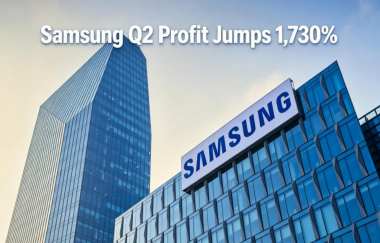
According to industry estimates, Samsung Electronics is expected to report a record-breaking second-quarter operating profit, driven by the continued expansion of artificial intelligence (AI) infrastructure, which has tightened global memory supply and pushed semiconductor prices significantly higher.
Samsung is forecast to post operating profit of KRW 86 trillion (approximately USD 56.35 billion) for the second quarter, based on the SmartEstimate consensus compiled by the London Stock Exchange Group (LSEG) from 30 analysts. The projected result represents an increase of approximately 1,730% year over year, compared with KRW 4.7 trillion in the same period last year, marking the company's third consecutive quarter of record operating profit.
The exceptional earnings growth reflects persistent shortages across the global memory market as demand for AI infrastructure continues to outpace manufacturing capacity. Analysts expect memory supply to remain constrained through at least next year.
The current market strength is being fueled not only by robust demand for high-bandwidth memory (HBM), but also by improving demand for conventional DRAM and NAND flash products. As AI applications—particularly agentic AI—expand into broader enterprise and consumer computing workloads, memory requirements are increasing across servers and data centers.
Unlike earlier AI deployments that primarily focused on training large language models, agentic AI systems perform more sophisticated multi-step reasoning and decision-making tasks. These workloads require server processors equipped with larger memory capacity as well as higher storage density to retain and retrieve data efficiently during AI inference.
Samsung remains one of the world's leading memory chip manufacturers, supplying major technology companies including NVIDIA, Google, and Apple.
According to Citi Research, average selling prices (ASPs) for DRAM and NAND increased 44% and 53% quarter over quarter, respectively, during the second quarter, reflecting continued pricing strength across the memory industry.
The sustained memory shortage has also driven strong gains in semiconductor stocks. Shares of Samsung Electronics, SK Hynix, and Micron Technology have risen approximately 158%, 273%, and 242%, respectively, this year, lifting the market capitalization of all three companies above USD 1 trillion.
Despite the favorable operating environment, analysts caution that Samsung's second-quarter earnings could fall short of consensus expectations if employee bonus provisions are higher than anticipated.
In late May, Samsung reached a wage agreement with its labor union, allocating 10.5% of the semiconductor division's operating profit toward special bonuses for chip employees. Some analysts estimate total bonus provisions could exceed KRW 40 trillion, making the timing of accounting recognition a key variable that may influence reported second-quarter earnings.
Samsung is scheduled to release its detailed second-quarter financial results later this month.
Looking ahead, analysts believe that any slowdown or delay in AI infrastructure investment remains the largest potential risk to the ongoing memory market rally.
JPMorgan noted that while investors generally expect memory supply-demand fundamentals to remain tight, concerns are growing over whether AI memory spending can continue to account for an expanding share of cloud service providers' capital expenditures. AI memory investment is projected to represent 52% of cloud capital spending this year, rising to more than 70% next year.
The investment bank added that investors are seeking stronger evidence that AI services will generate faster growth in cloud computing and AI-related revenue, thereby supporting the increasing share of memory devices within AI infrastructure spending.
Meanwhile, Nomura Securities forecasts continued pricing momentum in the third quarter. Driven by stronger demand for consumer memory products, conventional data center chips, and AI processors, DRAM prices are expected to rise another 24% quarter over quarter, while NAND flash prices are projected to increase 25%.
At the same time, Samsung's mobile business is facing mounting cost pressure as rising memory prices increase component expenses faster than recent smartphone price increases can offset. Although Samsung has already raised smartphone prices, analysts believe additional price adjustments may be required in the second half of the year. Apple also increased prices for selected iPad and MacBook models in June, highlighting broader pricing pressure across the consumer electronics industry.


