
DIY Small PC Case Cooling Upgrade


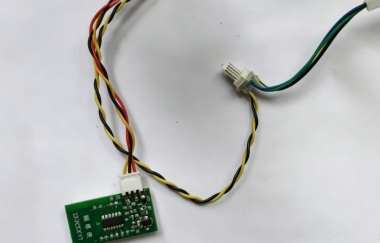
If Summer has arrived, and you have noticed that the CPU core temperature is quite high. When you run an FPU stress test, the temperature reaches 85°C and then the CPU starts to throttle. The actual CPU power consumption reaches around 65 W. Your motherboard only has one CPU fan header, so you suddenly think that you could build an external fan speed monitoring device.
There is no intake grille on the front panel of the case (there is one at the bottom), resulting in insufficient airflow. You want to make additional openings.
After summarizing everything, you need to do the following:
Delid the CPU and replace the thermal interface material with liquid metal;
Modify the temperature-controlled fan cable and add a fan speed display module;
Cut intake openings in the case front panel.
Now, let's get started:
First, delid the CPU and replace the thermal interface material with liquid metal. You add a little solder wire to the gallium and use a hot-air gun set to 300°C to melt and mix them. This can increase the viscosity and prevent the liquid metal from flowing everywhere.
Then, you modify the circuit. You remove the relatively unnecessary R1 and C5 components and short-circuit R1. You also remove resistor R2, which causes unstable power supply to the module, and short-circuit it. You connect a 10 kΩ pull-up resistor from the speed signal line to +5 V (the module has a 7805 regulator in it). The fan speed signal uses an open-drain or open-collector output. You solder the modified circuit to the temperature-controlled fan cable, take 12 V power from it, and connect the fan speed signal.
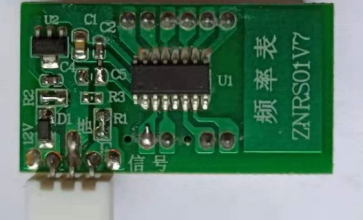
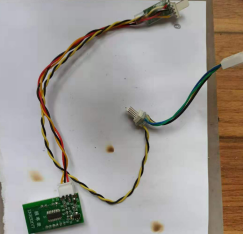
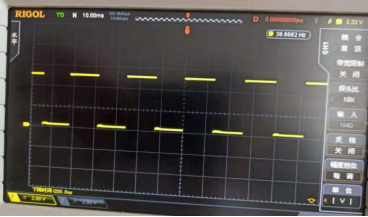
The seven-segment display reading is consistent with the oscilloscope measurement, and the waveform is perfect. If you do not short-circuit R2, the measured +5 V output from the 7805 is highly unstable, which causes the edges of the speed pulses to become non-monotonic.
Finally, you use a laser engraving machine to cut the intake grille openings in the case and the opening for the frequency counter. Then, you assemble everything.
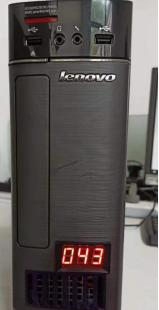
At this point, the case fan speed is approximately 43 × 30 = 1,290 rpm.
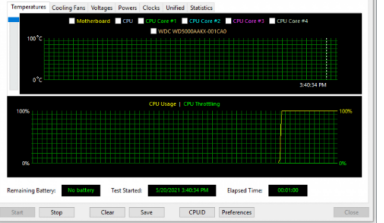
The ambient temperature is 20°C. The stress test results are shown in the image above. The temperature is 10°C lower than before.


