
DIY 18650 Battery Upgrade for an Electric Mosquito Swatter


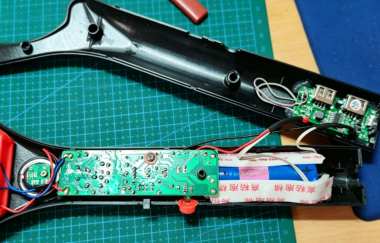
Summer is here, and there are plenty of mosquitoes around, but unfortunately, the battery in your electric mosquito swatter has failed.
Suppose you happen to have an 18650 lithium-ion battery with a protection circuit board and a discarded power bank that still has its charging control circuit. You may suddenly get the idea of using them to replace the original 4V lead-acid battery in your electric mosquito swatter with the 18650 lithium-ion battery.
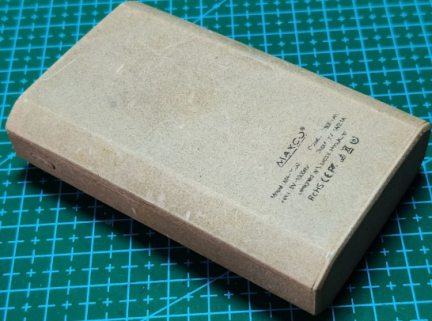
The power bank also has a battery level indicator, so you can easily check the remaining battery level at any time.
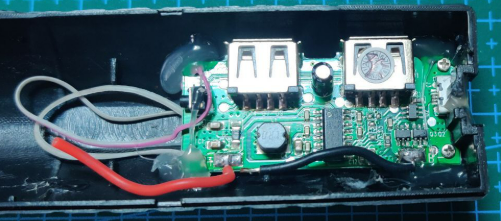
You can saw off one of the screw mounting posts at the end of the electric mosquito swatter to make room for the power bank's circuit board. You can use the lithium-ion battery to power the electric mosquito swatter's circuit, so you should use a lithium-ion battery with a protection circuit board. If the components in your electric mosquito swatter's circuit have enough voltage tolerance to withstand 5V, you can power the circuit directly from the power bank's output, so you do not need a separate protection circuit board because the power bank already has one built in.
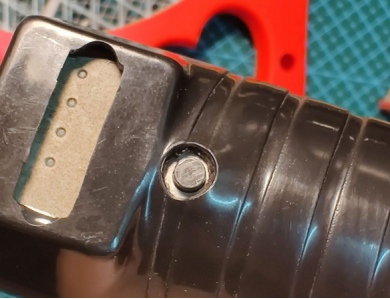
The battery level button fits perfectly into the original screw hole, while the battery indicator LEDs are exposed through the original 220V charging port.
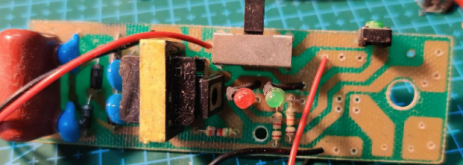
You can remove the original capacitive-dropper charging circuit.
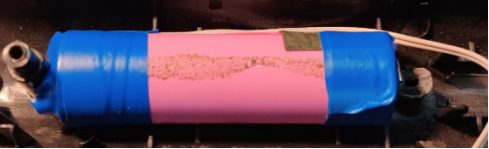
There is still plenty of space after you install the 18650 battery.
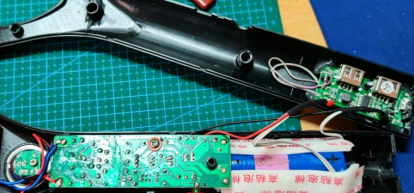
You can fill the gap around the battery with foam tape.
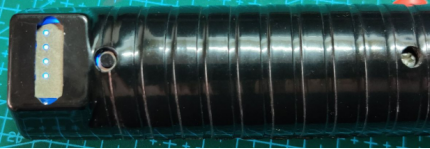
The battery indicator LEDs light up.
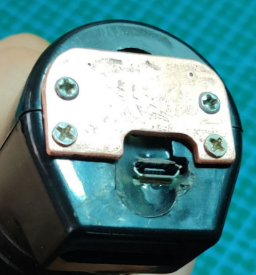
Because one screw mounting point has been removed from the end, you can add a piece of copper sheet to reinforce the structure.
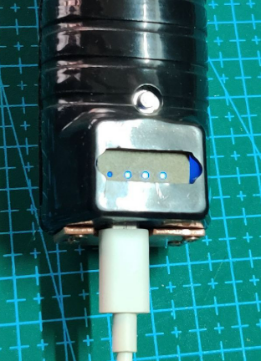
The battery indicator also works as the charging indicator while the battery is being charged.
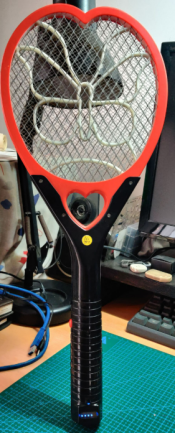
The modification is complete.


