
Intel Speeds Up U.S. Chip Factory Expansion


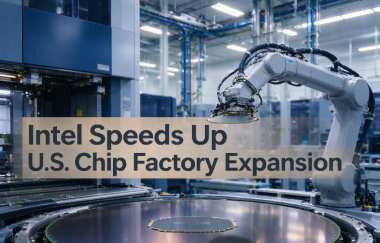
According to Intel, its U.S. advanced semiconductor manufacturing expansion is progressing, with equipment installation underway at its Fab 62 facility in Arizona and construction advancing at the Ohio One project in Ohio. Against a backdrop of rising data center processor demand and increased capital investment, Intel is continuing to expand its domestic chip manufacturing capacity.
Intel Vice President Naga Chandrasekaran said in a company blog post on October 21 that equipment installation is underway at Fab 62, located at the company's Ocotillo campus near Phoenix, Arizona. Equipment installation is a critical stage before a semiconductor fabrication plant can begin production. Intel expects Fab 62 to enter operation in early 2028.
Intel planned two new fabrication plants at the Ocotillo campus. Fab 52 is already operational, while Fab 62 is being built nearby. Once completed, the new facility will further expand Intel's semiconductor manufacturing footprint in Arizona. Chipmaking equipment represents one of the largest capital expenses in building a fabrication plant, and procurement and installation schedules can significantly affect the timeline for production.
Meanwhile, Intel's Ohio One semiconductor manufacturing project in New Albany, Ohio, has also reached a new construction milestone. Construction crews have installed the first major roof truss at the project's first factory, indicating that work on the previously delayed development is moving forward.
Ohio One was initially envisioned as one of the world's largest semiconductor manufacturing complexes and a key part of Intel's strategy to strengthen advanced chip production in the United States. However, construction slowed after the project was launched. Intel CEO Lip-Bu Tan has emphasized that investments in manufacturing facilities should be aligned with actual market demand to avoid excessive spending before demand becomes clear. Although the latest update indicates continued progress in Ohio, Intel has not announced a revised production timeline for the project.
In recent years, Intel has been transforming its manufacturing business to produce its own processors while expanding its foundry services for external customers. However, the company has faced challenges in advanced process technology competition, and its efforts to attract external foundry customers have progressed more slowly than expected. These factors have affected some of its manufacturing expansion plans.
More recently, stronger demand for Intel's own products, particularly data center processors used to run artificial intelligence services, has put pressure on its supply capacity. Although Intel has yet to announce a substantial number of new foundry customers, demand for its internal products is providing additional support for manufacturing capacity expansion.
Intel has also increased its planned capital investment in new factories and equipment. In July, the company indicated that its investment would exceed previous expectations, with its 2026 budget for these expenditures reaching approximately $20 billion and spending expected to rise significantly in 2027. By comparison, market estimates put Taiwan Semiconductor Manufacturing Company (TSMC)'s capital expenditure at approximately $60 billion in 2026, while Samsung Electronics is also expected to invest more than Intel.
As equipment installation advances at Fab 62 in Arizona and construction continues at Ohio One, Intel is moving forward with its efforts to strengthen U.S. semiconductor manufacturing capacity. However, construction schedules, equipment delivery timelines, future factory utilization rates, and the scale of external foundry orders will remain important factors in determining how successfully the company's expansion plans translate into operational production capacity.


