
The Future of AI Chips May Be Quantum Chips


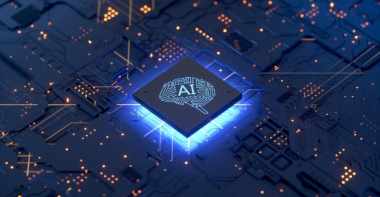
The use of AI chatbots is indeed on the rise, and this has led to increased investment in the technology by major technology companies and search engines. The integration of ChatGPT into Microsoft's Bing search engine, as well as other companies exploring their own AI chatbots, is a testament to the growing interest in this field.
Recently, the number of users of the artificial intelligence chat robot ChatGPT has continued to rise, from 1 million to 10 million, and then to 100 million. It took only two months to set a new record for the growth of the number of artificial intelligence chat program users.
ChatGPT has the potential to change the rules of the game in the search market, and the boom in AI chatbots has swept the global market. Microsoft's Bing search engine will integrate ChatGPT; Alphabet's Google search service will join AI chatbot technology Bard; Baidu, Alibaba, "Russian version of Google" Yandex, South Korea's Naver, Kakao, etc. are also pouring in, planning to release their own AI chatbots.
AI chatbots require large-scale data learning and fast computing, and the demand for AI chips will surge, bringing a warm current to the sluggish semiconductor industry, and Nvidia, Samsung Electronics, SK Hynix, etc. will all benefit. However, Nvidia’s AI chip solution for servers has problems with heat generation and excessive power consumption. Technology giants such as Google, Amazon AWS, Samsung Electronics, SK Hynix, and Baidu are also developing their own dedicated AI chips, trying to improve performance while reducing power consumption. Power consumption, to seize the new heights of AI chips
People in the semiconductor industry pointed out that although traditional AI chips currently occupy the mainstream and AI-specific chips are booming, they have all encountered physical limits, and the future of AI chips may be quantum chips.
The growth of AI chatbots also has implications for the semiconductor industry, as the demand for AI chips is expected to increase. Companies like Nvidia, Samsung Electronics, SK Hynix, Google, Amazon AWS, and Baidu are all investing in developing their own AI chips to improve performance and reduce power consumption. The growth of AI chips has the potential to bring a boost to the semiconductor industry, but as mentioned in the news, there are also physical limits to traditional AI chips. The future of AI chips may lie in quantum chips, which would bring new opportunities and challenges to the field.


