
Supercapacitor vs Electrolytic Capacitor: What's the Difference?


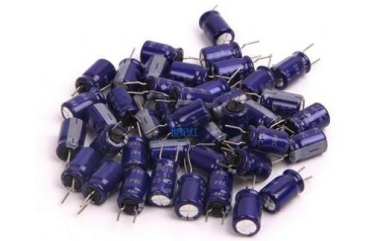
In the world of electronic components and energy storage, two devices are getting a lot of attention: supercapacitors and electrolytic capacitors. While both store charge using an electrolyte, they differ significantly in structure, working principle, performance, and application. This article dives into their definitions, core mechanisms, pros and cons, and practical uses.
Catalog
II. What is an Electrolytic Capacitor?
I. What is a Supercapacitor?
A supercapacitor, also called an electrochemical capacitor, is a high-performance energy storage device based on the double-layer principle. It's made up of two porous electrodes separated by a membrane, with the electrodes often made of high-surface-area materials like activated carbon, carbon nanotubes, or graphene.
The energy storage mechanism relies mainly on the formation of a double layer at the electrode-electrolyte interface, while some supercapacitors also leverage pseudocapacitance, which involves fast, reversible chemical reactions. This unique combination allows supercapacitors to deliver extremely high power density and incredibly long cycle life.
II. What is an Electrolytic Capacitor?
An electrolytic capacitor is a traditional capacitor that uses an electrolyte as its cathode. Its structure includes a metal anode (usually aluminum or tantalum), a dielectric oxide layer, and the electrolyte. In aluminum electrolytic capacitors, an oxide film forms on the aluminum surface via electrochemical processes to act as the dielectric. In tantalum electrolytic capacitors, the dielectric layer is typically made of tantalum pentoxide.
The energy storage principle of electrolytic capacitors is based on conventional charge induction: the dielectric layer separates the two electrodes, allowing charge to accumulate.
III. Key Differences
Here's a detailed comparison across multiple dimensions.
1. Structure and Working Principle
Supercapacitors: Composed of two porous electrodes, an electrolyte, and a separator. The electrodes have extremely high surface areas, often using materials like activated carbon. They store energy primarily through an electrostatic mechanism. When the electrodes charge, ions in the electrolyte form a double-layer structure at the electrode surface, storing energy. This process is physical and doesn't involve chemical reactions.
Electrolytic capacitors: Consist of a metal anode, oxide dielectric, and electrolyte. In aluminum electrolytic capacitors, an aluminum foil anode forms an oxide layer electrochemically. Energy storage relies on the dielectric properties of the oxide layer, which separates the electrodes and holds the charge.
2. Performance Characteristics
Supercapacitors: Offer very high power density and can deliver huge bursts of current. They have extremely long cycle life—often hundreds of thousands of charge-discharge cycles. Charging and discharging are fast, typically within seconds to minutes. They operate across a wide temperature range and have relatively low self-discharge rates. However, their energy density is limited, so they store less energy per unit volume.
Electrolytic capacitors: Provide higher energy density and relatively stable capacitance. Their power density is lower, making them unsuitable for rapid high-current discharges. They have a limited cycle life, typically ranging from a few thousand to tens of thousands of hours. They are sensitive to temperature, with high heat significantly reducing lifespan, and they also exhibit some leakage current.
3. Application Areas
Supercapacitors: Used where high power output and rapid charge/discharge are required. In electric vehicles, they're used for energy recovery systems; in power systems, they provide instant voltage support; in industrial equipment, they serve as backup power. They also find applications in wind and solar energy storage, as well as in rail transportation systems.
Electrolytic capacitors: Commonly used for power filtering, signal coupling, and voltage stabilization. They filter input and output in switching power supplies, couple signals in audio equipment, and stabilize and decouple power in a wide range of electronics. Their relatively high capacitance-to-volume ratio makes them advantageous in space-constrained designs.
IV. Conclusion
In short, supercapacitors and electrolytic capacitors, though both capacitors, differ fundamentally in structure, energy storage mechanism, performance, and application. Supercapacitors excel at high power, fast response, and long life, making them ideal for energy regeneration, instant power supply, and hybrid storage systems. Electrolytic capacitors, on the other hand, offer high capacitance, mature manufacturing, and cost efficiency, making them essential for traditional circuits like power filtering, coupling, and energy buffering.


