
SK hynix Set to Boost 1c DRAM Output Nearly 10x


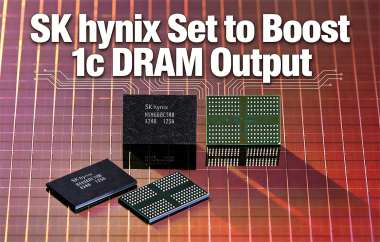
According to reports, SK hynix is accelerating the expansion of its 10nm-class sixth-generation 1c DRAM production. To focus resources on high-bandwidth memory (HBM), the company had informed key clients that general-purpose DRAM supply would be significantly reduced starting in Q4 2025. However, with general DRAM prices continuing to rise, SK hynix is now readjusting its strategy.
SK hynix's 1c process DRAM is primarily used in DDR5, LPDDR5X, and GDDR7 products, rather than HBM. The company predicts that the DRAM shortage will persist through the end of 2027, while new factories for traditional chips are not expected to start producing until 2027 or 2028. This has raised concerns about meeting the demand for general-purpose DRAM.
Currently, SK hynix's 1c DRAM monthly production is around 20,000 wafers. Korean industry estimates suggest this could grow to 190,000 wafers per month by the end of 2026. Key production sites include the M14 and M16 plants in Icheon, with the M15X plant in Cheongju partially introducing 1c DRAM lines. From the first half of 2026, SK hynix plans to significantly ramp up mass production and shipments of LPDDR5X and GDDR7 products using the 1c process.
Korean media Deal Site reports that SK hynix's operating profit could exceed 70 trillion KRW (~$49 billion) by 2026. While HBM's share of profits may decrease, general-purpose DRAM is expected to contribute a larger portion, with operating margins for both HBM and general DRAM approaching 70% in the first half of 2026.
Meanwhile, Samsung Electronics is also adjusting its DRAM production focus, shifting toward DDR5 RDIMM modules to capitalize on higher profit potential. This adjustment could free up roughly 80,000 DRAM wafers in capacity. Samsung plans to upgrade 30–40% of its 1a process production to the more advanced 1b or 1c processes, with 1c set as a key focus for future growth. The new capacity will mainly support DDR5, LPDDR5X, LPDDR6, and GDDR7 products.
Additionally, CXMT (ChangXin Memory Technologies) is reducing DDR4 production to fully pivot toward DDR5 and LPDDR5 markets.


