
How to Remove Integrated Circuits Effectively?


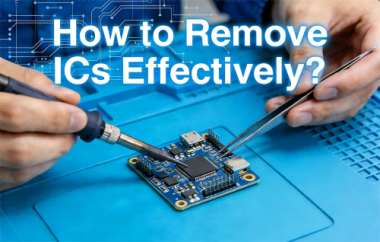
In electronic repair, rework, or reverse engineering, removing integrated circuits (ICs) from printed circuit boards (PCBs) is a common task that requires high technical skill, and because ICs have many densely packed pins, improper handling can easily damage the IC itself or the PCB pads and traces, affecting subsequent soldering and functionality, so mastering multiple effective removal techniques is extremely important for electronic technicians, and this article will systematically share several practical and reliable IC removal techniques.
Catalog
I. What is an Integrated Circuit?
II. Effective IC Removal Methods
1. Soldering Iron with Brush Method
3. Medical Hollow Needle Method
4. Multi-Strand Copper Wire Solder Absorption Method
5. Adding Solder for Melting Method
6. Solder Sucker Removal Method
I. What is an Integrated Circuit?
An integrated circuit (IC) is an important electronic functional module in which a large number of transistors, resistors, capacitors, and other components are integrated onto a single semiconductor chip through processes such as photolithography, doping, and thin-film deposition, and it connects to external circuits through packaging and pins, making it small in size, high in performance, and an indispensable core component of modern electronic devices, and because IC pins are soldered to PCB pads, the removal process essentially requires heating to melt the solder and using appropriate tools and techniques to separate the pins from the PCB pads, and the main challenges in IC removal include the high pin density that makes heating and solder removal difficult, the susceptibility of pads to damage, and precise temperature control during the process.
II. Effective IC Removal Methods
The following methods are commonly used in the industry and have been proven effective in practice, and each method is suitable for slightly different scenarios, so the choice should depend on the IC package type, available equipment, and operational requirements.
1. Soldering Iron with Brush Method
This method requires only simple tools, a temperature-controlled soldering iron and a small heat-resistant brush, and during operation, the soldering iron is first heated to the solder melting temperature, then the solder joints on one side or a single pin of the IC are melted in sequence, and while the solder is still liquid, the small brush is quickly swept across the joints to remove the molten solder from the pins and pads, and once the solder on all pins is cleared, a pointed tweezer or a small flathead screwdriver can be used to gently pry up the IC from the board, and the key to this method is to maintain smooth continuous movements to prevent the solder from re-solidifying.
2. Razor Blade Method
This method is especially suitable for removing densely pinned surface-mount ICs, and before operation, an appropriate amount of rosin-core solder is added to the chip pins to improve heat conduction, then a sharp razor blade or thin steel sheet is carefully inserted from the bottom edge of the IC into the gap between the pins and the PCB, and the soldering iron is used to heat the pin area, and once the solder underneath is fully melted, the blade is gently pushed in and held for a moment before being removed, and at this point, the chip is usually separated from the board, and any remaining solder on the chip can be cleaned by holding the chip with tweezers, adding more solder if necessary, and using the soldering iron tip to drag and remove it.
3. Medical Hollow Needle Method
This is a classic method that uses mechanical isolation principles, and several medical hollow needles with inner diameters matching the IC pins are required, and during removal, the solder on the target pin is melted with a soldering iron, then the needle is quickly slipped over the pin and pressed against the PCB, the soldering iron is removed while gently rotating the needle, and once the solder cools and solidifies, the pin is isolated by the needle and separated from the pad, and after repeating this for all pins, the IC can be easily removed, and this method is particularly effective for through-hole IC packages.
4. Multi-Strand Copper Wire Solder Absorption Method
This method utilizes the strong capillary absorption of multi-strand copper wire, and a section of insulated multi-strand copper conductor is stripped to expose the copper strands and coated with rosin alcohol flux, and during operation, the soldering iron tip is pressed onto the flux-coated copper strands so that they make full contact with the solder joints on the IC pins, and the molten solder is quickly absorbed by the copper strands, and the copper strands holding solder can be cut off and the process repeated until the pins are completely free of solder, and shielded braid wire can also be used, and after solder removal, the chip can be easily pried off.
5. Adding Solder for Melting Method
This method improves heat transfer efficiency by using solder to conduct heat and is suitable for ICs with many pins, and during removal, extra solder is added to one side or a row of pins so that the solder joints form a continuous strip, and then a sufficiently powered soldering iron tip is used to heat the strip thoroughly, allowing the solder's high thermal conductivity to melt nearly all pins simultaneously, and at this point, a tool is used to slightly pry the IC from the other side, alternating heating and prying between sides, and typically two to three cycles are enough to remove the chip completely.
6. Solder Sucker Removal Method
This is the most commonly used and relatively professional tool-based method, and the main tool is a solder sucker with a piston-based vacuum mechanism or a combination soldering iron with solder extraction, and during operation, the soldering iron tip is heated and applied to the target pin, and once the solder is fully melted, the solder sucker is triggered, instantly drawing the molten solder into the reservoir, and it is important to ensure that the solder is completely melted before suction to avoid mechanically damaging the pad, and once the solder on all pins is removed, the IC can be safely lifted off the board.
III. Conclusion
The choice of IC removal method should consider the chip package type, available tools, operator skill level, and PCB protection requirements, and for hobbyists, the soldering iron with brush method, adding solder method, and multi-strand copper wire method are valuable because the tools are readily available, while in professional repair scenarios, the solder sucker method and medical needle method are more efficient and reliable, and regardless of the method used, patient and careful operation, along with precise control of temperature and timing, is the key to success, and with repeated practice of these methods, technicians can significantly improve the safety and success rate of IC removal, allowing them to work more effectively in electronic repair and manufacturing.


