
DIY QC3.0 Trigger Device Guide


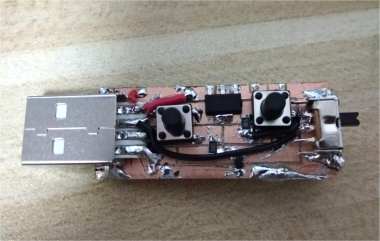
If you're interested in DIYing a QC3.0 trigger device, you might want to check out this article.
First, you need to prepare a QC3.0 buck module. Making this is actually pretty simple—you only need 8 components. If you don't have a 7133, you can also use an AMS1117.
The schematic is roughly shown in the diagram below, and all resistors are 5.1kΩ.
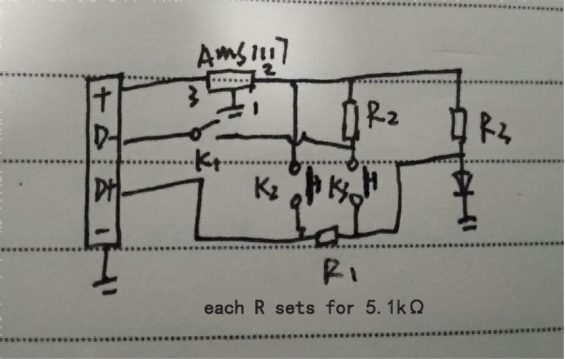
If you've never done thermal transfer or aren't familiar with AD, then you'll have to do hand etching and sketching, as shown below. If the switch connecting to D- and R2 isn't shown, you'll have to wire it manually.
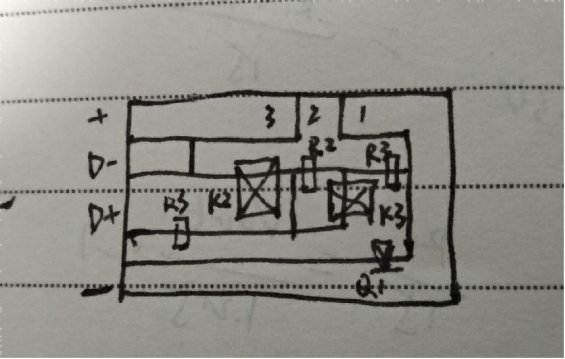
Square-shaped boards are easier to etch. You only need a craft knife and about half an hour to get it done. But before you start etching, you need to simulate the placement of the components to make sure your etching will actually work. If you only have the USB male connector shown below and its size doesn't match the traces, then you'll have to wire the positive manually. The red and black lines below are the manual wires.
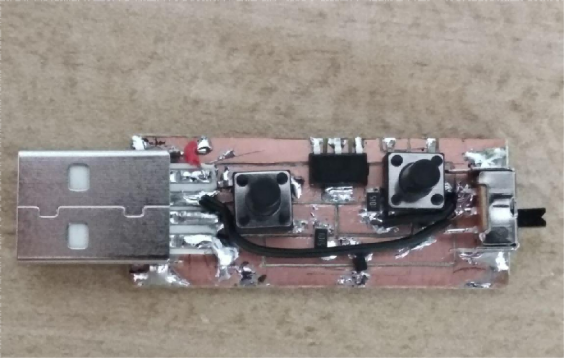
Once that's done, you can start testing. If you find that the 12V output isn't adjustable, you need to check where the problem is. If it's because the two pins of K3 have no place to go and you etched a U-shaped area without separating them, causing a short circuit on K3, then you need to separate the pins on K3. Draw a line in the middle of the U-shape. After etching, it should look like the boxed area below.
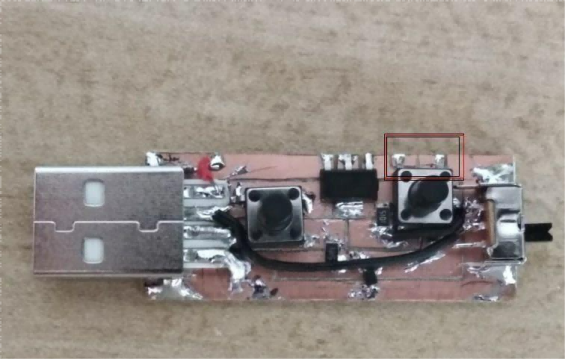
If you find that it can trigger but the output voltage can't connect, you can add a USB female port for output. If you don't want messy wiring, you can connect the negative of the USB female port to the casing, which is then connected to the negative. When the positive cannot avoid wiring, you can drill a hole in the input positive and then solder the USB female port.
After finishing this, you need to reinforce it. You can first fix it with solder.
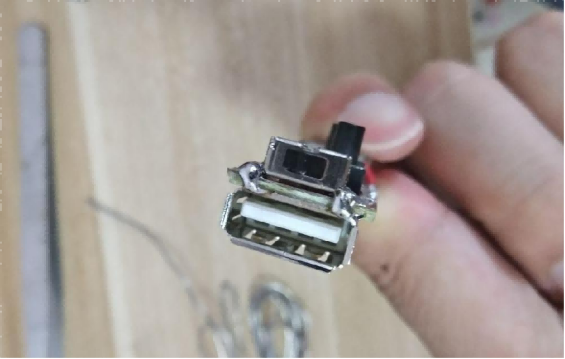
Then secure it with silicone glue.
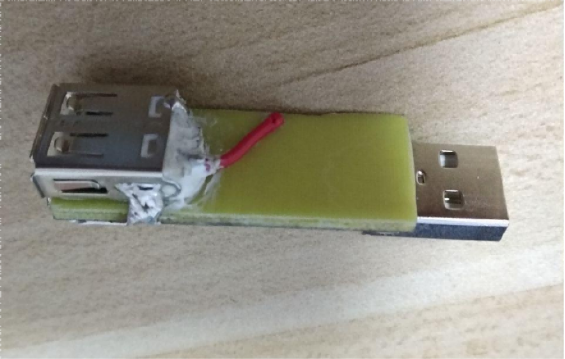
The front view looks like the image below.
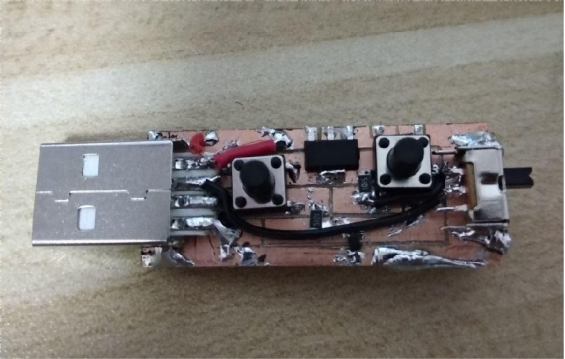
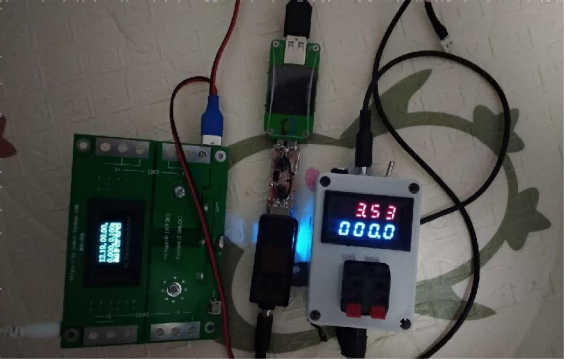
Next, you can test it. Input 12.2V, the lowest output can reach 3.53V, and the USB tester shows a voltage below 3.6V.
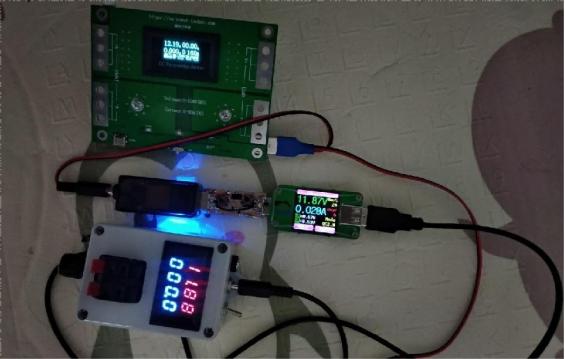
Input 12.2V, the highest adjustable output is 11.88V.
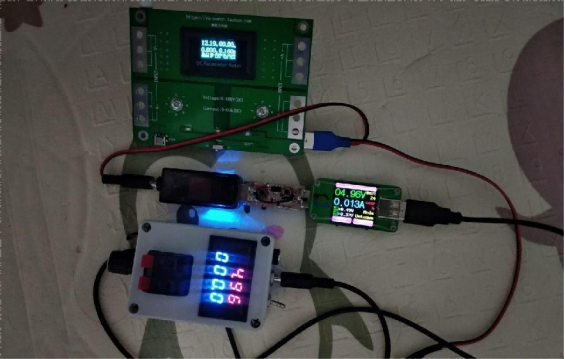
Input 12.2V, without adjustment, defaults to 4.95V.
Summary:
The following two methods can quickly activate 9V and 12V outputs:
After connecting the trigger device to power, hold down K3, then turn on K1. Release K3 after the output reaches 12V.
After connecting the trigger device to power, hold down K2 and K3, then turn on K1. Release K3 after the output reaches 9V.
Done.


