
HSR vs Humidity Capacitor: What's the Difference?


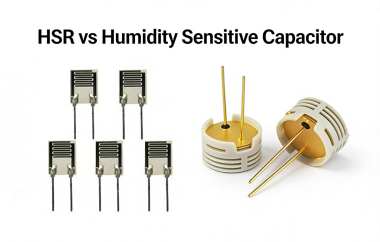
In modern electronic devices and industrial systems, accurate sensing and control of ambient humidity is a critical factor in ensuring stable operation, improving product reliability, and enhancing the overall user experience. Among the many available technical solutions, the humidity sensitive resistor (HSR) and the humidity sensitive capacitor are the two most widely used and technologically mature types of humidity sensors. They share the same goal—converting invisible changes in humidity into electrical signals that circuits can measure—but because their core principles, materials, and performance characteristics are fundamentally different, they naturally form a clear division of roles and complement each other in real-world applications. This article starts from basic principles and takes a closer look at the key features and differences between these two mainstream humidity-sensing components.
Catalog
I. What is a humidity sensitive resistor?
II. What is a humidity sensitive capacitor?
I. What is a humidity sensitive resistor?
A humidity sensitive resistor is an electronic component whose resistance value changes with ambient humidity. Its core lies in the humidity-sensitive material, such as semiconductor ceramics, organic polymer films, or lithium chloride, which absorbs water molecules from the air and alters its internal ion or charge carrier concentration, ultimately resulting in a noticeable change in resistance. Its strengths and limitations are very distinct.
1. Main characteristics
Humidity sensitive resistors have the following notable characteristics.
· Humidity sensitive resistors usually have low material and manufacturing costs, making them well suited for cost-sensitive, large-scale applications such as greenhouse monitoring or basic consumer appliances.
· Especially ceramic-based humidity sensitive resistors can withstand extreme operating temperatures ranging from minus 40 degrees Celsius up to 150 degrees Celsius or even wider ranges.
· Humidity sensitive resistors show a clear resistance response to changes in humidity, allowing them to detect variations in moisture levels.
2. Limitations
Humidity sensitive resistors also have obvious limitations.
· Their moisture absorption and desorption response times are typically on the order of several seconds to tens of seconds, such as 5–30 seconds for absorption and 10–60 seconds for desorption, making them unsuitable for tracking rapidly changing humidity.
· Because the sensing layer is directly exposed to the environment, it is easily affected by dust and oil contamination, and the material itself may slowly change over time, leading to annual drift often exceeding ±5% RH and requiring regular recalibration.
· The output response of humidity sensitive resistors is usually nonlinear, so additional signal-processing circuits or algorithms are needed to improve measurement accuracy.
· The resistance value of a humidity sensitive resistor is strongly affected by temperature, with a high temperature coefficient that can reach ±2% to 5% RH per degree Celsius, so accurate readings require extra temperature compensation circuitry.
· Humidity sensitive resistors must be driven with an AC signal, because using DC excitation can cause electrolysis or polarization in the sensing material and permanently damage the sensor.
II. What is a humidity sensitive capacitor?
The working principle of a humidity sensitive capacitor is fundamentally different from that of a humidity sensitive resistor. It relies on polymer materials such as polyimide or polystyrene, or special ceramics, as the humidity-sensitive dielectric layer. When water molecules penetrate the dielectric layer, the overall dielectric constant increases because water has a much higher dielectric constant than the base material, causing the capacitance to increase proportionally with humidity. Its characteristics and limitations are outlined below.
3. Main characteristics
The main characteristics of humidity sensitive capacitors include the following points.
· Humidity sensitive capacitors are extremely sensitive to small humidity changes, with capacitance variation rates much higher than resistance variation rates, and they respond faster, with some models achieving moisture absorption response times of less than four seconds, making them suitable for dynamic applications such as respiration monitoring.
· Thanks to stable dielectric materials and well-designed protective structures, humidity sensitive capacitors offer excellent long-term stability, with typical annual drift below ±2% RH and relatively low sensitivity to temperature, resulting in long maintenance intervals.
Their capacitance value usually has a good linear relationship with humidity, and product consistency is high, which makes them easy to interchange and integrate into standardized modules.
· Modern humidity sensitive capacitors are often integrated with signal-conditioning circuits and temperature sensors to form factory-calibrated digital temperature and humidity modules, greatly simplifying system design for end users.
4. Limitations
However, humidity sensitive capacitors also have some limitations.
· Compared with humidity sensitive resistors, humidity sensitive capacitors may respond more slowly and can take several seconds or longer to complete a response.
· For widely used polymer film–based humidity sensitive capacitors, the long-term operating temperature limit is usually constrained by material properties and is typically below 150 degrees Celsius.
· Although their resistance to contamination is better than that of humidity sensitive resistors, additional protective structures are still required in extremely harsh environments or where condensation is present to ensure long-term accuracy and service life.
III. Conclusion
As two mainstream humidity-sensing components, humidity sensitive resistors and humidity sensitive capacitors each have their own strengths and limitations in terms of measurement principles and performance. Humidity sensitive resistors, with their low manufacturing cost, simple structure, and clear response to basic humidity changes, are well suited for cost-sensitive applications or scenarios where high precision is not critical, but their nonlinear output and environmental dependence limit their use in high-accuracy systems. Humidity sensitive capacitors, on the other hand, stand out as the preferred choice for high-precision humidity monitoring thanks to better linearity, wider measurement ranges, and superior environmental stability, although their higher cost and greater dependence on signal-conditioning circuits make them less economical for low-cost applications.
Therefore, the final selection decision should always come back to a careful review of the specific project requirements, including measurement accuracy, response speed, operating temperature and humidity range, expected service life, and overall budget as the five key decision factors.


