
What Are Humidity-Sensitive Capacitors?


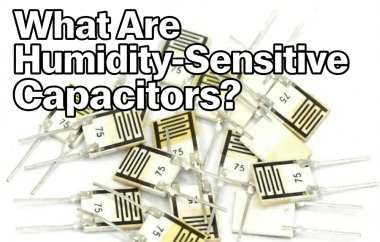
In the modern electronic components industry, humidity sensing technology plays an indispensable role in environmental monitoring, industrial automation, smart home appliances, and many other fields. Among these, the humidity-sensitive capacitor (capacitive humidity sensor), as one of the core components for humidity detection, holds a leading position in the global humidity sensor market due to its high accuracy, fast response, and compact size. Especially within the capacitive technology segment, its usage and application areas continue to grow, providing reliable humidity data support for a wide range of end devices.
Catalog
I. What is a Humidity-Sensitive Capacitor?
III. Characteristics and Advantages
I. What is a Humidity-Sensitive Capacitor?
A humidity-sensitive capacitor is a type of sensor whose capacitance changes significantly with environmental humidity. Structurally, it is usually made as a capacitor with an organic polymer film, such as polystyrene, polyimide, or cellulose acetate, serving as the dielectric layer. Its core structure is a series-connected double-capacitor design. Specifically, it consists of a top electrode, a polymer dielectric layer, and a bottom electrode. The top electrode is often designed as a porous gold film, which allows water vapor from the environment to freely penetrate the underlying dielectric material. The bottom electrode is typically a comb-shaped or blade-shaped metal electrode responsible for charge transfer, while the entire structure is supported by a glass substrate. The basic working principle of the humidity-sensitive capacitor is that the polymer dielectric layer can adsorb water molecules from the air, and since water’s dielectric constant is much higher than that of the polymer material itself, the overall capacitance of the device increases as humidity rises, ultimately showing an increase in the measured capacitance value.
II. Working Principle
The core principle of a humidity-sensitive capacitor is based on the physical property of capacitance, where the capacitance between two electrodes depends on the dielectric constant of the material in between. When environmental humidity changes, the moisture-sensitive dielectric material (such as a polymer or ceramic moisture-sensitive material) between the electrodes absorbs or releases water molecules, causing its dielectric constant to change. This results in the overall capacitance of the device varying with humidity. By measuring changes in capacitance and converting them through algorithms, the relative humidity of the environment can be calculated. Higher humidity generally leads to greater water absorption by the dielectric material, raising its dielectric constant and increasing the capacitance value, while dry conditions produce the opposite effect.
III. Characteristics and Advantages
Compared with other humidity-sensing components, humidity-sensitive capacitors offer notable features and industry advantages.
Firstly, the change in capacitance usually exhibits a good linear relationship with humidity, providing high measurement accuracy, fast response, and stable output, which is especially effective for applications requiring continuous real-time monitoring.
Secondly, these devices can be miniaturized and integrated into standard electronic packages, facilitating automated production and system integration, making them particularly suitable for IoT (Internet of Things) and portable devices.
Additionally, capacitive humidity sensors generally offer better compensation for temperature drift and resistance to environmental contamination, enabling them to meet higher requirements in industrial control and precision environmental monitoring applications.
IV. Applications
As a fundamental and critical sensing component, humidity-sensitive capacitors are widely used in various end products and systems, with applications including but not limited to the following areas. In environmental monitoring and climate control, they are used in weather stations, air quality monitoring instruments, and humidity control systems in green buildings, providing accurate data for ecological analysis.
In industrial automation and process control, they are employed to maintain consistent humidity in warehouses and production lines, as well as in industries such as pharmaceuticals and food processing, where precise humidity control is essential.
In consumer electronics and smart home applications, capacitive humidity sensors are widely adopted in devices like air conditioners and dehumidifiers to provide humidity feedback and ensure comfort and efficiency.
Furthermore, with the rise of IoT and smart hardware, compact humidity sensing modules have become key components in wearable devices and intelligent sensing terminals.
V. Conclusion
As a mature humidity-sensing technology, the humidity-sensitive capacitor achieves precise and rapid environmental humidity measurement through the adsorption of water vapor by its unique polymer dielectric layer, which alters its capacitance. Its core advantages, including high sensitivity, fast response, and easy integration, make it an essential environmental sensing component across industrial manufacturing and everyday consumer electronics. Currently, humidity-sensitive capacitor technology continues to advance. The incorporation of nanotechnology, such as nanofibers and nano-conductive polymer materials, is expected to further enhance sensor sensitivity and response speed. Future trends clearly point toward greater integration, intelligence, and multifunctionality.


