
Supercapacitor vs Lithium Battery: Which Is Better?


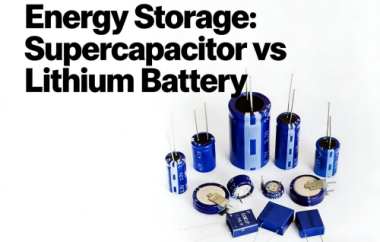
In the modern electronic components industry, energy storage technology is a core part of product design and system architecture, and supercapacitor energy storage and lithium battery energy storage are widely discussed due to their unique performance characteristics and application scenarios. As electric vehicles, renewable energy systems, and portable devices increasingly demand higher energy storage performance, the market and technology development have carried out in-depth comparisons of these two storage solutions. This article starts with definitions and progressively analyzes the essential differences between the two.
Catalog
I. What is Supercapacitor Energy Storage?
II. What is Lithium Battery Energy Storage?
III. Differences Between the Two
I. What is Supercapacitor Energy Storage?
Supercapacitor energy storage refers to the technology of storing and releasing electrical energy using supercapacitors, also known as ultracapacitors or electric double-layer capacitors. The core structure of a supercapacitor consists of two high-surface-area electrodes and an electrolyte, where energy is stored through the formation of a charge double layer at the electrode interface. This type of storage is a physical process based on electric field energy and does not involve the deep chemical reactions commonly seen in traditional batteries. Supercapacitors can complete the charge and discharge process in an extremely short time and possess very high power density and cycle life, making them suitable for applications that require rapid energy response and frequent charge-discharge cycles.
II. What is Lithium Battery Energy Storage?
Lithium battery energy storage refers to the process of storing electrical energy in electrode materials through lithium-ion batteries and releasing it via electrochemical reactions. Lithium batteries come in various types, among which lithium-ion batteries dominate consumer electronics, electric vehicles, and large-scale energy storage systems due to their high energy density, relatively light weight, and mature industrial chain. Lithium battery storage achieves energy storage and release through the intercalation and de-intercalation of lithium ions between the positive and negative electrodes. This process involves chemical reactions, which means that while the charging and discharging speed is slower, it can provide continuous and stable power to the load.
III. Differences Between the Two
1. Energy Storage Mechanism
Supercapacitors store energy through a physical mechanism where charges form a double layer at the interface between electrodes and electrolyte. This method can respond quickly to voltage changes without involving chemical reactions. In contrast, lithium batteries release and store energy through electrochemical reactions between electrode materials. Although this reaction is slower, it allows for denser and more sustained energy storage.
2. Power Density
Power density refers to the amount of energy a storage device can release per unit mass or volume over a unit of time. Supercapacitors excel in this regard, reaching levels of thousands to tens of thousands of watts per kilogram, making them suitable for scenarios that require high instantaneous power output. While lithium batteries also have respectable power density, they lag noticeably behind supercapacitors in high-power applications.
3. Energy Density
Energy density refers to the total energy a device can store. In this metric, lithium batteries clearly outperform supercapacitors. Lithium batteries typically reach several hundred watt-hours per kilogram, whereas supercapacitors usually only achieve a few watt-hours per kilogram. This makes lithium batteries more suitable for applications requiring long-duration, continuous power supply.
4. Cycle Life
Supercapacitors have an extremely long cycle life, often reaching hundreds of thousands to over a million charge-discharge cycles. This is because their energy storage process is mainly physical and does not involve significant structural changes in electrode materials. By comparison, lithium batteries experience material fatigue due to electrochemical reactions, and their cycle life usually ranges from several hundred to several thousand cycles, depending on the material type and operating conditions.
5. Charge and Discharge Rate
Supercapacitors can complete charging and discharging within seconds or even shorter times, giving them a clear advantage in scenarios requiring rapid energy replenishment or instantaneous high-current output. In contrast, lithium batteries usually need tens of minutes or even several hours to fully charge, which is a disadvantage in high-frequency charge-discharge applications.
6. Safety
Because supercapacitors do not rely on deep chemical reactions, they do not carry the risk of thermal runaway or combustion, resulting in higher overall safety. Lithium batteries, due to their chemical activity, face risks such as overheating and fire, and therefore require strict monitoring and protection through battery management systems.
7. Environmental Adaptability
Supercapacitors generally operate over a wider temperature range and are less affected by environmental conditions, allowing them to perform reliably in harsh industrial or outdoor environments. Lithium batteries, however, are more sensitive to temperature, and their performance may drop or safety may be compromised in low-temperature conditions.
8. Application Areas
Supercapacitors, with their fast charge-discharge and long lifespan, are advantageous in power buffering, instantaneous energy compensation, and regenerative braking systems. Lithium batteries, thanks to their high energy density and long-term power supply capabilities, are more common in portable devices, electric vehicles, and energy storage systems requiring extended endurance. In practice, the two are often combined to balance high-power and high-energy requirements.
9. Technology Development
One current direction in energy storage technology development is to use material innovations and electrode design to narrow the energy density gap between supercapacitors and lithium batteries while also improving lithium battery cycle life and safety performance. With advancements in new materials and electrolyte systems, higher-performance hybrid energy storage solutions may emerge in the future.
IV. Conclusion
In summary, supercapacitor energy storage and lithium battery energy storage differ significantly in energy storage mechanism, power and energy density, cycle life, charge-discharge speed, safety, and application areas. There is no absolute superiority between them; the proper technology choice depends on the specific application and the trade-off between "instantaneous power and high-frequency cycling" and "high energy capacity and long endurance." With continued technological progress, both types of energy storage will play indispensable roles in the industry and have the potential for further integration and collaborative development in the future.


