
How to Test if an SCR Trigger Board is Good?


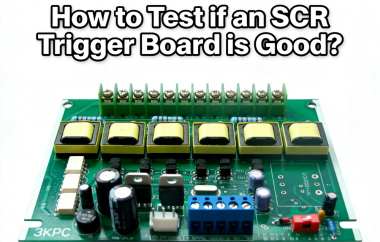
In the electronic components industry, the SCR trigger board serves as the core interface between the control system and the silicon-controlled rectifier (SCR), and its quality directly affects the operational stability and reliability of power electronic equipment. If the trigger board malfunctions, it can not only prevent the SCR from conducting properly or cause false triggering, but also lead to overall system control failures, abnormal motor speed regulation, or unstable power supply. So, how can you accurately determine the quality of the SCR trigger board in your hands? This article provides a systematic, specific, and practical method for evaluating it.
Catalog
I. What is an SCR Trigger Board?
II. How to Determine the Quality of an SCR Trigger Board
1. Appearance and Material of the SCR Trigger Board
2. Electrical Performance Testing of the Trigger Board
3. Performance Indicator Testing of the Trigger Board
4. Stability Testing of the Trigger Board
I. What is an SCR Trigger Board?
An SCR trigger board is a circuit board specifically designed to provide trigger signals to a silicon-controlled rectifier. Its main function is to convert control logic signals into pulse signals suitable for SCR conduction, thereby precisely controlling the SCR's conduction timing and angle. The trigger board usually includes a power supply circuit, driving components, isolation optocouplers, filtering, and protection circuits. By providing a stable and precise trigger current, it ensures that the SCR conducts safely and reliably under high-voltage and high-current conditions. Depending on the application scenario, the trigger method can be either cathode-gate triggering or anode-gate triggering. A high-quality trigger board not only requires accurate signal output but also must have anti-interference capability and long-term stability to ensure the overall performance of the power electronic system.
II. How to Determine the Quality of an SCR Trigger Board
Determining the quality of a trigger board requires a comprehensive evaluation process that moves from the surface to the internal components and from static to dynamic testing. The assessment can be approached from the following four aspects:
1. Appearance and Material of the SCR Trigger Board
This is the most intuitive and preliminary screening step, which often reflects the manufacturer's basic craftsmanship and material quality.
· Appearance: Observe whether the board is neat, clear, and free from obvious defects or damage. A high-quality board is usually smooth, flat, and without visible scratches or cracks.
· Material: The material of the trigger board has a significant impact on its quality and service life. Common materials include PCB boards or ceramic substrates. Trigger boards made from high-quality materials generally have better stability and durability.
2. Electrical Performance Testing of the Trigger Board
Use common instruments to conduct offline basic tests to determine whether the electrical connectivity and fundamental functions are normal.
· Testing Resistance: Measure the board's resistance with a multimeter. The normal resistance for a trigger board is usually between a few ohms and several tens of ohms. If the resistance is abnormal, there may be circuit faults or material issues.
· Testing Capacitance: Use an appropriate capacitance tester to measure the board's capacitance. Normal capacitance usually ranges from tens of picofarads to several hundred picofarads. Significant deviations may indicate capacitor damage or circuit issues.
· Testing Response Time: Use a signal generator to provide a short pulse signal and measure the board's response time. A longer response time may indicate low sensitivity or instability of the trigger board.
3. Performance Indicator Testing of the Trigger Board
This part of the testing is more in-depth and should be conducted under simulated or real load conditions to verify whether the technical specifications are met.
· Static Current: Measure the board's static current when it is off. It should be very low. Significant leakage may indicate unstable voltage or material issues.
· Trigger Current: The trigger current is the minimum current required for the board to operate normally. If the trigger current is too high, the board may not work properly; if it is too low, the board may be overly sensitive.
· Normal SCR Triggering Method: Common triggering methods include cathode-gate and anode-gate triggering. The trigger board should support the specified method and accurately trigger the SCR.
· Load Capacity: This refers to the maximum current and voltage the trigger board can withstand. Selecting a board with appropriate load capacity is crucial to ensure stable and reliable operation.
4. Stability Testing of the Trigger Board
This section evaluates the board's ability to operate reliably under harsh conditions and is the highest standard for judging quality.
· Temperature Stability: Test the board under different temperature conditions and observe whether its performance remains stable. Temperature has a significant impact on the board's performance, and a high-quality board should demonstrate high temperature stability.
· Electromagnetic Interference Resistance: Place the board in an environment with electromagnetic interference and observe whether it continues to function normally. A premium trigger board should have good EMI resistance to ensure stable operation.
In addition to the above testing methods, long-term operational testing under various loads and conditions can be conducted to observe the board's stability and reliability. Users can also refer to reviews and experiences from other operators to understand the performance of different brands or models of SCR trigger boards.
III. Conclusion
Determining the quality of an SCR trigger board is not simply a matter of powering it on. It requires a systematic evaluation process that includes inspecting appearance, conducting basic electrical measurements, verifying performance indicators, and assessing long-term stability. For professionals in the electronics industry, mastering this method not only helps make accurate judgments during maintenance and procurement, preventing major losses caused by component failure, but also serves as a measure of professional expertise and technical skill.


