
DIY T12 Soldering Iron Tip Swap


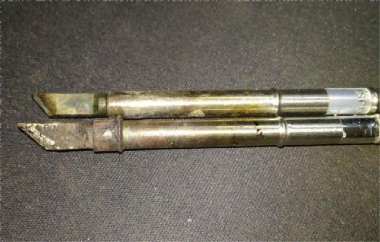
The topic of swapping tips on an all-in-one soldering iron has always attracted attention, but when people see that it requires something like ZVS high-frequency heating or a gas torch, they immediately back off. If you don't have either of these and have always wanted to change the tip of your T12, the best method is to enlarge the 936 tip, then grind down a section of the T12 tip, and simply slide it on. It will work. However, the downside is that the exposed copper inside will oxidize heavily. What should you do at this point? You can try using copper solder. If you're interested, check out this article.
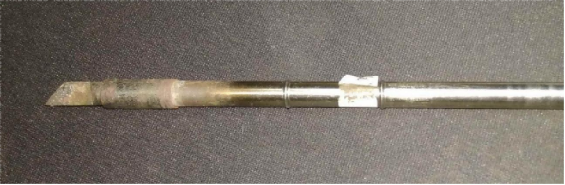
The fitted tip looks like the picture above.
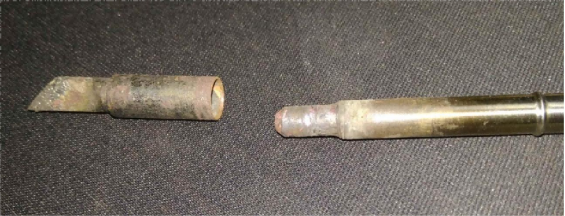
As shown above, the inside is already heavily oxidized, and if left like this, it will become even less durable.
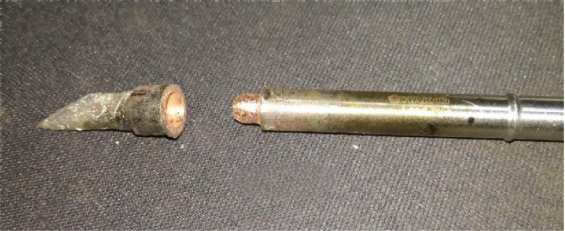
In that case, you can cut and grind the tip again, and use another T12 body to grind a section for a mating joint. This kind of interlocking joint is more secure and easier to handle.
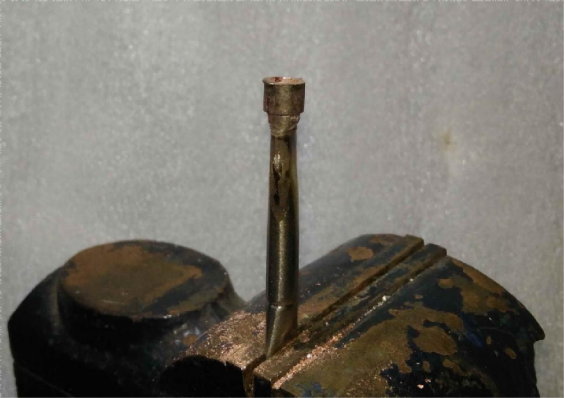
You need to put the ground tip into a short section of stainless steel tube. Why not just clamp the soldering iron tip directly with a vise? The reason is that clamping it directly will dissipate heat too quickly, which can cause the soldering to fail.
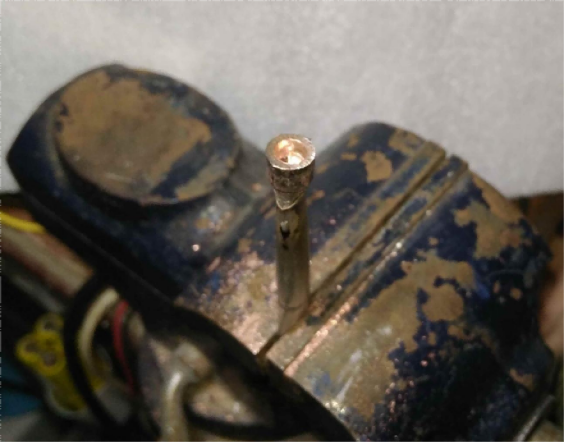
Next, you need to place a few small pieces of phosphor bronze solder into the little cavity of the tip.
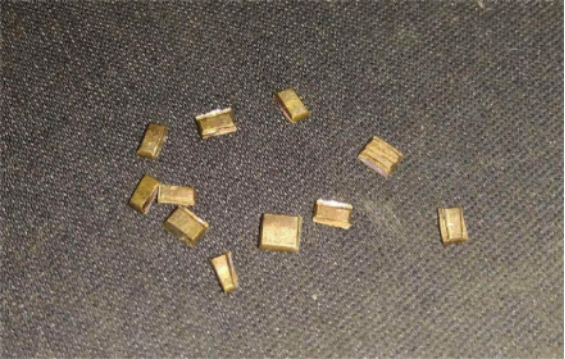
Before placing them, cut the phosphor bronze solder into small pieces, roughly 1x3 mm to 3x3 mm in size.
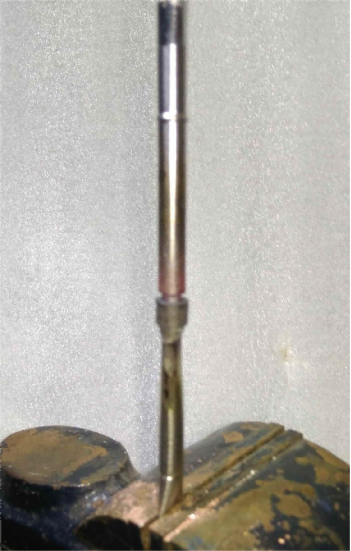
Then, insert the ground front end of the T12 into the cavity of the tip and power it on to heat. The power supply should be set to a constant current of about 1.5A–2A, as shown in the picture above.
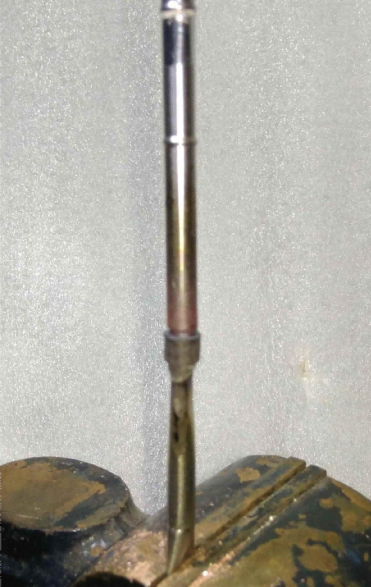
After powering on, the soldering iron body will slowly start to glow red. As shown above, a faint red color already appears.
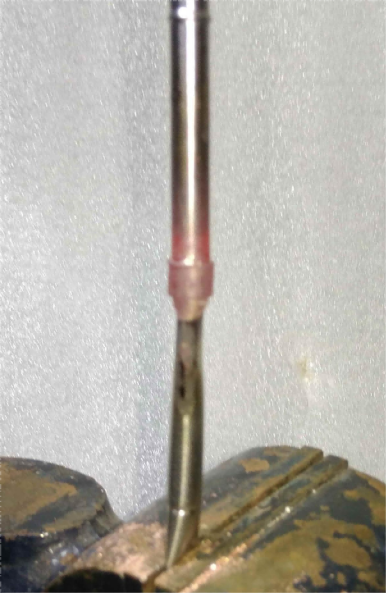
The glowing red soldering iron body will gradually heat up the tip as well. At this point, you can see the insulation effect of the short stainless steel tube. This piece of tube is also cut from a scrap T12. The phosphor bronze solder placed inside the tip will melt, and then you can gently push the T12 body downward while rotating it slightly left and right to squeeze out the excess solder.
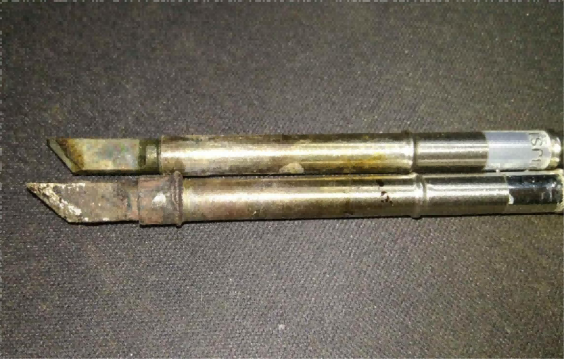
After cutting the power and letting it cool, the soldering is done. If the soldering is misaligned, you can reheat it until the solder melts again and adjust it to the correct position.
Done.


