
LG Display Cuts OLED Prices by 40%, Price War Looms


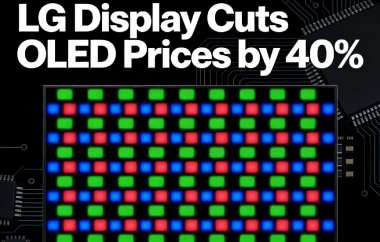
Industry sources say several TV brands have asked LG Display to supply a new "OLED Special Edition" (OLED SE) panel that could be priced up to 40% lower than current OLED models. The first shipments are expected in the first quarter of this year, with major customers such as Samsung Electronics and LG Electronics already lined up.
LG Display has begun mass production of key sizes including 55-inch panels and plans to expand the SE lineup to 48-, 77-, and 83-inch versions in the second quarter. The OLED SE is designed as a budget-friendly alternative, with pricing close to that of traditional LCD screens. It is roughly 30–40% cheaper than existing OLED panels, putting it in the same range as the mini-LED displays widely adopted by Chinese manufacturers.
To achieve the lower cost, some specifications have been adjusted. Peak brightness has been reduced from 2,000 nits to around 1,000 nits, and the polarizer layer—used to cut reflections and improve visibility—has been removed. Even with these changes, the panel retains OLED's signature "perfect black" performance, and its brightness still exceeds that of most LCD panels, which typically average 700–800 nits. This balanced approach allows LG Display to stay competitive on price while preserving the core advantages of OLED technology against pressure from low-cost LCD products.
The push for more affordable OLED screens is being driven by rising costs elsewhere in the TV bill of materials. The addition of AI features has increased the number of semiconductor components required, while prices for DRAM and NAND flash have surged—reportedly jumping as much as 90% in the first quarter compared with the previous quarter. Semiconductors usually account for about 15% of a TV's cost, but the recent hikes have pushed that share significantly higher. As a result, manufacturers are shifting their focus from hard-to-secure chips to reducing the price of displays, which represent a much larger portion of total expenses. LG Display is also said to be considering extending OLED SE production to the monitor market.
Observers expect the price pressure to spread beyond panels and into the broader home electronics sector. Manufacturers face the difficult task of passing higher costs on to consumers while competing with aggressively priced Chinese products, leaving little room for retail price increases.
Cost constraints are already affecting component choices in other categories. Smartphones, for example, often adopt camera modules and sensors from previous generations rather than the latest versions. One industry insider noted that even when companies initially plan to use all new parts, around 30% are frequently replaced with earlier models due to budget limits. Another source in the components field said that while no clients have formally requested price renegotiations yet, inflation in both memory and raw materials suggests downward pricing pressure could emerge as early as the first half of this year.
The challenge is that profitability across the sector is already thin. Whether producing components or finished appliances, operating margins are typically in the single digits. Last year, economic slowdown, weak consumer confidence, and U.S. tariffs pushed several businesses into losses. Samsung Electronics' DA/VD division, responsible for home appliances and TVs, reported a deficit of 200 billion won. LG Electronics' Home Appliance division achieved record revenue of 26.1 trillion won, yet its operating margin reached only 4.9%. Key component makers also faced tight returns, with operating margins of 8.1% at Samsung Electro-Mechanics and 3.03% at LG Innotek.
As costs continue to rise across the supply chain, the success of lower-priced OLED solutions like the SE series may play a crucial role in keeping next-generation displays within reach for both manufacturers and consumers.


