
How to Solder a Printed Circuit Board?


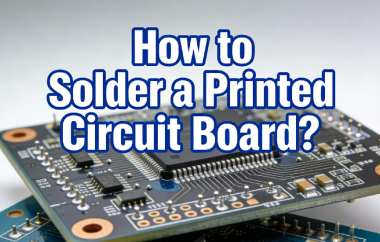
If there Soldering printed circuit boards plays a crucial role in the electronics manufacturing and repair industry, as it not only determines the reliability of electrical connections between components but also affects the overall performance and lifespan of the product. For electronics technicians and repair engineers, mastering the skills to solder and desolder printed circuit boards is a fundamental requirement, and whether in small-scale repairs or large-scale production, a scientific and standardized soldering process can significantly improve work efficiency and reduce the risk of damage. Therefore, understanding the structure of printed circuit boards and the soldering process is especially important for professionals in the field.
Catalog
I. What is a Printed Circuit Board?
II. The Structure of a Printed Circuit Board
III. How to Solder a Printed Circuit Board?
IV. Desoldering Techniques for Surface-Mount Integrated Circuits
V. Soldering Techniques for Surface-Mount Integrated Circuits
I. What is a Printed Circuit Board?
A printed circuit board, also known as a PCB, is the basic carrier that allows electronic components to achieve both electrical connections and mechanical support. It creates specific circuit functions by etching copper traces onto an insulating board and provides positions for mounting and soldering various electronic components. Printed circuit boards are widely used in computers, communication devices, consumer electronics, and industrial control equipment. Their function is not only to hold electronic components but also to enable signal transmission, power delivery, and information processing through the circuit design. As electronic products evolve toward higher density and miniaturization, the number of PCB layers, the complexity of the traces, and the diversity of component packaging types impose higher demands on soldering techniques.
II. The Structure of a Printed Circuit Board
A printed circuit board mainly consists of an insulating substrate, conductive copper traces, solder pads, vias, and a protective solder mask layer. Solder pads are important copper areas used to connect component pins, while vias provide interconnections between different layers of the PCB. The solder mask layer protects the traces from short circuits and oxidation. Components on the board can be classified as through-hole or surface-mount components, and surface-mount devices (SMDs) have densely packed, very small pins, which require higher soldering precision and temperature control, often necessitating specialized tools or automated soldering equipment for reliable connections. With the development of surface-mount technology, high-density PCBs have become the industry standard, making the ability to solder surface-mount components a core skill for electronics manufacturing and repair professionals.
III. How to Solder a Printed Circuit Board?
1. For dual in-line package (DIP) integrated circuits, two soldering irons can be used simultaneously to heat both rows of pins at the same time for removal.
2. For through-hole components that need to be soldered next, solder will inevitably remain in the holes, potentially blocking them, and a solder sucker is generally used to clear the leftover solder.
3. If the integrated circuit is determined to be damaged and needs replacement, a sharp knife can be used to cut the IC pins, and the remaining pins on the PCB can be cleaned using a soldering iron.
4. During the desoldering of integrated circuits, tweezers and magnifying glasses are indispensable, as it is not possible to perform this work with the naked eye alone.
5. A hot air gun is very convenient for soldering and desoldering surface-mount integrated circuits because it can heat the entire module evenly, allowing all solder points to reach the proper temperature and making removal successful.
6. There are other soldering and desoldering methods, such as those used for BGA integrated circuits, which are not easy to solder or remove and require specialized tools to complete.
IV. Desoldering Techniques for Surface-Mount Integrated Circuits
1. Before desoldering, carefully observe the position and orientation of the IC on the PCB and mark it to ensure it can be reinstalled correctly.
2. Use a small brush to clean any debris around the SMD component and then apply a small amount of rosin powder or rosin flux to the pins.
3. Adjust the hot air gun's temperature and airflow, typically setting the temperature to level 3–5 and the airflow to level 2–3.
4. When using a single nozzle, keep the nozzle perpendicular to the IC and move it around the pins to heat each pin evenly, ensuring the nozzle does not touch the IC or surrounding components, and the heating is accurate without affecting nearby parts.
5. Once all solder on the IC pins has melted, use tweezers to lift or remove the IC without applying excessive force, as this could easily damage the copper pads connected to the IC.
For technicians without a hot air station or hot air gun, the following method can be used to desolder SMD ICs: first, apply rosin to a row of pins and connect all the pins with solder, then heat the solder with a soldering iron. When the solder melts, insert a thin blade, such as a razor blade, between the PCB and the pins. Remove the soldering iron, wait a few seconds, and lift the blade, separating that row of pins from the PCB. Repeat the process for the remaining pins until the IC is fully removed.
V. Soldering Techniques for Surface-Mount Integrated Circuits
1. Use a soldering iron to level the solder points on the PCB, and if necessary, add solder to pads with insufficient solder. Clean the area around the pads with alcohol to remove any debris.
2. Align the IC with the solder positions on the PCB, then solder the four diagonal pins first to secure the IC, and apply rosin or sprinkle some rosin powder on the pins.
3. If using a hot air gun, heat the surrounding pins until the solder melts and the pins adhere to the pads, then remove the gun. If using a soldering iron, apply a small amount of solder to the iron tip and drag it along a row of pins so the solder connects each pin to the pad. If any pins are bridged by excess solder, use stranded copper wire to remove the extra solder, apply rosin, and reheat the area to separate the solder between pins.
4. After soldering, inspect all pins for short circuits or missed solder joints, using a magnifying glass or multimeter. If there are any missed joints, use a fine soldering iron tip to rework them. Finally, clean the surrounding area and pins with anhydrous alcohol to remove any residual rosin.
VI. Conclusion
Soldering and desoldering printed circuit boards are core skills in electronics manufacturing and repair, and whether using hand soldering or automated soldering, mastering the correct process, proper tool usage, heat management, and soldering order is essential to ensure high-quality connections. Surface-mount ICs require even more precision and patience, and applying these methods and techniques proficiently can not only improve work efficiency but also significantly reduce PCB damage and rework, thereby ensuring the performance and reliability of electronic products.


