
Are SMD Capacitors Ceramic Capacitors?


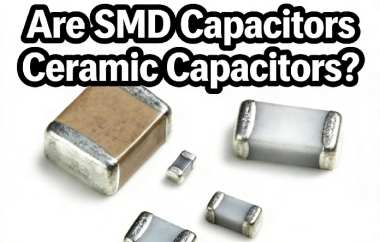
In modern electronic component design, capacitors are one of the key passive components. As electronic products move toward higher performance and miniaturization, surface mount capacitors (SMCs) have become an essential component in circuit design. Surface mount capacitors not only have advantages in size and mounting over traditional capacitors but also meet the performance requirements of high-speed digital circuits and high-frequency signal filtering. This article provides an in-depth analysis of whether surface mount capacitors are the same as ceramic capacitors, covering their definition, manufacturing process, characteristics, applications, and market trends.
Catalog
I. Are Surface Mount Capacitors Ceramic Capacitors?
II. Manufacturing Process & Features of SMD Capacitors
III. Characteristics of SMD Capacitors
IV. Applications and Market Outlook
I. Are Surface Mount Capacitors Ceramic Capacitors?
Surface mount capacitors do not solely refer to ceramic capacitors; they are a type of packaging form. Ceramic capacitors are capacitors that use ceramic as the dielectric and metal plates as electrodes. Their main characteristics include small size, good high-temperature stability, and strong high-frequency response.
In practical applications, surface mount capacitors can be made from various dielectric materials, including ceramic, tantalum, and aluminum electrolytic. Only surface mount capacitors that use ceramic as the dielectric can be called ceramic surface mount capacitors (MLCCs). Therefore, it can be said that ceramic surface mount capacitors are a typical form of surface mount capacitors, but surface mount capacitors are not equivalent to ceramic capacitors. This distinction helps clarify material properties and performance requirements during design and component selection.
II. Manufacturing Process & Features of SMD Capacitors
Surface mount capacitors are generally produced using SMT (Surface Mount Technology) processes. Their production process includes substrate preparation, ceramic sheet pressing, cutting and shaping, mounting, and soldering. Specifically, the ceramic substrate and conductive materials are processed separately through pressing and cutting, after which electrodes are applied to the substrate surface and subsequent processes such as sintering and soldering are completed. This manufacturing approach ensures that surface mount capacitors have better reliability and stability.
III. Characteristics of SMD Capacitors
By combining packaging and material characteristics, surface mount capacitors offer multiple advantages in circuit design:
· Compact size: They are small in volume, saving PCB space and facilitating high-density integration.
· Excellent high-frequency performance: Ceramic surface mount capacitors have low ESR and low ESL, making them suitable for filtering and bypass applications and effectively suppressing high-frequency interference.
· High-temperature stability: Ceramic materials ensure stable long-term operation under high temperatures without significant drift.
· Low leakage current: Leakage remains low under high voltage and high temperature, improving system reliability.
· Suitable for automated production: Standardized packaging allows efficient SMT automated production with high throughput and low error.
· Material diversity: Besides ceramic, tantalum, electrolytic, or polymer materials can be used to meet various capacitance and electrical performance requirements.
IV. Applications and Market Outlook
Surface mount capacitors have a wide range of applications and have become one of the essential components in the electronics industry. They are widely used in high-end electronic devices, communication equipment, automotive electronics, and home appliances. Additionally, with the rapid development of LED lighting, new energy vehicles, and mobile terminals, the applications of surface mount capacitors continue to expand.
From a market perspective, multi-layer ceramic surface mount capacitors (MLCCs) are particularly favored by the global electronics manufacturing industry due to their balanced performance and cost. Statistics show that MLCCs are among the most widely produced capacitor types worldwide. With the rapid growth of 5G communications, automotive electronics (especially electric vehicles and ADAS systems), and IoT devices, the demand for surface mount capacitors—particularly high-reliability ceramic surface mount capacitors—continues to increase.
V. Conclusion
Surface mount capacitors are capacitors realized through SMT packaging, and their materials can vary, including ceramic, tantalum, and electrolytic types. Among them, ceramic surface mount capacitors are the most common, featuring high-temperature stability, strong frequency response, and compact size. Understanding the relationship between surface mount capacitors and ceramic capacitors helps designers, purchasers, and engineers choose the most suitable components for their applications. As electronic products continue to evolve toward miniaturization and high performance, surface mount capacitors will demonstrate their core value and broad market potential across more industries.


