
What Are Relay Failure Symptoms and How to Fix Them?


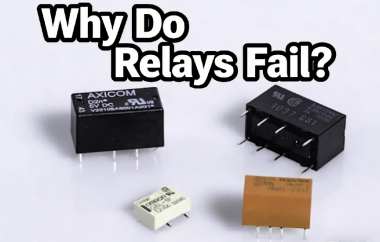
Relays are indispensable switching components in electronic circuits and automation control systems. They are widely used in industrial equipment, household appliances, automotive electronics, and intelligent control systems. Relays use low-power control signals to drive high-power loads, enabling circuit switching and electrical isolation. Over time, with changes in the environment and variations in manufacturing processes, relays can develop various faults. These faults can affect system stability and may even cause equipment damage or safety hazards. This article will provide a detailed introduction to the basic concept of relays, common fault symptoms, repair methods, and preventive measures.
Catalog
III. Preventive Measures for Relay Faults
I. What is a Relay?
A relay is an electrical switching device that operates based on the principle of electromagnetic induction. It mainly consists of a coil, an iron core, contacts, and a casing. When the coil is energized, it generates a magnetic field that closes or opens the contacts, thereby controlling the circuit. Relay types include electromagnetic relays, solid-state relays, and time-delay relays. Among these, electromagnetic relays are the most common, featuring a simple structure, low cost, and ease of maintenance. The primary function of a relay is to provide safe and reliable control and isolation between low-power control signals and high-power loads.
II. Relay Fault Symptoms
Common relay faults mainly manifest in three ways: no current output, abnormal output, and overheating.
1. No Current Output
No current output is one of the most common relay faults. In this case, even though the relay is powered, there is no current at the output terminals, and the load cannot operate normally. Causes of this fault may include a damaged coil, poor contact, or soldering issues.
To address this problem, the following repair methods can be used: First, use a multimeter to check the relay coil for open circuits or poor connections. If the coil is damaged, the relay should be replaced. Second, clean the contact surfaces to remove oxidation or minor soldering residue, restoring normal operation of the contacts. Finally, check whether the supply voltage matches the rated requirements and ensure stable power delivery.
2. Abnormal Output
Abnormal output occurs when the relay operates inconsistently, with irregular current or unusual load response. This is usually caused by worn contacts, loose contacts, or damaged coil insulation. Abnormal relay output may result in intermittent start or stop of equipment, causing instability in production or control systems.
Repair methods include: if the contacts are severely worn or loose, replace the relay contacts, ensuring that the new contacts match the original model and specifications. Use an insulation resistance tester to check the coil's insulation performance. If the insulation is damaged, replace the coil or the entire relay. Additionally, inspect the relay's mechanical structure to ensure that the springs and iron core components function properly.
3. Overheating
Relays may overheat during operation, which can affect performance and even create safety hazards. The main causes of overheating include excessive load, high surrounding temperatures, or poor coil insulation.
To address overheating, the following measures can be taken: reduce the load to ensure the operating current is within the relay's rated range. Improve ventilation around the relay or adjust its installation position to lower the temperature. At the same time, check the coil insulation. If the insulation is inadequate, replace the relay promptly.
III. Preventive Measures for Relay Faults
To extend relay lifespan and reduce the likelihood of faults, the following measures can be implemented:
1. Regular Maintenance: Clean the contacts periodically, check circuit connections, and monitor for signs of overheating or damage around the relay.
2. Proper Design: Ensure that the relay load does not exceed its rated capacity during circuit design to avoid overload operation.
3. Correct Usage: Avoid excessive switching operations to reduce wear and energy loss.
4. Environmental Control: Keep the relay's surroundings dry and clean, maintaining appropriate temperature and humidity levels.
5. Choosing High-Quality Relays: Use relays from reliable suppliers and avoid low-quality products to reduce fault occurrence from the source.
IV. Conclusion
As a core control component in electronic systems, the stability of relays directly impacts equipment safety and reliability. Common faults include no current output, abnormal output, and overheating. Corresponding repair methods cover coil testing, contact cleaning or replacement, load adjustment, and improved heat dissipation. Implementing preventive measures such as regular maintenance, proper circuit design, correct usage, and selecting high-quality relays can significantly reduce the occurrence of relay faults and enhance overall system reliability and lifespan.


