
DIY 50Ah High-Capacity Power Bank


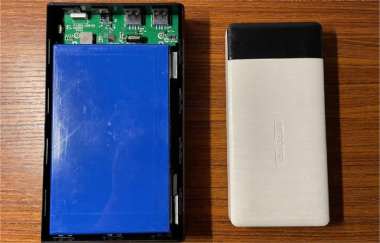
If someone is interested in DIY power banks, they might want to check out the content of this article.
If someone owns a 20,000mAh power bank that has been used for over two years, they may often experience situations where 20% of the battery suddenly drops to 0%, or the charge jumps to 30% after only a few minutes of charging. In such cases, they can follow this article to DIY a power bank themselves.
One needs to use a CATL 50Ah large single-cell battery to assemble the power bank. The cell, along with the casing kit, supports batteries of 1489827mm (basically the maximum size for a 50Ah cell). The black casing is prone to fingerprints, as shown in the image below.
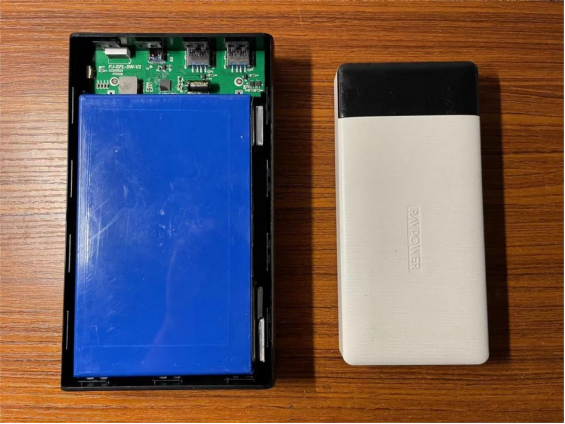
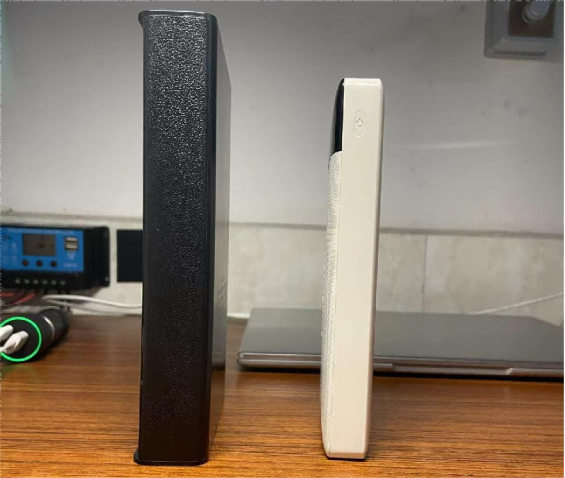
Since it is a single lithium battery and the battery compartment is made of insulating material, the cell can be fixed directly using three layers of 3M double-sided tape. Note: once the top cover is snapped on, it is very difficult to open it again.
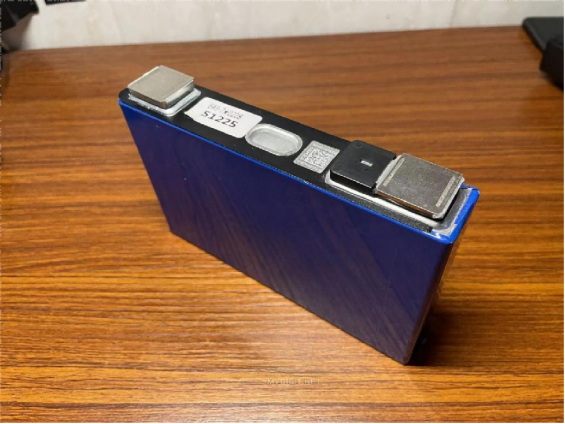
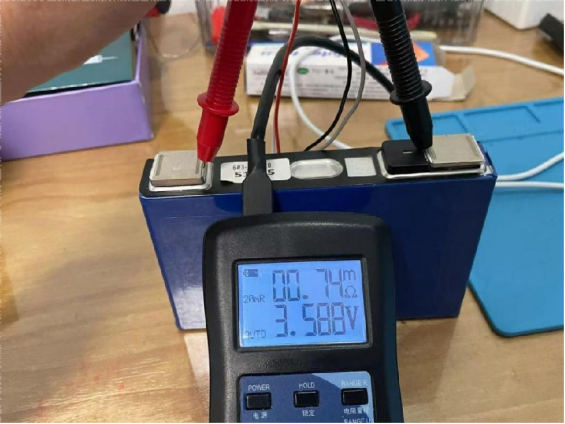
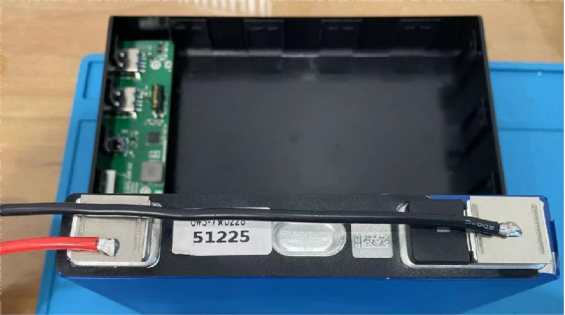
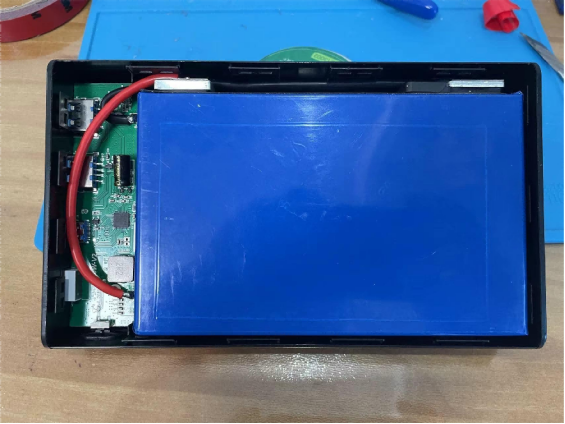
The power bank casing kit does not have many interface options. Considering that the charging frequency may not be very high, it only includes a Type-C fast charge input port, and does not provide Micro-USB or Lightning inputs. Therefore, when fully charged, it can charge a phone approximately 10–15 times. The IP5328 fast charge chip supports a maximum of only 22.5W fast charging, which is sufficient for normal use.
Without a Type-C coulomb meter on hand, the PD charger socket shows a power of 22W. Using USB input, a USB meter displays 9.1V 2.1A. When charging an iPhone 12, the USB meter shows 5V 1.75A on the output.
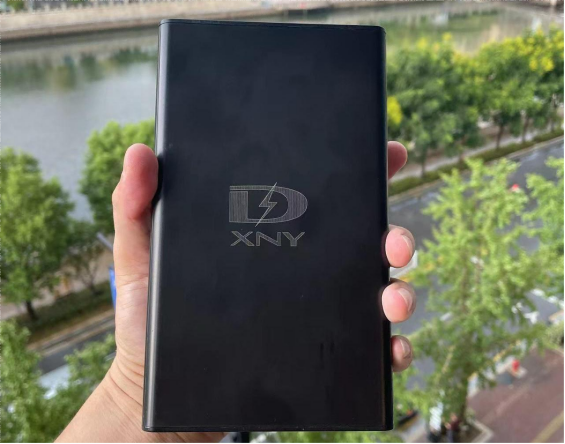
Finished.


