
What Are the Four Main Types of Chip Inductors?


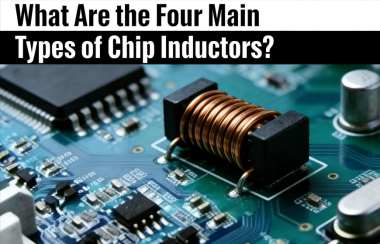
As electronic products continue to evolve toward miniaturization, high frequency, and high integration, chip inductors have become one of the key passive components in circuit design. In consumer electronics, communication equipment, power management, and automotive electronics, engineers are often concerned with questions such as: what are the differences between various types of chip inductors? Which type is more suitable for high-frequency or high-current applications? How can performance and cost be balanced? Currently, chip inductors are mainly divided into four types: wire-wound, multilayer, thin-film, and woven, among which wire-wound and multilayer types are the most widely used.
Definition
A chip inductor is a miniaturized inductive component that is directly mounted on a PCB using surface mount technology (SMT). Its primary functions include energy storage, filtering, choking, and impedance matching. Based on manufacturing processes and structures, chip inductors can be classified into wire-wound, multilayer, thin-film, and woven types, each offering different electrical characteristics and application suitability.
Working Principle
The basic working principle of a chip inductor is based on electromagnetic induction. When current flows through a conductor (such as a coil or conductive layer), it generates a magnetic field. When the current changes, the magnetic field also changes, inducing an էլectromotive force that resists changes in current. Although different types of chip inductors vary in structure, they all fundamentally rely on optimizing conductor paths and magnetic materials to control inductance, quality factor (Q), and frequency characteristics to meet various circuit requirements.
Characteristics and Advantages
Wire-wound chip inductors are miniaturized versions of traditional wound inductors. They offer a wide inductance range (from microhenries to henries), high accuracy, high Q factor, low loss, and high current capability. Their manufacturing process is mature, simple, and cost-effective. These inductors perform well in high-frequency circuits and are commonly used in power and RF modules. However, their structure limits further miniaturization.
Multilayer chip inductors are manufactured using multilayer printing and lamination processes. They feature small size, good magnetic shielding, integrated structure, and high reliability. Their closed magnetic path minimizes interference with surrounding components, making them ideal for high-density circuit designs and automated SMT assembly. However, they typically have lower inductance values, lower Q factors, higher costs, and lower production yields.
Thin-film chip inductors are designed for high-frequency and microwave applications. They offer high precision, high stability, and maintain a high Q factor at high frequencies. Their internal electrode structure ensures concentrated magnetic fields, reducing parameter variation after mounting. They exhibit excellent performance above 100 MHz and are widely used in RF and communication modules.
Woven chip inductors provide relatively high inductance per unit volume at around 1 MHz. They are compact and easy to integrate, making them suitable for power processing micro magnetic components and specific power circuit designs.
Applications
In practical applications, different types of chip inductors serve different purposes. Wire-wound inductors are widely used in power management, filtering, and DC-DC converters. Multilayer inductors are commonly found in smartphones, wearable devices, and high-density PCB designs. Thin-film inductors are used in RF communication, microwave circuits, and high-speed signal processing. Woven inductors are mainly applied in compact power modules and power processing circuits. With the rapid growth of 5G, automotive electronics, and AI hardware, the demand for high-frequency and high-reliability inductors continues to increase.
Conclusion
Overall, chip inductors are evolving toward higher frequency, smaller size, and greater reliability. Wire-wound and multilayer types remain the mainstream in the market, while thin-film and woven types play important roles in specialized and high-end applications. In practical selection, engineers must consider inductance value, frequency performance, current handling capability, and cost to achieve the optimal balance. With ongoing advancements in materials and manufacturing technologies, chip inductors will play an increasingly critical role in future electronic systems.


