
DIY Build a Mini Portable Card-Style Bluetooth Amplifier


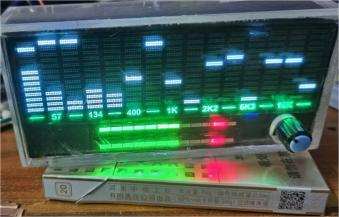
If you are interested in building a DIY card-style Bluetooth amplifier, you might want to take a look at this article. Here is the production process to share with you. If you want the appearance to be more attractive and eye-catching, you can integrate a level meter and a spectrum analyzer into the design:
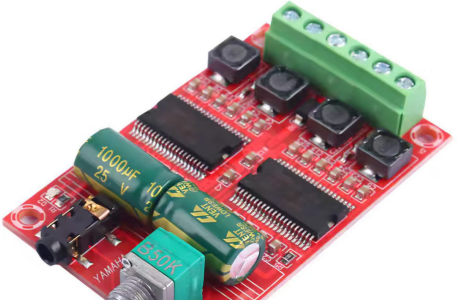
If you happen to have a Yamaha YDA-138 amplifier board, its output power is close to 30W:
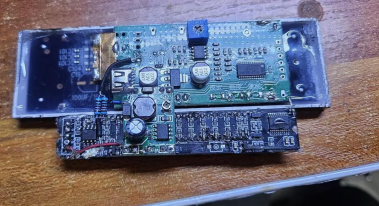
First, you need to assemble the level meter and the spectrum analyzer together, and then add a 5V voltage regulator board to the spectrum analyzer. The level meter requires a 12V power supply, while the spectrum analyzer operates at 5V:
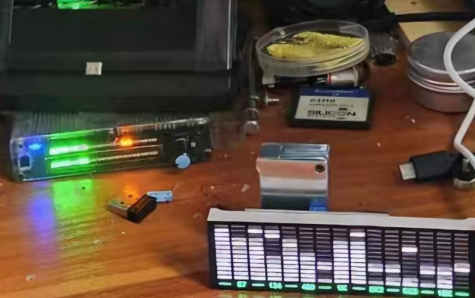
You can first connect an audio source to test the effect.
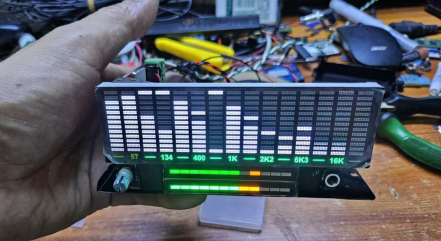
Then, you can install a button control board on the side and connect it with flying wires, which will make it convenient for you to adjust the modes, brightness, and response speed of the two boards later:
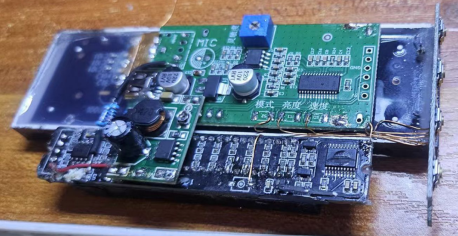
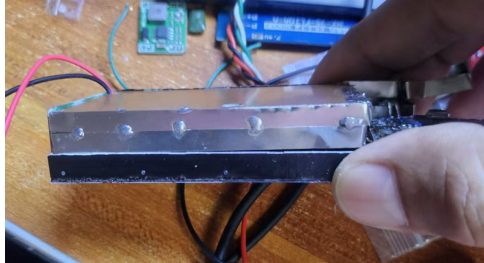
To prevent pulse interference between these two modules, you can add a ring of nickel strips around them for shielding:
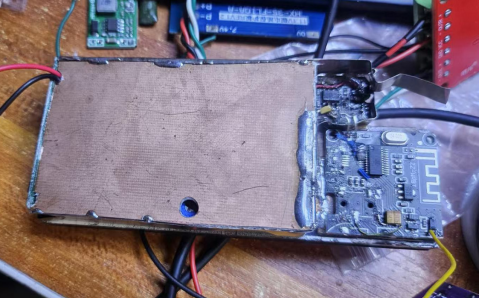
After installing the Bluetooth receiver board, you should also add a copper-clad board behind the display for shielding:
You also need to wrap the volume potentiometer with a layer of nickel strip:
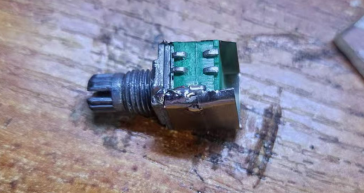
You can install an AUX auxiliary input jack and a potentiometer. Although the auxiliary input is rarely used, it is still recommended that you include it just in case:
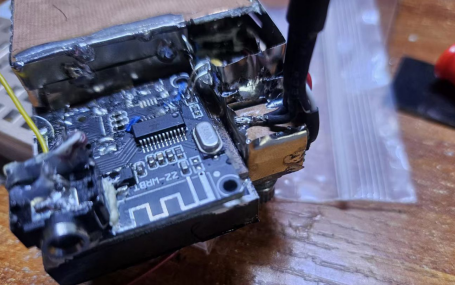
After making the front panel with acrylic, you should connect all the wiring and test the device, making sure to distinguish and properly connect the left and right audio channels:
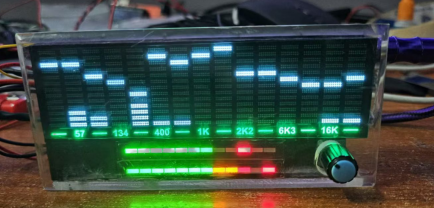
After installing the amplifier board, you can use multiple nickel strips to connect the amplifier board and the display enclosure to create a large-area grounding, which helps improve shielding performance. You should also provide proper shielding for the audio source section:
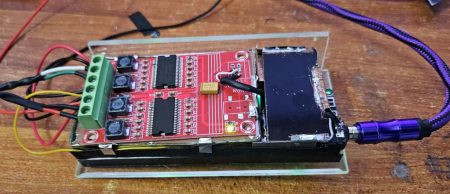
Then, you need to install a heatsink on the amplifier IC. You should remove the original connector on the amplifier board and replace it with a dual-row Dupont connector, which will make it easier for you to create different configurations in the future. If you plan to use it outdoors, you can consider installing it on an electric vehicle so that you can listen to music anytime:
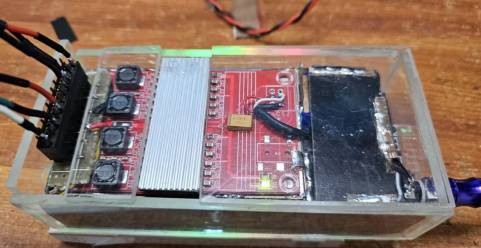
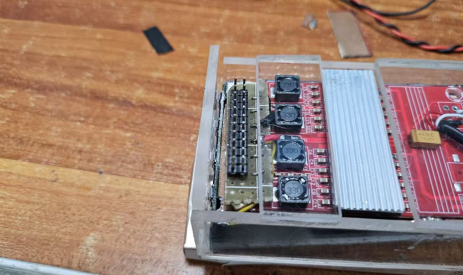
This is the final result after sealing the acrylic enclosure:
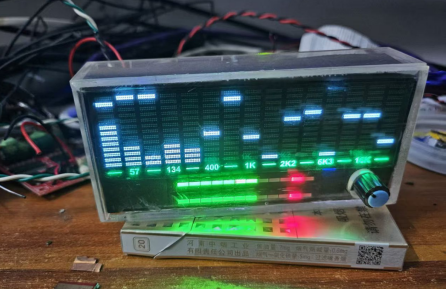
Alright, this is the final product, and the project is complete.


