
AT27C020-90PU: Features, Specs & More


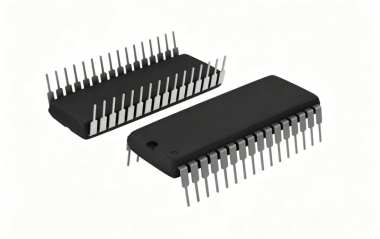
The Microchip AT27C020-90PU is a 2Mbit parallel EPROM memory integrated circuit. In this comprehensive article, we'll delve into the intricacies of the AT27C020-90PU, uncovering its definition, key features, specifications, applications, and a closer look at its manufacturer.
Catalog
AT27C020-90PU’s Overview
The Microchip AT27C020-90PU is a high-performance non-volatile EPROM memory device designed for embedded systems and industrial electronics. It is widely used in applications that require reliable data retention without power dependency.
This memory chip is built using EPROM OTP technology. It offers stable performance in harsh operating environments. It is commonly selected for firmware storage and legacy system design support.
Engineers value this device for its predictable read performance and long-term data integrity.
Key Features
Let's delve into the standout features that make the AT27C020-90PU a standout in the world of electronics:
The Microchip AT27C020-90PU offers several important advantages for embedded design engineers.
It provides 2Mbit storage capacity for firmware and program code.
It uses EPROM technology for non-volatile data retention.
It supports parallel memory interface for fast data access.
It delivers 90ns access time for responsive read performance.
It operates under a 4.5V to 5.5V supply voltage range.
It ensures stable performance in industrial temperature conditions.
It is packaged in a standard 32-DIP through-hole format.
Specifications
Now, let's take a closer look at the technical specifications that define the capabilities of the AT27C020-90PU:
Type | Parameter |
Memory Type | Non-Volatile |
Memory Format | EPROM |
Technology | EPROM - OTP |
Memory Size | 2Mbit |
Memory Organization | 256K x 8 |
Memory Interface | Parallel |
Access Time | 90 ns |
Voltage - Supply | 4.5V ~ 5.5V |
Operating Temperature | -40°C ~ 85°C (TC) |
Mounting Type | Through Hole |
Package / Case | 32-DIP (0.600", 15.24mm) |
Supplier Device Package | 32-PDIP |
Base Product Number | AT27C020 |
Applications
The Microchip AT27C020-90PU is used in a wide range of electronic systems.
It is commonly used in embedded firmware storage systems.
It is used in industrial control equipment for program memory.
It supports automotive electronic control modules.
It is used in legacy computing and retro hardware systems.
It is applied in communication devices requiring stable code storage.
It is used in consumer electronics for embedded logic functions.
Its non-volatile nature makes it ideal for long-term data retention applications.
AT27C020-90PU’s Manufacturer
Microchip Technology, a global leader in the semiconductor industry, stands at the forefront of innovation, consistently pushing the boundaries of technology to create solutions that power the interconnected world. With a rich history dating back to 1989, Microchip has become synonymous with cutting-edge microcontroller and analog products. Renowned for its commitment to quality, reliability, and customer satisfaction, the company offers a comprehensive portfolio of integrated circuits and embedded solutions. Microchip's diverse range of products caters to a wide array of industries, including automotive, industrial, consumer electronics, and healthcare.
Conclusion
The Microchip AT27C020-90PU remains a reliable EPROM memory solution for engineers working with embedded systems and industrial electronics.
Its combination of 2Mbit storage capacity, 90ns access time, and robust EPROM architecture ensures dependable performance in demanding environments.
For designers requiring stable firmware storage with long-term data integrity, this device continues to be a trusted choice in legacy and industrial applications.


