
What Are the Working Principles and Advantages of Transformers?


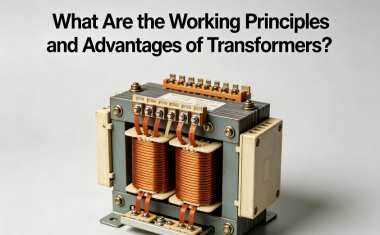
In the electronic components industry, transformers are one of the indispensable foundational core devices. As an important equipment for power transmission and voltage regulation, transformers are widely used in power transmission and distribution networks, industrial control systems, consumer electronic power supplies, and communication equipment. Their core value lies in efficiently and safely converting voltage levels, thereby meeting the diverse voltage and current requirements of different electrical devices. Against the backdrop of continuous optimization of the global energy structure and the increasing density of electronic devices, the importance of transformers continues to grow, making them a key component of the power electronics technology system.
I. What is a transformer?
A transformer is a static electrical device that operates based on the principle of electromagnetic induction. Its primary function is to step up or step down AC voltage without changing the frequency of electrical energy. A typical structure includes a magnetic core (magnetic circuit), primary winding, secondary winding, and an insulation system. Through different turns ratios, transformers can flexibly adjust the voltage relationship between input and output, thereby achieving efficient matching and distribution of electrical energy. In the electronic components industry, transformers are not only used in power systems but are also widely applied in switching power supplies, power adapters, and various electronic modules.
II. Working principle of transformers
The working principle of transformers is based on Faraday’s law of electromagnetic induction and magnetic coupling mechanisms. When alternating current is applied to the primary winding, an alternating magnetic flux is generated in the iron core. This flux propagates through the closed magnetic circuit and cuts through the secondary winding, thereby inducing an alternating electromotive force in the secondary coil. The process can be divided into several key stages:
First, the primary winding generates an alternating magnetic field under AC excitation, with its strength directly related to the current magnitude and the number of turns in the coil. Second, the magnetic flux is efficiently transferred through a high-permeability iron core, enabling energy coupling from the primary side to the secondary side. Then, according to the principle of electromagnetic induction, an induced voltage is generated in the secondary winding, the magnitude of which is closely related to the turns ratio between the primary and secondary windings. Finally, by connecting an external load, the secondary side delivers electrical power, achieving voltage conversion and energy transfer. This process ensures stable conversion between different voltage levels while maintaining a constant frequency.
III. Advantages of transformers
Transformers have multiple significant advantages in power and electronic systems. First, they provide highly efficient voltage conversion capability, enabling step-up transmission for long-distance power delivery and step-down conversion at the consumption end, significantly improving energy transmission efficiency. Second, in power conversion applications, transformers can provide stable and properly matched operating voltages for various electronic devices, such as industrial equipment, communication base stations, and consumer electronics, all of which rely on different types of transformers for power adaptation.
In addition, transformers perform exceptionally well in energy saving and loss reduction. By increasing transmission voltage, current can be reduced under the same power conditions, thereby reducing line resistance losses and improving overall energy efficiency. At the same time, their excellent electrical isolation characteristics allow safe separation between primary and secondary circuits, effectively reducing the risk of electric shock and enhancing system safety. Furthermore, modern transformer designs continuously optimize materials and structures, providing higher stability and longer service life, making them suitable for complex industrial environments.
IV. Conclusion
In summary, transformers, as key foundational devices in the electronic components industry, play an irreplaceable role in power transmission, voltage regulation, and electrical isolation. With the development of new energy, electric vehicles, and smart grids, the demand for high-efficiency and high-reliability transformers will continue to grow. In the future, transformer technology will continue to evolve toward high-frequency operation, miniaturization, and higher energy efficiency, maintaining its important role in the global electronics and power industry chain.


