
What Are the Functions and Working Principles of Optocouplers?


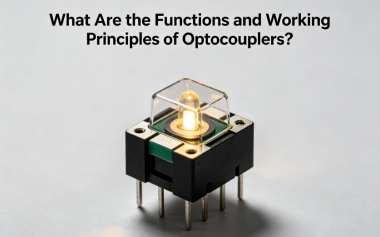
In the electronic components industry, the optocoupler (also known as an optical coupler or optoisolator) is a key device used to achieve electrical isolation and signal transmission. It is widely applied in switching power supplies, industrial control systems, communication equipment, and digital circuit interfaces. As the demand for high reliability and strong anti-interference design continues to increase, the importance of optocouplers in ensuring system safety and stability has become increasingly prominent. They play an irreplaceable role in signal isolation between high-voltage and low-voltage circuits. In particular, linear optocouplers are core components in precision power supply feedback and analog signal regulation.
I. What is an Optocoupler?
An optocoupler (Optocoupler), also known as a photoelectric coupler, is a semiconductor device that uses the principle of photoelectric conversion to achieve electrical isolation and signal transmission. It typically consists of a light-emitting diode (LED) and a photosensitive device such as a phototransistor, photodiode, or light-controlled thyristor, all encapsulated within the same package.
The basic operating principle is that the input electrical signal drives the LED to emit light. The optical signal then passes through the isolation medium and is received by the output-side photosensitive device, which converts it back into an electrical signal. This enables complete electrical isolation between input and output while transmitting signals. This structure allows optocouplers to safely transfer information between high-voltage and low-voltage circuits while preventing electrical interference and feedback risks.
II. Main Advantages of Optocouplers
The widespread application of optocouplers in electronic systems is mainly attributed to their following key advantages.
First, optocouplers provide complete electrical isolation between input and output, ensuring that the control side and load side do not interfere with each other. This fundamentally enhances system safety, especially in high-voltage control and industrial environments.
Second, optocouplers offer strong anti-interference capability, effectively suppressing common-mode noise and electromagnetic interference (EMI), thereby ensuring stable and reliable signal transmission.
In addition, optocouplers are contactless devices with no mechanical wear during operation, resulting in long service life and high reliability, making them suitable for long-term continuous operation in industrial equipment.
Furthermore, optocouplers support unidirectional signal transmission, effectively preventing reverse interference and improving system controllability and safety margins.
Finally, optocouplers offer high transmission efficiency, compact structure, and easy integration into modern high-density electronic designs.
III. Functions and Application Areas of Optocouplers
Optocouplers are widely used in electronic circuits, covering multiple areas from logic control to power systems.
In logic circuits, optocouplers can be used to construct reliable isolation logic structures. Compared with transistor-based solutions, they offer stronger anti-interference capability and are therefore commonly used in industrial control and automation systems.
In solid-state switching applications, optocouplers enable electrical isolation between control circuits and switching circuits, making it possible to control high-power systems with low-power signals. They are widely used in solid-state relay (SSR) designs.
In trigger circuits, optocouplers are used in bistable or trigger-type output configurations, effectively isolating the load side and improving system stability and resistance to electrical shock.
In pulse amplification and digital circuits, optocouplers can isolate and transmit pulse signals, ensuring signal integrity in high-frequency and complex electromagnetic environments.
In linear circuit applications, linear optocouplers are widely used in switching power supply feedback loops due to their relatively good linear response characteristics. By adjusting the control-side current, they regulate duty cycles to achieve precise voltage stabilization.
In addition, optocouplers are also commonly used in high-voltage control systems, long-distance signal transmission, communication interfaces, and A/D conversion circuits as key isolation and protection components.
IV. Selection Principles for Linear Optocouplers
In switching power supply and precision analog circuit design, the correct selection of linear optocouplers is critical to system performance. The following key factors should be considered.
First, the current transfer ratio (CTR) is a core parameter, typically recommended to be within the range of 50% to 200%. When CTR is below 50%, the LED requires higher driving current to operate properly, increasing power consumption and reducing efficiency. When CTR exceeds 200%, the system may experience false triggering during startup or sudden load changes, affecting output stability.
Second, linear optocouplers should be preferred because their CTR exhibits good linear adjustability within a certain range, making them more suitable for analog feedback and precision control applications.
Third, traditional switching-type optocouplers such as the 4N25, 4N26, and 4N35 series should be used with caution. These devices are primarily designed for digital signal transmission, have poor linearity, and are not suitable for switching power supply feedback control systems.
Finally, in practical design, additional parameters such as operating temperature range, response speed, isolation voltage, and long-term stability should also be considered comprehensively to ensure reliable operation under complex conditions.
V. Conclusion
In summary, optocouplers are essential components in electronic systems for achieving electrical isolation and signal transmission. They play an irreplaceable role in industrial control, power management, and communication systems. As electronic devices continue to evolve toward higher reliability and greater integration, the application scope of optocouplers continues to expand. In particular, linear optocouplers are becoming increasingly important in precision power supply feedback control. A proper understanding of their working principles, performance advantages, and selection criteria is essential for improving the overall stability and design quality of electronic systems.


