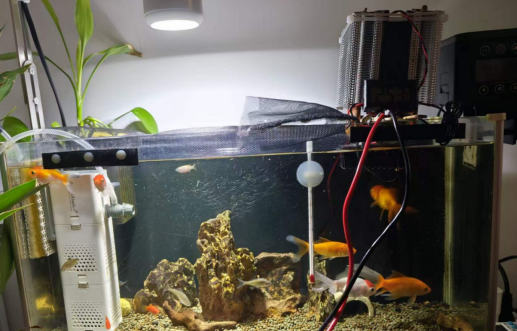
DIY Fish Tank Cooler: Thermoelectric Cooling System


If you are interested in a DIY aquarium cooler, you may want to take a look at this article.
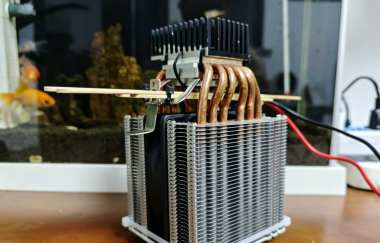
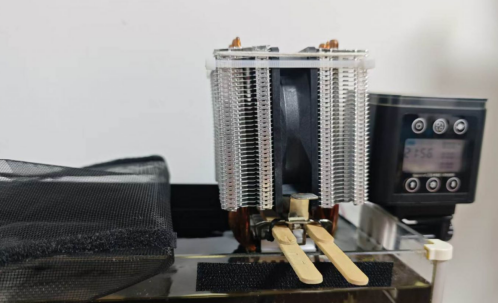
The aquarium cooler uses a 12706 thermoelectric module, a single piece rated at 72W. You connect a 6-heat-pipe CPU heatsink to the hot side, and an aluminum alloy heatsink to the cold side. A 9×9 cm fan is sandwiched between the two fin stacks. You secure everything with cable ties.
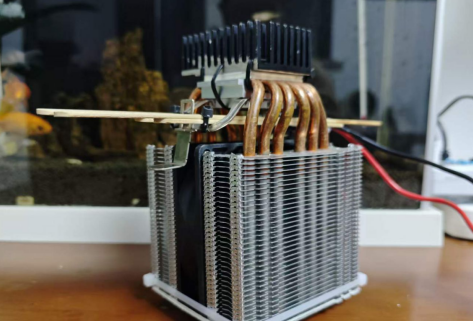
Ice cream sticks are used as the support structure.
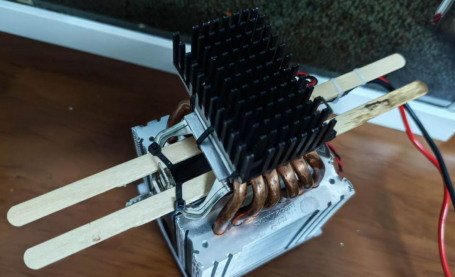
For a 60 cm aquarium, it fits perfectly as a stand. The cold-side heatsink is just immersed in the water.
A high-power power supply is essential.
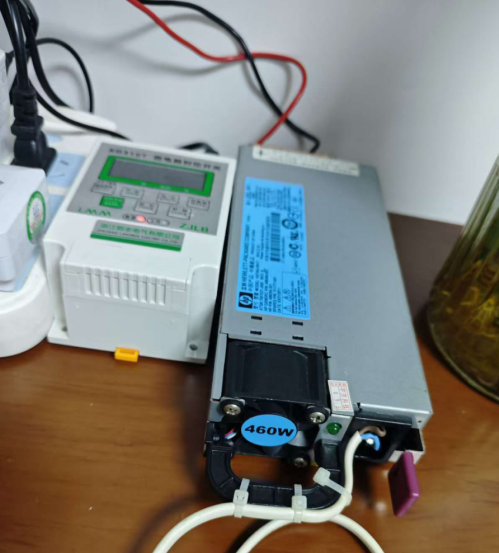
When you power it on, it runs at about 55 watts. The noise is slightly loud, and you may want to add a fan voltage regulator.
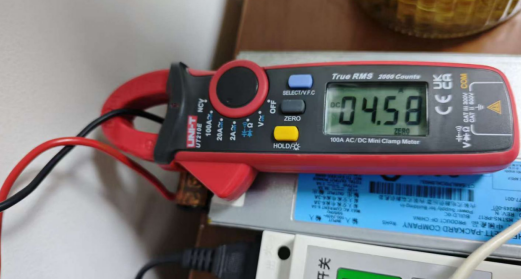
This is the temperature right after you put it into the water, which is basically room temperature.
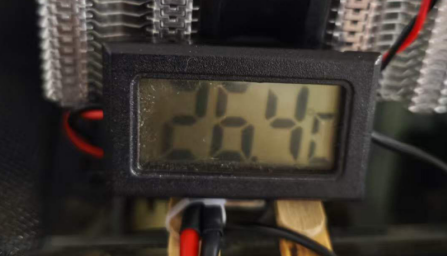
After 30 minutes of operation, the temperature looks pretty good.
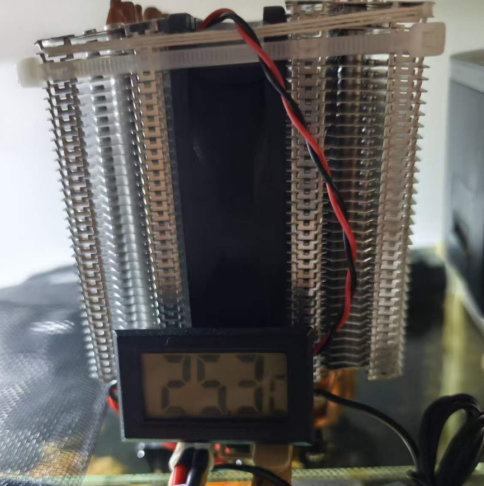
You eliminate the need for water pipes, which avoids energy loss and makes the system highly efficient. Most importantly, you don’t need to worry about water leakage.
The pump outlet can spray water onto the heatsink, allowing fast convection.
Since the temperature probe is located near the heatsink, the actual water temperature drop may not be as fast as it appears. You can try running it continuously when the room temperature reaches 30°C to test the final performance.