
What Is Transformer Parallel Operation?


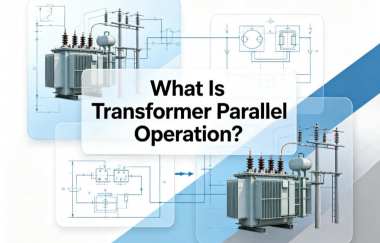
In modern power systems and industrial power networks, the continuous growth of electricity demand has made it difficult for a single transformer to meet the requirements of large-capacity and highly reliable power supply. Transformer parallel operation is a common operating method in power systems. It connects the primary and secondary sides of two or more transformers to the same power grid, allowing multiple units to share the power supply load and improve power capacity, operational stability, and system flexibility.
Transformer parallel operation is widely used in substations, industrial facilities, power distribution systems, and large-scale building power networks. Proper implementation of parallel operation can not only improve power supply reliability but also optimize equipment utilization and reduce operation and maintenance costs.
Catalog
I. What Is Transformer Parallel Operation
II. Reasons for Transformer Parallel Operation
III. Functions of Transformer Parallel Operation
IV. Implementation and Considerations of Transformer Parallel Operation
I. What Is Transformer Parallel Operation
Transformer parallel operation refers to the process of connecting two or more transformers to the same power source bus and load bus under certain technical conditions, allowing multiple transformers to operate simultaneously and jointly supply electrical energy to loads.
During parallel operation, each transformer shares the load according to its own capacity, impedance, and other parameters. When transformer parameters are properly matched, the system can operate stably. However, if the required conditions are not met, problems such as circulating current, uneven load distribution, or even equipment damage may occur.
Therefore, transformer parallel operation usually requires basic conditions such as the same rated voltage, identical transformation ratio, the same vector group, similar short-circuit impedance, and consistent phase relationships.
II. Reasons for Transformer Parallel Operation
1. Improving Power Supply Reliability
Operating multiple transformers in parallel can effectively reduce the impact of a single transformer failure on the power supply system. When one transformer fails or requires maintenance, other transformers operating in parallel can continue supplying part or all of the load, ensuring continuous power delivery.
For facilities with high requirements for power stability, such as hospitals, data centers, and industrial production lines, parallel operation provides a more reliable power supply solution.
2. Increasing Power Supply Capacity
As industrial production expands and the number of electrical devices increases, the capacity of an existing single transformer may no longer meet the load requirements. By adding more transformers and operating them in parallel, the total power supply capacity of the system can be increased to satisfy growing electricity demand.
Compared with a single large-capacity transformer, multiple medium-capacity transformers operating in parallel also provide greater flexibility in transportation, installation, and maintenance.
3. Optimizing Load Distribution
Multiple transformers operating in parallel can distribute electrical loads more efficiently according to actual power demand, allowing each unit to operate within a more efficient range. For example, during periods of low load demand, some transformers can be taken offline to reduce no-load losses. During peak demand periods, additional transformers can be activated to share the load.
4. Facilitating Equipment Maintenance and System Expansion
Parallel operation improves the scalability of power systems. When one transformer needs maintenance, inspection, or upgrading, other transformers can temporarily take over the power supply task, avoiding a complete shutdown of the power system.
In addition, as future power demand increases, new transformers can be added to expand the overall system capacity.
III. Functions of Transformer Parallel Operation
1. Enhancing Power System Stability
Multiple transformers sharing the load can reduce the operating pressure on individual units, minimizing issues such as overheating and insulation aging. This improves the overall stability and reliability of the power supply system.
2. Improving Equipment Utilization
By adjusting the number of transformers operating in parallel according to actual load conditions, equipment can operate within a more economical range, reducing energy waste and improving overall transformer efficiency.
3. Improving Power Quality
Transformer parallel operation can enhance voltage support capability, reduce voltage fluctuations caused by load changes, and improve power quality, ensuring stable operation of electronic equipment and industrial machinery.
4. Reducing Operating Costs
A properly designed parallel operation system can reduce the need for additional backup equipment while lowering equipment losses and maintenance pressure. Over long-term operation, it helps reduce the construction and operating costs of power systems.
IV. Implementation and Considerations of Transformer Parallel Operation
To achieve transformer parallel operation, circuit breakers, disconnect switches, and other electrical devices are used to connect multiple transformers to the same power source and load system. Before operation, it is necessary to confirm that all transformers meet the requirements for parallel operation.
First, the rated voltage and transformation ratio of each transformer should be consistent. Otherwise, excessive circulating current may occur, increasing power losses and affecting system stability. Second, the transformer vector groups must be identical to ensure that the secondary-side voltages have the same phase relationship. In addition, the short-circuit impedance values should be as close as possible; otherwise, uneven load distribution may occur, causing some transformers to become overloaded.
During actual operation, the following points should also be considered:
Strengthen Operation Monitoring.
The load, current, temperature, and operating conditions of each transformer should be monitored in real time to prevent individual units from operating under excessive load.
Improve Protection Configuration.
A transformer parallel operation system requires comprehensive relay protection. If one transformer fails, the faulty unit can be quickly isolated to protect the remaining transformers and maintain normal system operation.
Perform Regular Maintenance and Inspection.
Routine maintenance, including insulation testing, oil quality inspection, and connection checks, should be carried out according to operating requirements to ensure long-term stable transformer performance.
V. Conclusion
Transformer parallel operation is an important technology in modern power systems for improving power supply capacity and operational reliability. By allowing multiple transformers to share loads, this approach can effectively increase power capacity, optimize load distribution, improve equipment utilization, and enhance system flexibility.


