
What Are the Positive Electrode Materials for Supercapacitors?


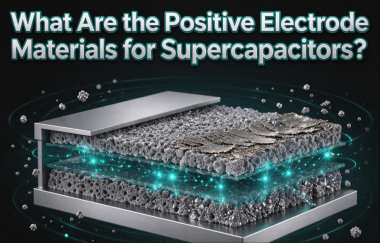
In the electronic components industry, supercapacitors are widely used in new energy vehicles, industrial equipment, and electronic products due to their fast charging and discharging capabilities, high power density, and long cycle life. Positive electrode materials are important factors affecting supercapacitor energy storage performance, directly influencing specific capacitance, rate capability, and cycle stability. Common positive electrode materials include carbon-based materials, metal oxides and hydroxides, conductive polymers, and composites.
Catalog
I. What Are Supercapacitor Positive Electrode Materials?
II. How Do Supercapacitors Work?
III. Supercapacitor Positive Electrode Materials and Their Characteristics
I. What Are Supercapacitor Positive Electrode Materials?
Supercapacitor positive electrode materials are active materials used in the positive electrode to participate in charge storage. Based on their energy storage mechanisms, they mainly involve two types: electric double-layer capacitance and pseudocapacitance. The former stores charge through the adsorption of electrolyte ions on the electrode surface, while the latter stores charge through fast and reversible redox reactions.
II. How Do Supercapacitors Work?
During charging, ions in the electrolyte move toward the positive and negative electrodes under the influence of an electric field, resulting in charge accumulation at the electrode surfaces. In electric double-layer capacitors, ions store charge primarily through interfacial adsorption. In pseudocapacitors, active materials store charge through fast and reversible redox reactions. During discharging, the stored electrical energy is released through an external circuit. The specific surface area, pore structure, and electrical conductivity of positive electrode materials affect ion transport efficiency and energy storage performance.
III. Supercapacitor Positive Electrode Materials and Their Characteristics
1. Carbon-Based Materials
Common materials include activated carbon, carbon nanotubes, and graphene, which primarily store charge through the electric double-layer mechanism. These materials generally feature a large specific surface area and good cycling stability. Carbon nanotubes and graphene also offer good electrical conductivity. However, some carbon-based materials have relatively limited specific capacitance.
2. Metal Oxides and Hydroxides
Common materials include ruthenium oxide (RuO₂), manganese dioxide (MnO₂), and nickel- and cobalt-based oxides and hydroxides. These materials offer high pseudocapacitance potential, but some have limitations such as low electrical conductivity, high cost, or insufficient cycling stability.
3. Conductive Polymer Materials
Common materials include polypyrrole (PPy) and polyaniline (PANI). They primarily achieve pseudocapacitive energy storage through reversible redox reactions and offer high specific capacitance and good processability. However, repeated charging and discharging may cause volume changes and structural degradation.
4. Composite Materials
Common types include carbon/metal oxide composites and carbon/conductive polymer composites. By combining the advantages of different materials, these composites can improve electrode conductivity, charge storage capacity, and cycling stability.
IV. Conclusion
Supercapacitor positive electrode materials mainly include carbon-based materials, metal oxides and hydroxides, conductive polymers, and composites. Each type offers different advantages in terms of specific capacitance, electrical conductivity, cost, and cycle life. In practical applications, material selection should consider energy storage requirements, electrolyte type, and operating conditions to achieve a balance between performance and cost.


