
Why Crystal Oscillators Fail to Start?


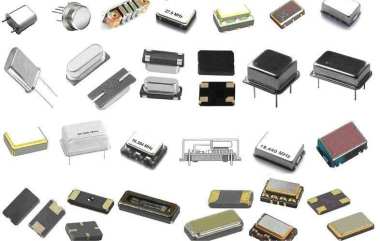
In the field of electronic design and manufacturing, crystal oscillators (commonly called crystals or XOs) are a core component of circuits, and their stability directly affects the reliability of the entire system. However, in practical applications, engineers often encounter crystal failures or situations where the crystal simply won't start oscillating. This article dives into several common crystal failure causes based on industry experience and offers practical solutions.
Catalog
I. What is a Crystal Oscillator?
II. 6 Common Crystal Oscillation Issues & Fixes
I. What is a Crystal Oscillator?
A crystal oscillator is an electronic component that uses the piezoelectric effect of quartz to generate a stable frequency. It's widely used as a clock source in microprocessors, communication modules, and various digital circuits. At its core, it consists of a quartz wafer precisely cut and packaged with electrodes to achieve high-frequency vibration.
II. 6 Common Crystal Oscillation Issues & Fixes
Generally, the causes of a crystal failing to start can be summarized as follows:
1. Crystal Wafer Breakage
The crystal wafer is made of silicon dioxide, similar to glass, which is brittle and fragile. Strong impacts, drops, vibrations (like ultrasound), or rapid temperature changes can cause cracking or breaking.
Solution: Physical damage to the wafer is irreversible, so strict screening at the production stage is essential. Reinforce packaging during transport and strictly follow a “drop = scrap” policy to prevent potential issues from reaching the production line.
2. Conductive Glue Failure
The conductive glue connects the electrodes to the pins electrically. Poor-quality or aged glue can become brittle, causing intermittent open circuits, which show up as sporadic oscillation.
Solution: Use high-reliability imported conductive glue for crystal products to ensure stable connections from the material source.
3. Excessive Resistance
During long-term storage or if the sealing is insufficient, moisture and impurities can attach to the crystal surface, increasing the equivalent resistance and preventing sufficient drive current for oscillation. For example, 49U packages, which have larger internal space, are more prone to contamination.
Solution: Prefer smaller package sizes and shorten storage times. Choose crystals with nitrogen-filled sealing to maintain internal cleanliness and vacuum conditions.
4. Hidden Electrode Contamination
Dust and oil from the soldering environment can accumulate on the electrode surface, causing drift in electrical parameters. The risk increases significantly if workbenches are not regularly cleaned.
Solution: Implement daily post-shift cleaning routines using lint-free cloths and specialized alcohol wipes, supervised by management.
5. Base Breakage
If the ceramic or plastic base is subjected to mechanical stress (like PCB bending during mounting) or accidental pressure, the stress can transfer to the internal crystal and cause it to crack.
Solution: Preheat PCBs before mounting to reduce thermal stress. Handle and store components gently, and scrap any dropped units.
6. Improper Soldering
High-temperature soldering or prolonged heating can damage the crystal's silver layer or exceed resistance limits. For example, when soldering cylindrical crystal pins, heating above 300°C or for more than 5 seconds can damage the glass sealing.
Solution: Limit soldering to at least 1.0mm from the base of the pin, keep the soldering iron below 300°C, and heat for less than 5 seconds. Avoid pulling on the pins to prevent the glass-fiber base from cracking.
III. Conclusion
Crystal failures are often caused by small oversights. From material selection to process control, building quality awareness throughout the supply chain is essential. By standardizing storage conditions, optimizing soldering parameters, and strengthening production management, the reliability of a circuit's clock system can be significantly improved. For high-demand applications, it's recommended to work with suppliers that provide vacuum nitrogen-filling processes and full inspection systems to fundamentally reduce failure rates.


