
Intel 2025 Foundry Revenue Only $120M, 0.1% of TSMC


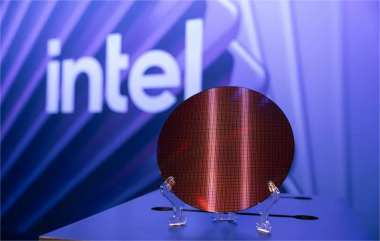
According to the latest forecast shared by semiconductor analyst Sravan Kundojjala from SemiAnalysis, Intel's foundry revenue is projected to reach only about $120 million in 2025, a figure that reportedly includes only contributions from external foundry customers. In comparison, TSMC's revenue over the same period is expected to be roughly 1,000 times higher, with the company already reporting around $101 billion in revenue during the first ten months of this year.
This modest revenue figure underscores the steep challenges Intel faces in its foundry business, especially given the massive capital investments the company has made to develop its advanced Intel 18A process technology.
Although the Intel 18A node has not yet gained strong adoption among external customers, the company hopes that success in its own product lines—such as the Panther Lake (3rd Gen Core Ultra) and Clearwater Forest (Xeon 6+) processors, both manufactured on the Intel 18A node—will demonstrate its capabilities and attract new clients.
Kundojjala believes that despite the limited external revenue contribution, Intel Foundry Services (IFS) could reach break-even by the end of 2027. This improvement is expected to come as Intel transitions more of its internal chip production from DUV to EUV lithography. With EUV penetration forecast to rise significantly from just 5% in FY2024, the company expects wafer average selling prices to grow about three times faster than costs, helping narrow losses.
Under CEO Pat Gelsinger's leadership, Intel has been undergoing broad structural changes across its businesses—from foundry operations to client computing and AI platforms—showing a clear push toward long-term transformation. The company has also secured multi-billion-dollar investments from the U.S. government, SoftBank, and NVIDIA, with the latter expanding cooperation with Intel in both PC and server chip segments.
Still, Intel's path forward in the foundry space remains challenging. The company must first prove the performance and efficiency of its Intel 18A node through internal success before it can win broader industry trust. Major tech firms including Tesla, Broadcom, and Microsoft are reportedly evaluating Intel's upcoming 18A production and the next-generation Intel 14A process node, which has been redesigned specifically for foundry customers. These partnerships could be pivotal in determining whether Intel can reestablish its position in the global semiconductor manufacturing landscape.


