
RTD vs Thermocouple: What's the Difference?


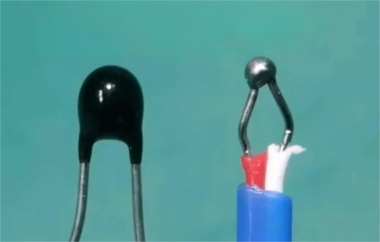
Temperature measurement plays a crucial role in many fields, including industrial automation, energy and power, and scientific research. Among the various temperature sensors, thermocouples and resistance temperature detectors (RTDs) are the most well-known due to their wide range of applications. Although both are used to measure temperature, they are based on different physical principles and have unique performance characteristics and suitable scenarios. Choosing the right temperature sensor not only ensures measurement accuracy but also improves system reliability and reduces costs. This article provides a comprehensive introduction to the definitions, operating principles, and key differences between thermocouples and RTDs.
Catalog
II. What is a Resistance Temperature Detector (RTD)?
III. Key Differences Between Thermocouples and RTDs
I. What is a Thermocouple?
A thermocouple is a temperature-sensing device that operates based on the Seebeck effect. It is made by joining two conductors or semiconductors of different materials to form a closed loop. When the two materials are connected at both ends and the connection points are at different temperatures, a voltage, known as a thermoelectric EMF, is generated in the loop. This physical phenomenon forms the theoretical basis of the thermocouple.
A thermocouple typically consists of two different metal wires welded at one end, which serves as the measurement junction in contact with the medium being measured, while the other end serves as the reference junction connected to the measuring instrument. The thermoelectric voltage generated is proportional to the temperature difference between the measurement and reference ends. By measuring this voltage and applying reference junction compensation, the temperature of the measured point can be determined. Common types, such as K, S, and J, use different metal combinations to accommodate measurements ranging from low temperatures to high temperatures up to 1800°C.
II. What is a Resistance Temperature Detector (RTD)?
An RTD is a temperature sensor that works based on the resistance-temperature effect, where the electrical resistance of a metal changes with temperature. RTDs are usually made from pure metals, with platinum, copper, and nickel being the most common. Platinum RTDs, in particular, are widely used in industrial temperature measurement due to their high accuracy and excellent stability, and are also used as standard reference instruments.
The relationship between the resistance of an RTD and temperature can be approximately expressed mathematically. For metal RTDs, the formula is: Rt=Rt0[1+α(t−t0)] where Rt is the resistance at temperature ttt, Rt0R_{t0}Rt0 is the resistance at the reference temperature t0t_0t0, and α\alphaα is the temperature coefficient of resistance. Common RTD types include Pt100, Pt1000, and Cu50. For example, a Pt100 indicates a platinum RTD with a resistance of 100 ohms at 0°C.
III. Key Differences Between Thermocouples and RTDs
1. Operating Principle
Thermocouples operate based on the Seebeck effect, determining temperature by measuring the voltage generated from a temperature difference. RTDs operate based on the change in resistance with temperature, determining temperature by measuring resistance.
2. Materials
Thermocouples are made from two different metals, such as nickel-chromium/nickel-silicon or platinum-rhodium/platinum. RTDs are made from a single metal, most commonly high-purity platinum wire wound on an insulating frame and housed in a protective tube.
3. Temperature Range
Thermocouples have a wider measurement range, with some types capable of measuring from –200°C to +1800°C. RTDs are typically used for low to medium temperatures, with standard platinum RTDs ranging from –200°C to 850°C; exceeding this range may cause permanent damage.
4. Accuracy and Stability
Within suitable temperature ranges, RTDs usually provide higher measurement accuracy. Platinum RTDs can achieve ±0.1°C accuracy. Thermocouples are less accurate, with typical errors of ±1–2°C, and their long-term stability is slightly lower than that of RTDs.
5. Response Time
Thermocouples generally have faster response times and can reflect temperature changes more quickly. RTDs may respond slightly slower due to their size and structure, but they have high sensitivity because their resistance changes significantly with temperature.
6. Installation and Use
When installing RTDs, lead resistance must be considered. Three-wire or four-wire connections are commonly used to eliminate lead resistance errors. Thermocouples require compensation wires that match the thermocouple type and the reference junction temperature must be accurately known or compensated. The input modules for connecting to control systems differ: thermocouples require a TC module, while RTDs require an RTD module.
7. Cost
RTDs typically have higher initial component costs, especially high-precision platinum RTDs. Thermocouples may be less expensive, but the cost of compensation wires can significantly increase the overall system cost.
8. Resistance to Interference
RTD resistance signals are relatively less affected by electromagnetic interference, though measurement current can cause self-heating errors. Thermocouples generate microvolt-level signals that are more susceptible to EMI and require shielding, but they perform more reliably in high-vibration environments.
IV. Conclusion
Thermocouples and RTDs, as two mainstream types of contact temperature sensors, each have unique advantages and suitable applications. Thermocouples are indispensable for high-temperature measurement and dynamic temperature scenarios due to their wide measurement range and fast response. RTDs, with their high accuracy, excellent stability, and good linearity, are essential for precise temperature measurement in low to medium temperature ranges.


