
What Is An Optical Coupler?


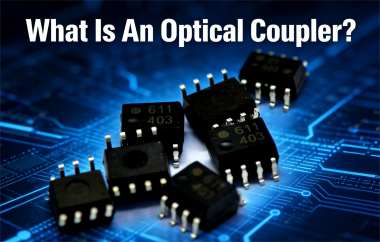
In the field of electronic circuit design and industrial control, how to safely and reliably transmit signals between different parts of a circuit while effectively suppressing interference is a core issue that engineers frequently search for and pay attention to. The optical coupler, or optocoupler, as a classic and efficient solution, is a key component that addresses this challenge. This article will systematically explain the definition of optical isolation, its working principle, and its core functions.
Catalog
I. What is an optical coupler?
III. What are the functions of optical isolation?
I. What is an optical coupler?
Optical isolation is centered around the optical coupler. It is a device that uses light as a medium to transmit electrical signals, and its physical structure integrates a light-emitting component (usually a light-emitting diode, or LED) and a light-sensitive component (such as a phototransistor or photodiode) within the same sealed housing. This design ensures that there is no direct electrical connection between the input and output signals, thereby achieving physical electrical isolation between circuits.
II. Working Principle
The working principle of optical isolation is based on the "electrical-to-light-to-electrical" signal conversion process. When an electrical signal is applied to the input circuit, the LED inside the optical coupler emits light. This light passes through the transparent insulating layer to reach the light-sensitive component, which generates a corresponding electrical signal based on the light intensity. The signal is then amplified or shaped as necessary before being output to downstream circuits. Throughout this process, there is no direct electrical connection between input and output, which means voltage changes on the high-voltage side do not pass through the coupler to the low-voltage side, providing effective electrical isolation and interference protection.
III. What are the functions of optical isolation?
Optical isolation mainly serves two critical functions in electronic systems:
1. Isolation Function. The most fundamental role of an optical coupler is to achieve electrical isolation between the input and output circuits. This isolation not only prevents common-ground interference and ground loop noise but also effectively blocks high-voltage or electromagnetic disturbances from entering sensitive control circuits. This ensures the safety and stable operation of low-voltage control logic. In high-voltage power supplies, industrial control systems, and communication devices, good isolation performance helps products meet safety standards and enhances overall system reliability.
2. Level-Shifting Function. Because the optical isolation mechanism converts electrical signals to light and then back to electrical signals, the optical coupler not only isolates circuits but also supports signal compatibility and level conversion between circuits of different voltage levels. For example, when a low-voltage microcontroller (such as one operating at 3.3V or 5V logic) needs to communicate with a 12V, 24V, or higher voltage driver or feedback circuit, an optical coupler can provide a safe logic-level interface without a direct electrical connection, simplifying interface design and improving system robustness.
In addition, optical isolation offers significant advantages due to its strong anti-interference capability, unidirectional signal transmission, and solid-state construction without mechanical contacts. These features help reduce noise, improve signal integrity, and extend system lifespan, making optical couplers particularly valuable in industrial control, signal acquisition, and relay-driving applications.
IV. Conclusion
Through its unique electro-optical conversion mechanism, optical isolation creates a reliable barrier in circuits that allows signals to pass while blocking electrical interference. Its outstanding performance in achieving safe isolation and flexible level conversion makes it an indispensable component in power management, communication interfaces, industrial automation, and instrumentation. A deep understanding and proper application of optical isolation technology is an essential part of designing highly reliable and interference-resistant electronic systems.


