
DIY XYS3580 Buck-Boost Power Module Build


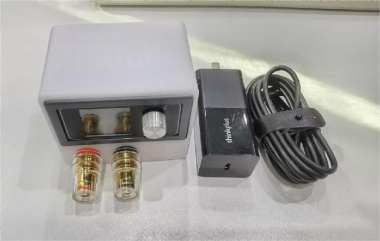
If you're interested in power modules, you might want to take a look at this article.
The DIY project this time uses the XYS3580 high-precision digitally controlled buck-boost power module, as shown in the image below.
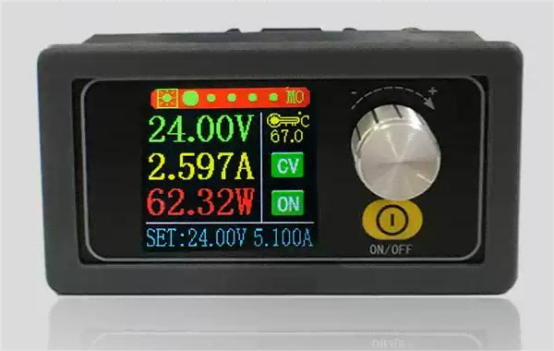
This power module comes with an almost complete set of protection features:
Hardware protection: output short-circuit protection (short it and it won't burn), reverse current protection on the output, and it can directly charge rechargeable batteries without adding an extra reverse-protection diode.
Software protection: over-voltage protection (OVP), over-current protection (OCP), over-power protection (OPP), over-temperature protection (OTP), input under-voltage protection (LVP), and the power chip's own internal protection (OEP).
The actual module looks like the image shown below.
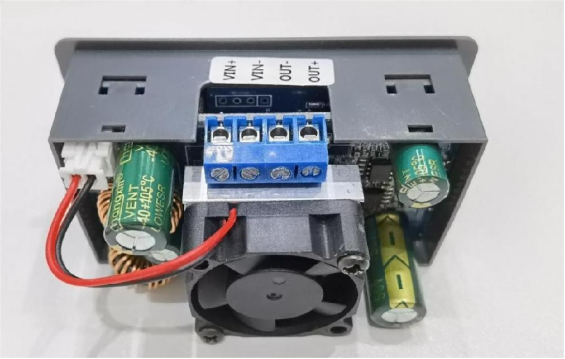
If you also have a module like this and find the wiring inconvenient, you can DIY a case for it just like in this article.
First, you need to make a simple model.
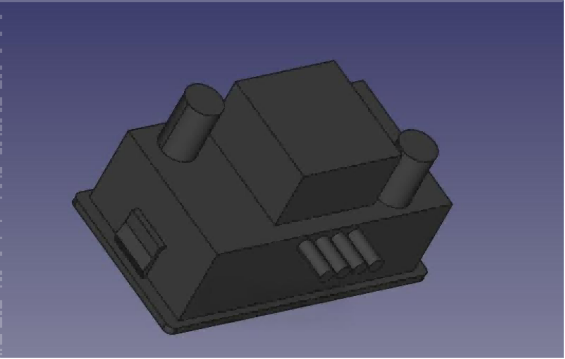
The front shell part is shown in the image below.
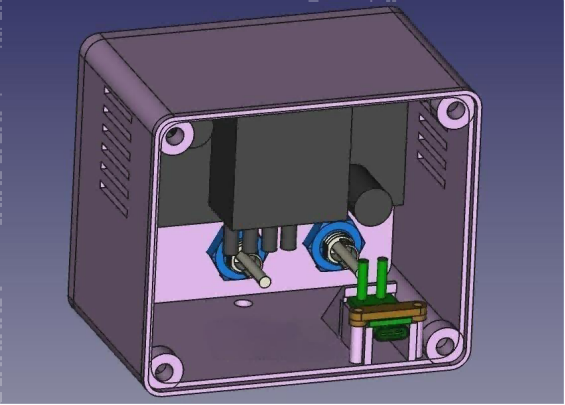
The rear shell part is shown in the image below.
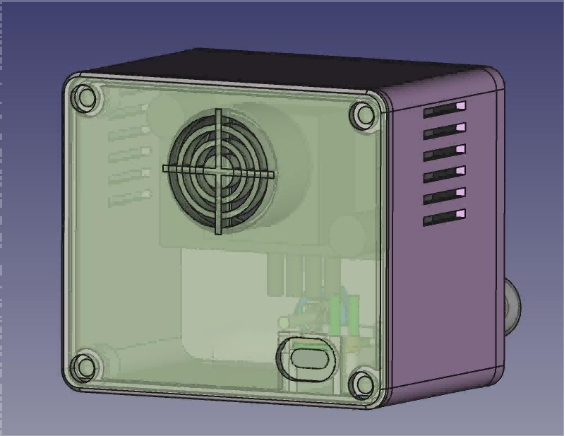
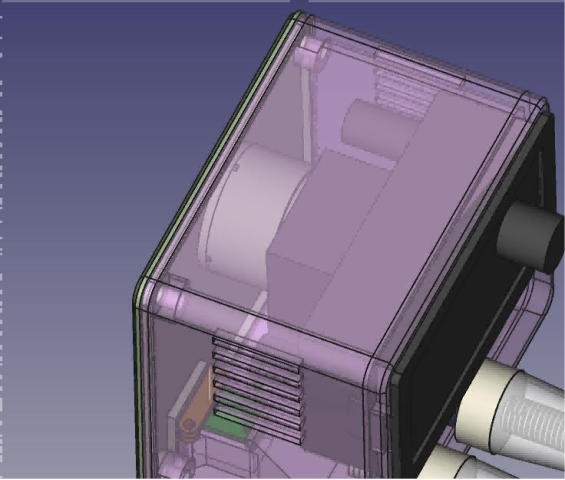
Considering there is a small cooling fan, an air duct is added to the rear shell.
Power is supplied by a PD trigger board that outputs 20V, which makes it easy to use a compact Type-C power adapter.
Next, you can print it using ABS.
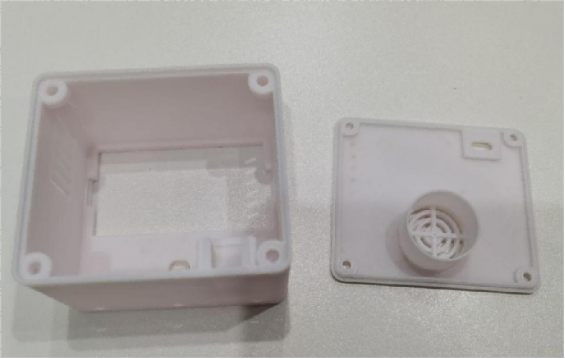
The size fits very well, and the back cover won't fall off even without screws, but it's still better to add screws anyway.
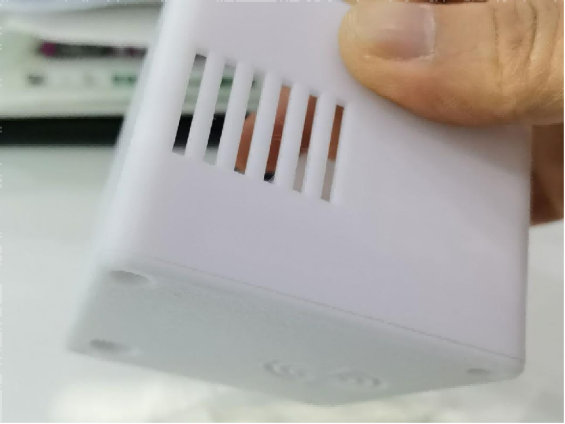
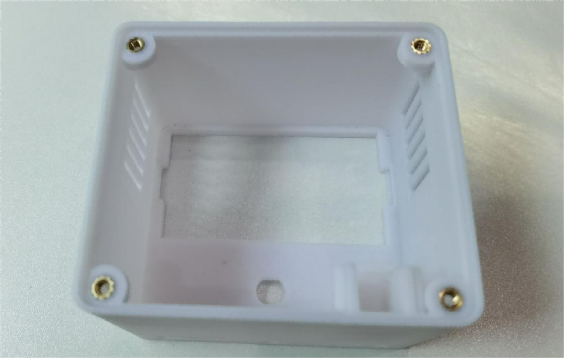
Heat-set threaded inserts are installed into the screw holes.
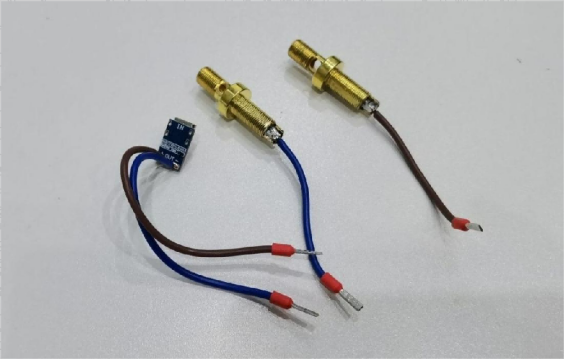
Next, you need to prepare the wires. The one on the left is the PD trigger board, and when you plug in a PD adapter that supports 20V output, it directly outputs 20V.
Here's a look at the front panel assembly.
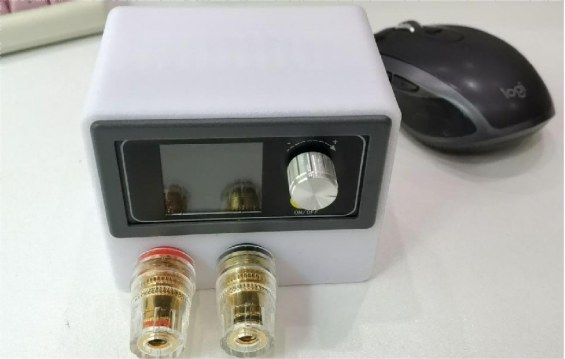
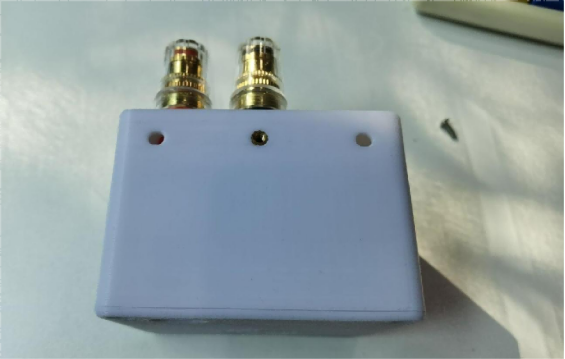
Now for the wiring. If you find that the mounting block of the trigger board is a bit loose here, you just need to trim a little off and it will fit tightly.
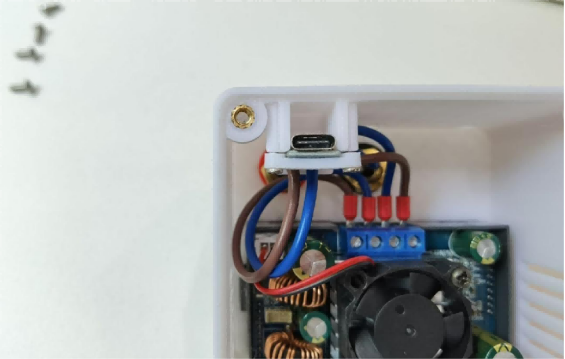
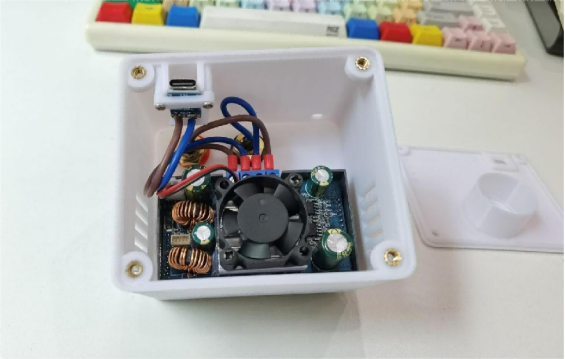
You can test it with a small current load, such as a 3D printer heater block, and if it works normally, you're good.
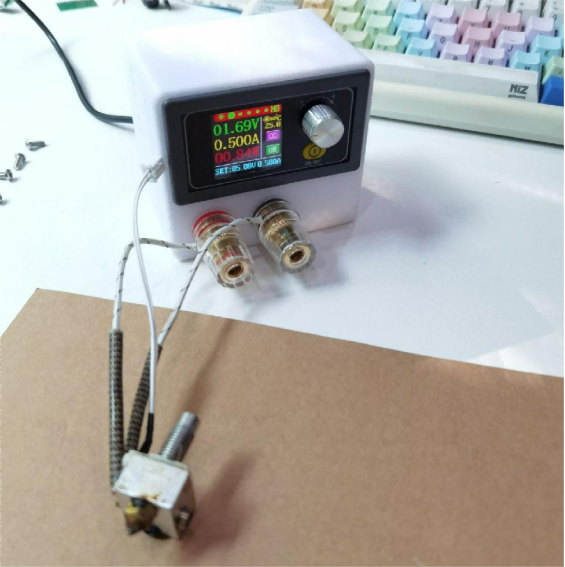
Then you can install the rear shell.
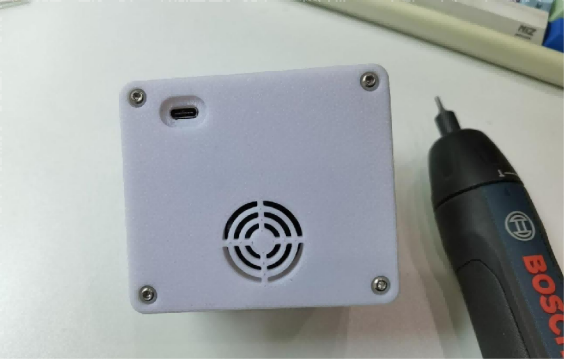
Although the output terminal is a bit too large and heavy and doesn't look perfectly matched, this type of terminal is very convenient to use, as you can either clamp bare wires directly or plug in 4 mm banana plugs.
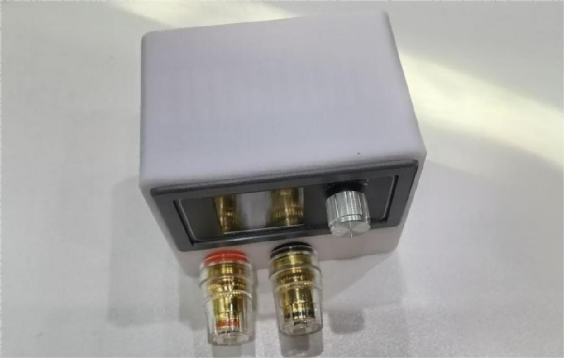
If you feel the panel angle is a bit too low and not very comfortable to operate, you can heat-set threaded inserts into the reserved holes and screw in a bolt to use as a temporary stand.
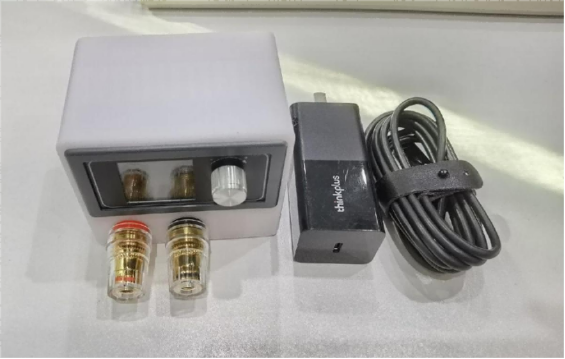
Done.


