
How to Test SMD Inductors?


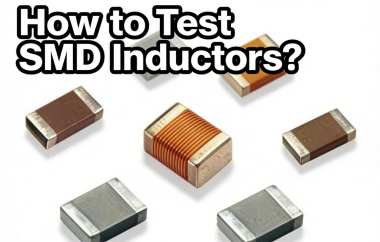
SMD inductors are a common and critical component in electronic devices, widely used in power filtering, RF matching, and signal stabilization circuits. Due to their small size and enclosed design, it is difficult for ordinary users to visually determine their condition, which leads many people to assume that SMD inductors rarely fail. However, in actual use, if factors such as temperature, soldering processes, or current load are neglected, SMD inductors can also experience performance degradation or even failure. This article will start from basic concepts and provide a detailed introduction to the structure of SMD inductors and common methods for testing their condition.
Catalog
II. How to Test if an SMD Inductor is Good or Bad?
III. Usage Recommendations for SMD Inductors
I. What is an SMD Inductor?
An SMD inductor is a surface-mounted device that typically consists of a coil and a magnetic core. The coil is usually wound from enameled wire, and the core is used to enhance the magnetic performance and stability of the inductor. Most SMD inductors feature an enclosed shell, making it impossible to judge their internal structure or electrical properties by appearance alone. Their main parameters include inductance value, current carrying capacity, allowable tolerance, and DC resistance, all of which directly affect the efficiency of circuit filtering and the integrity of signals.
II. How to Test if an SMD Inductor is Good or Bad?
1. Marking the Inductor
Before testing, it is necessary to first confirm the nominal parameters of the SMD inductor. The direct marking method prints numbers and text on the inductor’s shell, indicating the inductance, allowable tolerance, and maximum operating current, which allows engineers to quickly understand its performance range. The color code method uses colored bands to indicate the inductance value, where the first two bands represent significant digits, the third represents a multiplier, and the fourth indicates the tolerance. By referencing a standard table, the inductor’s specifications can be accurately determined. These two marking methods provide a reference for subsequent testing and help determine whether the measured results meet design requirements.
2. Using a Multimeter
Using a digital multimeter for a basic check is the most common method. Set the multimeter to the continuity or resistance mode, and place the probes on the two soldered ends of the SMD inductor while observing the reading. A normal SMD inductor coil should show low resistance, and the multimeter should display a reading close to zero. If the reading is too high or shows infinity, it indicates the inductor may be open or broken, meaning it is damaged. For inductors with many turns or thin wire, the DC resistance may reach a few ohms to tens of ohms, but it generally remains low. Damaged inductors may also exhibit signs such as heating of the shell, deformation of the core, or scorching on the surface. If the multimeter cannot provide a clear result, an LCR meter can be used to measure the actual inductance value, or a known good inductor can be used as a replacement for comparison.
III. Usage Recommendations for SMD Inductors
In practical applications, the performance of SMD inductors is easily affected by temperature and current, so the following principles should be followed during use:
The core and winding may experience changes in inductance due to temperature rise, so the inductor's body temperature must remain within the specified operating range.
The winding generates a magnetic field when current passes through it. Therefore, attention should be paid to the spacing between inductors, and winding groups can be arranged at right angles to each other to reduce mutual inductance.
IV. Conclusion
Although SMD inductors are small and enclosed, their performance stability directly affects circuit reliability and the overall lifespan of products. By identifying direct markings or color codes, checking continuity with a multimeter, and using a professional LCR meter to measure inductance, DC resistance, and quality factor, it is possible to effectively determine whether an SMD inductor is functioning properly. Following correct usage and installation practices can also extend the inductor's lifespan and reduce circuit failures.


