
Can Fast Recovery Diodes Replace Rectifier Diodes?


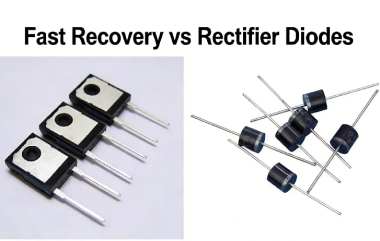
Although fast recovery diodes and rectifier diodes share some similar characteristics, their application scenarios and electrical properties differ significantly, so they cannot be fully interchangeable. Understanding the basic features, uses, and differences of these two types of diodes is crucial for high-frequency switching circuits, power supply design, and rectification applications.
Catalog
I. What is a Fast Recovery Diode?
II. What is a Rectifier Diode?
III. Differences Between the Two
I. What is a Fast Recovery Diode?
A fast recovery diode is a specially designed diode, and its main features include a short reverse recovery time, low reverse recovery current, and relatively high surge capacitance. Its short reverse recovery time means that when switching from forward conduction to reverse blocking, the diode can quickly cut off the current, effectively reducing energy loss and polarization effects. Fast recovery diodes are commonly used in high-frequency switching circuits, switch-mode power supplies, and motor drive applications that require rapid reverse recovery. In these applications, fast recovery diodes can significantly improve switching efficiency, reduce switching losses, and enhance the overall dynamic response of the circuit. Therefore, when designing circuits that require high-speed switching performance or operation in high-frequency environments, fast recovery diodes are the ideal choice.
II. What is a Rectifier Diode?
Rectifier diodes are the most commonly used type of power diode, primarily employed for power rectification and voltage conversion. Their key characteristic is a high forward voltage tolerance, and they maintain a relatively low voltage drop during forward conduction, effectively converting AC signals into DC signals. Rectifier diodes are typically used in power adapters, rectifiers, switch-mode power supplies, as well as in filtering and voltage regulation applications. In these applications, rectifier diodes can reliably handle large currents and provide stable rectification under low-frequency or line-frequency conditions. Their reverse recovery time is relatively long, which may cause energy loss and heat generation in high-speed switching environments; however, in conventional rectification applications, this feature does not negatively affect circuit performance.
III. Differences Between the Two
1. Reverse Recovery Characteristics: The turn-off speed of fast recovery diodes is faster than that of rectifier diodes. When the voltage switches from forward to reverse, fast recovery diodes can return from the conduction state to the blocking state more quickly. This characteristic makes fast recovery diodes suitable for high-frequency switching circuits, while rectifier diodes are more suitable for low-frequency, high-current rectification applications.
2. Reverse Recovery Current: Rectifier diodes have a smaller reverse recovery current, which means they can stop the current flow more quickly after turning off. In contrast, fast recovery diodes have a larger reverse recovery current, which may cause interference or generate electromagnetic noise in certain applications.
3. Capacitance Characteristics: Fast recovery diodes have a relatively high surge capacitance, which can help with filtering in some high-frequency applications. Rectifier diodes have a smaller surge capacitance and are therefore less suitable for high-frequency applications.
IV. Conclusion
In summary, although fast recovery diodes and rectifier diodes overlap in some functions, they cannot be completely interchangeable. Choosing which diode to use depends on the circuit's operating frequency, switching speed, reverse recovery current, and filtering requirements. If the application requires fast reverse recovery and high-frequency switching performance, fast recovery diodes should be prioritized. For conventional rectification and low-frequency power applications, rectifier diodes are more appropriate.
Additionally, in practical selection, factors such as the diode's rated current, operating temperature range, and package type must also be considered. It is essential to strictly follow the manufacturer's datasheets and recommendations to ensure circuit reliability and safety.


