
What Is the Difference Between Transformer Parallel Operation and Separate Operation?


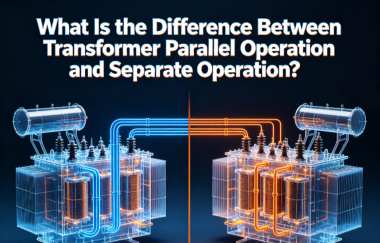
In the electronic components industry, the operating mode of transformers directly affects power supply reliability, system stability, and equipment operating efficiency. Among them, transformer parallel operation and separate operation are two common operating modes, widely used in industrial power distribution, power stations, data centers, and large-scale electronic manufacturing plants.
I. What Is Transformer Parallel Operation?
Transformer parallel operation refers to a mode in which two or more transformers have their primary sides connected to the same power supply system and their secondary sides connected to the same busbar, supplying power to loads together. Multiple transformers share the power system load through parallel connection, which can effectively improve the power supply capacity and operational flexibility of the system.
To ensure safe and stable parallel operation, transformers usually need to meet certain conditions, including the same rated voltage, identical transformation ratio, the same connection group, and similar impedance voltage. If there are significant differences in these parameters, circulating currents may occur between transformers, increasing equipment losses and even affecting transformer service life.
1. Advantages of Transformer Parallel Operation
First, parallel operation can increase power supply capacity. When a single transformer cannot meet large load requirements, multiple transformers operating in parallel can share the load and improve the overall power supply capability of the system.
Second, parallel operation can enhance power supply reliability. When one transformer fails or requires maintenance, the other transformers can continue supplying power, reducing the risk of power interruptions.
In addition, parallel operation provides higher operational flexibility. When the load changes significantly, the number of transformers in operation can be adjusted according to actual requirements to improve energy utilization efficiency.
2. Disadvantages of Transformer Parallel Operation
Parallel operation requires high matching accuracy between transformers. If the voltage level, transformation ratio, impedance, or connection method of transformers are inconsistent, it may result in uneven load distribution or even circulating currents.
At the same time, parallel operation increases the complexity of system control and management. Since multiple devices operate together, more advanced protection devices, monitoring systems, and operation management solutions are required.
II. What Is Transformer Separate Operation?
Transformer separate operation refers to a mode in which two or more transformers operate independently, with each transformer connected to different power supply circuits or load systems without electrical parallel connection. In this mode, each transformer independently supplies power to a specific area, and they do not directly affect each other.
Separate operation is commonly used in industrial environments with high requirements for power supply reliability and the need to reduce the impact range of faults, such as factory production lines, communication rooms, and large building power distribution systems.
1. Advantages of Transformer Separate Operation
The biggest advantage of separate operation is its simple system structure. Since each transformer operates independently, there is no need to meet strict matching requirements between transformers, making design, installation, and maintenance more convenient.
Second, separate operation provides higher safety. When one transformer fails, only the corresponding power supply area is affected, while other transformers can continue operating, helping reduce the impact of faults.
In addition, separate operation makes system expansion easier. As power demand increases, new transformers can be added according to actual requirements without redesigning the entire parallel operation system.
2. Disadvantages of Transformer Separate Operation
Separate operation cannot achieve capacity sharing between multiple transformers, so the overall power supply capacity is limited by the capacity of each individual transformer. When the load of one circuit suddenly increases, other transformers cannot assist in sharing the load.
Meanwhile, if the loads in different power supply areas vary significantly, some transformers may become overloaded while others remain underutilized, reducing the overall operating efficiency of the system.
III. Comparison Between Transformer Parallel Operation and Separate Operation
The biggest differences between transformer parallel operation and separate operation lie in the connection method and load distribution method.
In terms of connection methods, parallel operation requires multiple transformers to have their primary and secondary sides connected to the same power system to supply power together. In contrast, separate operation allows each transformer to work independently and supply power to different loads.
In terms of operating conditions, parallel operation requires strict control of transformer parameters, such as rated voltage, transformation ratio, connection group, and impedance voltage. Separate operation has fewer requirements for these conditions, making the system design simpler.
In terms of power supply capacity, parallel operation has obvious advantages because multiple transformers can provide a larger total output capacity. Separate operation, however, relies on individual transformers to handle their respective loads.
In terms of reliability, both methods have their own advantages. Parallel operation can improve overall power supply reliability through backup capacity, while separate operation reduces the impact of failures through independent power supply.
IV. Conclusion
Transformer parallel operation and separate operation are both common operating methods in power systems, and each is suitable for different application requirements. Parallel operation is more suitable for large industrial facilities, power stations, and applications requiring high power supply capacity and continuity. It can improve power supply capability and operational flexibility but requires higher technical conditions and management levels.


