
What Is Transformer Protection Testing?


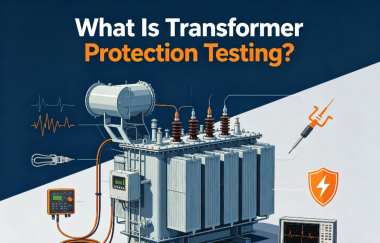
In power systems, transformers play a critical role in voltage conversion and power transmission, and their operating conditions directly affect the safety and stability of the entire grid. Since transformers operate under high-load conditions for extended periods, they may be affected by factors such as short circuits, overloads, and insulation aging. Therefore, reliable protection devices are required, and regular testing and commissioning are necessary to ensure that these devices can accurately identify faults and respond promptly. Transformer protection testing is an important technical process for ensuring the reliable operation of protection equipment, reducing equipment failure risks, and improving power system stability.
Catalog
I. What Is Transformer Protection Testing?
II. Classification of Transformer Protection Devices
III. Purpose of Transformer Protection Testing
IV. Main Contents of Transformer Protection Testing
V. Precautions for Transformer Protection Testing
I. What Is Transformer Protection Testing?
Transformer protection testing refers to the process of inspecting, verifying, and adjusting protection devices, control circuits, and related parameters before a transformer is put into operation or during maintenance. By simulating different fault conditions, engineers can verify whether the protection system can start, operate, and return accurately according to preset requirements, ensuring that faults can be quickly isolated and prevented from spreading when abnormal conditions occur.
Transformer protection systems usually consist of relay protection devices, measuring components, control circuits, and signal systems. The testing process not only includes hardware inspections but also involves protection setting verification, logic function testing, and performance analysis of protection actions.
II. Classification of Transformer Protection Devices
According to different protection targets and application ranges, transformer protection devices are mainly divided into two categories: primary protection and backup protection.
Primary protection is mainly used to detect and clear internal transformer faults, such as winding short circuits, inter-turn faults, and internal insulation failures. Common primary protection methods include differential protection, gas protection, and instantaneous overcurrent protection. Among them, differential protection determines internal faults by comparing the current differences between the two sides of the transformer and is widely used in large transformers. Gas protection is mainly applied to oil-immersed transformers to detect internal gas generation and abnormal oil flow conditions.
Backup protection is mainly used to prevent equipment damage caused by external faults or failures of the primary protection system. Common types include overcurrent protection, zero-sequence current protection, overload protection, and voltage-restrained overcurrent protection. These protection methods provide additional safety measures during abnormal operating conditions.
III. Purpose of Transformer Protection Testing
The main purpose of transformer protection testing is to verify the accuracy, reliability, and coordination of protection devices, ensuring that they can operate properly under specified conditions.
First, testing can confirm whether the installation and wiring of protection devices are correct, preventing false operations or failures to operate caused by wiring errors. Second, by checking protection settings and operating logic, potential problems during equipment operation can be identified, improving transformer safety. In addition, protection testing can optimize the coordination between different protection systems, enabling transformers to quickly clear faults while minimizing the impact on other parts of the power grid.
IV. Main Contents of Transformer Protection Testing
Transformer protection testing mainly includes the following aspects:
First, the appearance, wiring, and installation conditions of protection devices should be inspected to ensure that all connection components are secure and reliable, and that secondary circuits have no short circuits or open circuits.
Second, protection setting verification should be carried out. Based on transformer capacity, rated voltage, operating environment, and system requirements, parameters such as operating current, operating voltage, and time delay settings should be configured and checked to ensure compliance with design specifications.
Third, functional testing of protection devices should be performed. Engineers usually simulate abnormal conditions such as short circuits, overloads, and ground faults to verify whether the protection devices can start and operate correctly, while also confirming that the operating time meets the required standards.
In addition, the output signals, alarm functions, and trip circuits of the protection system should be checked to ensure that fault information can be transmitted accurately and that circuit breakers can disconnect fault circuits promptly according to protection commands.
V. Precautions for Transformer Protection Testing
During transformer protection testing, relevant safety operation procedures should be strictly followed to ensure the safety of personnel and equipment. Before testing, the transformer and protection devices should be comprehensively inspected to confirm that the equipment is in proper working condition.
During the testing process, each protection function should be tested according to technical standards to avoid missing critical items. At the same time, the operating status of protection devices should be closely monitored. If false operations, failures to operate, or abnormal parameters occur, the causes should be analyzed and resolved promptly.
After testing is completed, detailed test records should be maintained, including test items, parameter settings, operating results, and abnormal conditions, to support future maintenance and fault analysis. In addition, protection devices should be cleaned and maintained regularly to ensure long-term stable operation.
VI. Conclusion
Transformer protection testing is an essential part of power system operation and maintenance, and its quality directly affects transformer safety and grid stability. Through scientific and standardized testing procedures, protection devices can respond quickly and accurately when faults occur, reducing equipment damage risks and improving power system reliability. With the development of smart grids and automation technologies, transformer protection devices will continue to evolve toward digitalization and intelligence, placing higher requirements on protection testing technologies.


