
How to Solve Overheating Problems in Fully Insulated Transformers?


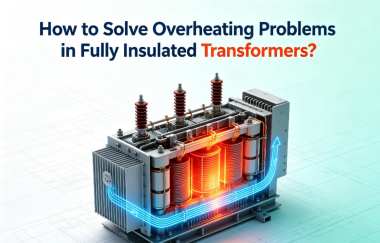
Fully insulated transformers are commonly used electrical devices in power systems. They feature excellent insulation performance, high safety, and reliable operation, and are widely applied in power distribution, industrial power supply, and renewable energy systems. However, during long-term operation, abnormal temperature rises may occur due to improper operating conditions or insufficient maintenance. Overheating of fully insulated transformers can accelerate the aging of insulation materials, reduce the service life of the equipment, and in severe cases may cause insulation breakdown, equipment damage, or even fire accidents. Therefore, understanding the main causes of fully insulated transformer overheating and adopting effective prevention and emergency measures are essential for ensuring stable equipment operation.
Catalog
I. What Is Fully Insulated Transformer Overheating?
II. Causes of Fully Insulated Transformer Overheating
III. Prevention Measures for Fully Insulated Transformer Overheating
IV. Emergency Handling Methods for Fully Insulated Transformer Overheating
I. What Is Fully Insulated Transformer Overheating?
Fully insulated transformer overheating refers to a condition in which the temperature of the internal windings, core, or other components exceeds the normal allowable range during operation. When a transformer operates, it generates copper losses, core losses, and other additional losses, which are converted into heat. Under normal conditions, the transformer releases heat through its cooling structure and heat dissipation system, keeping the operating temperature within a safe range.
When the heat generated by the transformer exceeds its heat dissipation capacity, or when abnormal losses occur inside the equipment, the temperature will continue to rise. Long-term overheating operation can reduce the performance of insulation materials, decrease transformer reliability, and eventually lead to serious equipment failures.
II. Causes of Fully Insulated Transformer Overheating
1. Excessive Load
Exceeding the rated capacity of a transformer is one of the most common causes of overheating. When a transformer operates under overload conditions for a long period, the current flowing through the windings increases, resulting in higher copper losses. Meanwhile, core losses and additional losses may also increase, generating excessive heat that cannot be effectively dissipated, causing the transformer temperature to rise.
2. Excessively High Ambient Temperature
The heat dissipation performance of a fully insulated transformer is closely related to its installation environment. If the transformer is installed in an area with poor ventilation, limited space, or high ambient temperature, the surrounding air temperature may reduce the cooling efficiency. As a result, heat accumulates inside the transformer and eventually causes overheating.
3. Cooling System Failure
Some fully insulated transformers use forced air cooling or other auxiliary cooling methods. If cooling fans stop working, ventilation channels become blocked, or heat sinks accumulate excessive dust, heat dissipation efficiency will be reduced, causing the transformer operating temperature to increase. In addition, failures in the cooling control system may also affect the overall cooling performance.
4. Internal Transformer Faults
Internal faults such as short circuits, winding damage, insulation aging, or partial discharge can cause abnormal localized heating inside the transformer. In particular, inter-turn winding short circuits can increase local current flow, generate excessive heat, and result in a rapid temperature rise.
5. Three-Phase Load Imbalance
For three-phase fully insulated transformers, uneven load distribution among phases can cause excessive current in certain windings, increasing local losses and leading to abnormal temperature rise. Therefore, load imbalance is also an important factor contributing to transformer overheating.
III. Prevention Measures for Fully Insulated Transformer Overheating
1. Proper Load Management
During the design and installation process, an appropriate transformer capacity should be selected according to actual power requirements to avoid long-term overload operation. During operation, load conditions should be regularly monitored, and load distribution should be adjusted when necessary to ensure the transformer operates within a reasonable range.
2. Strengthen Cooling System Maintenance
Regular inspections should be carried out on transformer cooling devices and heat dissipation systems to ensure that cooling fans operate properly. Dust and debris should be removed from heat sinks and ventilation channels to improve cooling efficiency. For transformers using forced cooling systems, the control system should also be checked regularly to ensure normal operation.
3. Optimize Installation Environment
The transformer installation location should maintain good ventilation conditions and avoid being placed near heat-generating equipment or in enclosed spaces. When operating in high-temperature environments, additional ventilation equipment and improved heat dissipation measures can be used to reduce ambient temperature.
4. Regular Equipment Condition Monitoring
Methods such as insulation resistance testing, temperature monitoring, and partial discharge detection should be used regularly to identify potential internal faults. Any detected problems should be repaired promptly to prevent minor issues from developing into serious overheating failures.
5. Maintain Three-Phase Load Balance
Three-phase loads should be properly distributed to prevent one phase from carrying excessive current for a long time. Regular monitoring of three-phase current conditions can help identify load imbalance problems and allow timely adjustments.
IV. Emergency Handling Methods for Fully Insulated Transformer Overheating
When abnormal temperature rise occurs in a fully insulated transformer, immediate actions should be taken to prevent further damage.
First, the information provided by temperature alarm devices or monitoring systems should be checked to determine the overheating location and severity. If the temperature continues to increase, the load should be reduced according to operating procedures to decrease heat generation.
Second, in cases of severe overheating, the transformer power supply should be disconnected immediately to stop operation and prevent further insulation damage or internal faults. After power disconnection, ventilation and cooling measures should be applied to accelerate temperature reduction.
Afterwards, professional technicians should conduct a comprehensive inspection of the transformer, including the condition of windings, insulation performance, cooling system operation, and internal connection components. The root cause of overheating should be identified, and necessary repairs should be carried out. The transformer should not be put back into operation until inspections confirm that it is safe and functioning properly.
V. Conclusion
Fully insulated transformer overheating is generally caused by factors such as excessive load, high ambient temperature, cooling system failures, internal faults, and load imbalance. To prevent overheating problems, equipment management should be strengthened through proper transformer selection, load control, cooling system maintenance, and regular condition monitoring. When abnormal temperature rise occurs, timely measures such as reducing load, disconnecting power, and carrying out professional maintenance should be implemented.


