
How to Reduce Supercapacitor Internal Resistance?


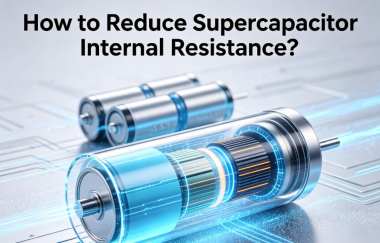
In the electronic components industry, supercapacitors are energy storage components known for their high power density, fast charge and discharge capabilities, and long cycle life. They are widely used in new energy vehicles, industrial equipment, backup power systems, and energy recovery systems. Internal resistance is one of the key parameters used to evaluate supercapacitor performance. Excessive internal resistance can increase energy loss and heat generation during charging and discharging while limiting the power output of the device. Therefore, reducing the internal resistance of supercapacitors is an important approach to improving charging and discharging efficiency, power performance, and operating stability.
Catalog
I. What Is the Internal Resistance of a Supercapacitor?
II. How Does a Supercapacitor Work?
III. Methods for Reducing Supercapacitor Internal Resistance
I. What Is the Internal Resistance of a Supercapacitor?
The internal resistance of a supercapacitor is commonly referred to as its equivalent series resistance (ESR). It does not originate from a single component but is determined by multiple factors, including the electrode materials, electrolyte, current collectors, separator, and internal connections of the device. A lower internal resistance generally results in a smaller voltage drop during high-current charging and discharging and less Joule heating, making the supercapacitor more suitable for high-power and fast-charge/discharge applications.
It is important to note that the internal resistance of a supercapacitor is not completely independent of parameters such as capacitance and rated voltage. The actual internal resistance can also be affected by temperature, frequency, charging and discharging current, and manufacturing processes. Therefore, reducing internal resistance requires comprehensive optimization of materials, device structure, and manufacturing processes.
II. How Does a Supercapacitor Work?
Supercapacitors primarily store charge through the electric double layer formed at the interface between the electrode and electrolyte. Some types also store energy through fast and reversible surface redox reactions. During charging, ions in the electrolyte move toward the oppositely charged electrode surfaces under the electric field and form charge layers. During discharging, the ions redistribute and the stored energy is released.
During this process, electrons travel through the electrodes, current collectors, and external circuit, while ions move through the electrolyte and the pores within the electrode. Insufficient electrode conductivity, unsuitable pore structures, or restricted ion transport can increase the equivalent series resistance of the device. Therefore, improving the transport paths for both electrons and ions is a key approach to reducing supercapacitor internal resistance.
III. Methods for Reducing Supercapacitor Internal Resistance
1. Optimize Electrode Materials
The electrical conductivity and pore structure of electrode materials have a direct impact on supercapacitor internal resistance. Activated carbon, which has a high specific surface area, is one of the most commonly used electrode materials. However, insufficient electrical conductivity or an excessively high proportion of micropores can increase resistance to electron and ion transport.
Optimizing the pore-size distribution and electrical conductivity of carbon materials, or incorporating highly conductive carbon materials such as graphene and carbon nanotubes, can improve electron transport and electrolyte ion diffusion. However, material selection requires a balance among specific surface area, pore structure, electrical conductivity, cost, and manufacturability. A larger specific surface area does not necessarily mean lower internal resistance.
2. Optimize Electrode Manufacturing Processes
Electrode manufacturing processes also affect internal resistance. Properly controlling the proportions of active materials, conductive additives, and binders can improve the internal electron-conduction network of the electrode. Optimizing coating, compaction, and drying processes can also help produce a more uniform and stable electrode structure.
Electrode compaction density must also be properly controlled. Excessive compaction may reduce electrolyte penetration and restrict ion transport, while insufficient compaction may increase electron transport paths and contact resistance. Therefore, practical manufacturing processes need to determine suitable parameters according to the characteristics of the electrode materials and the overall device structure.
3. Optimize the Electrolyte and Separator
The ionic conductivity of the electrolyte directly affects the internal resistance of a supercapacitor. Selecting an electrolyte with high ionic conductivity, a suitable operating voltage range, and good chemical stability can reduce resistance during ion transport.
At the same time, the separator must provide good electrolyte wettability and ion transport while maintaining electrical insulation and safety. An excessively thick separator or one with poor ion transport characteristics can increase the internal resistance of the device. Therefore, the electrolyte and separator should be properly matched with the electrode materials and operating temperature rather than optimizing only a single performance parameter.
4. Optimize Device Structure and Current Collectors
The current collectors, tabs, internal connections, and electrode thickness of a supercapacitor can all affect its overall internal resistance. Using current collectors with good electrical conductivity, reducing unnecessary current transmission distances, and optimizing tab and internal connection structures can reduce ohmic losses during electron transport.
For high-power applications, electrode thickness and current distribution also need to be properly designed. Excessively thick electrodes can increase the ion diffusion distance, while an inappropriate structural design may result in locally high current densities. Therefore, shortening the transport paths for electrons and ions can help reduce internal resistance while improving high-current charging and discharging performance.
5. Control Operating Temperature and Conditions
Temperature also affects the internal resistance of supercapacitors. Under normal conditions, lower temperatures can reduce the mobility of ions in the electrolyte, resulting in higher internal resistance. Within an appropriate operating temperature range, the internal resistance may remain relatively low. However, excessively high temperatures can accelerate electrolyte decomposition, material degradation, and unwanted side reactions.
Therefore, in practical applications, supercapacitors should be protected from long-term operation beyond their specified temperature, voltage, and current limits. Proper thermal management and charging and discharging control can also help maintain low and stable internal resistance.
IV. Conclusion
Reducing the internal resistance of a supercapacitor requires comprehensive optimization of electrode materials, electrode manufacturing processes, electrolytes and separators, current collectors, device structure, and operating conditions. Lower internal resistance can reduce voltage loss and heat generation during high-current charging and discharging, helping improve the power performance and operating stability of supercapacitors.
For electronic component selection, capacitance alone should not be used to evaluate supercapacitor performance. Key parameters such as ESR, rated voltage, operating temperature, cycle life, and allowable charging and discharging current should also be considered. Through appropriate material selection and structural design, supercapacitors can achieve lower internal resistance and higher operating efficiency while maintaining safety and reliability.


