
What Are the Advantages of Chip Inductors?


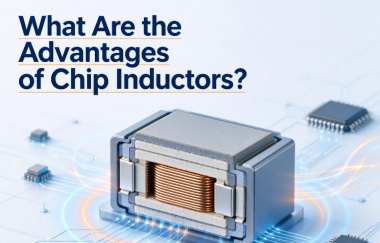
As electronic devices continue to become smaller, more highly integrated, and more powerful, chip inductors have become essential components in consumer electronics, communication equipment, automotive electronics, and industrial control systems. Their compact size and suitability for automated surface mounting make them valuable in power management, signal filtering, and electromagnetic interference (EMI) suppression. Understanding the definition, working principle, advantages, and common types of chip inductors helps engineers select the right components for specific circuit requirements.
Catalog
II. How Does a Chip Inductor Work?
III. Advantages of Chip Inductors
I. What Is a Chip Inductor?
A chip inductor, also known as a surface-mount inductor (SMD inductor), is a miniature inductive component designed for surface-mount technology (SMT). Unlike traditional leaded inductors, chip inductors typically feature leadless or short-terminal structures that can be soldered directly onto the pads of a printed circuit board (PCB). This design reduces installation space and improves assembly efficiency.
Chip inductors generate inductance through internal wire windings or layered conductor structures. They store energy in a magnetic field and respond to changes in current through electromagnetic induction. Depending on their construction, core materials, inductance values, and rated current, chip inductors can be used in high-frequency signal processing, DC power conversion, noise filtering, and impedance matching applications.
II. How Does a Chip Inductor Work?
The working principle of a chip inductor is based on electromagnetic induction. When current flows through its internal conductor, a magnetic field forms around the conductor. When the current changes, the magnetic field also changes, inducing a voltage that opposes the change in current. This property allows an inductor to resist rapid current variations and exhibit different impedance characteristics at different operating frequencies.
In power circuits, chip inductors are commonly used with capacitors and switching devices to store energy, smooth output current, and reduce power-supply ripple. In signal-processing circuits, they can work with capacitors to form filter networks that select desired frequency bands or attenuate unwanted high-frequency noise. Their actual performance depends on several key parameters, including inductance, DC resistance, self-resonant frequency, quality factor (Q factor), and rated current.
III. Advantages of Chip Inductors
1. Compact Size and Space Savings
Chip inductors feature compact packages that support high-density PCB layouts. They are well suited to the miniaturization requirements of smartphones, wearable devices, wireless communication modules, and portable electronic products.
2. Compatibility with Automated Manufacturing
Chip inductors are designed for surface mounting and can be placed by automated pick-and-place machines and electrically connected through reflow soldering. This helps improve production efficiency, reduce manual assembly work, and support high-volume electronic manufacturing.
3. Stable Electrical Characteristics and Easier Circuit Design
Chip inductors manufactured to specified standards have defined nominal inductance values, tolerances, and other electrical parameters, helping engineers design circuits and perform impedance matching. Compared with inductors formed directly on a PCB, separate chip inductors are generally easier to replace with components of different inductance values, making circuit adjustments more convenient.
4. Wide Range of Types and Applications
Chip inductors are available in different structures, core materials, and electrical configurations. Engineers can select suitable components based on operating frequency, current requirements, power losses, and available installation space. These components are widely used in power management, RF communication, signal filtering, and electromagnetic compatibility (EMC) design.
IV. Types of Chip Inductors
Based on their internal structures and manufacturing processes, chip inductors are commonly classified into wire-wound, multilayer, and thin-film types. Braided or woven structures may also appear in certain classification systems, although terminology and categories can vary among manufacturers.
1. Wire-Wound Chip Inductors
Wire-wound chip inductors generate inductance by winding wire around a magnetic core or another supporting structure. They typically offer a broad inductance range, and some models can handle relatively high currents while maintaining low DC resistance. These components are suitable for power conversion, power filtering, and certain high-frequency circuits. Their size and high-frequency performance depend on the winding structure, core material, and specific design.
2. Multilayer Chip Inductors
Multilayer chip inductors are manufactured by forming conductive patterns within layers of ceramic or magnetic materials, followed by processes such as lamination and sintering. Their compact structures and regular shapes make them suitable for high-density mounting and automated assembly. Some multilayer magnetic inductors also provide effective magnetic shielding, making them useful in mobile devices, communication modules, and high-frequency signal-processing circuits. However, inductance, rated current, and loss characteristics must be evaluated according to the specifications of each model.
3. Thin-Film Chip Inductors
Thin-film chip inductors typically use processes such as thin-film deposition, photolithography, and precision microfabrication to create conductive structures. They offer precise geometries and can provide high parameter accuracy. Some models feature high quality factors and favorable high-frequency characteristics, making them suitable for RF circuits, wireless communication modules, and impedance-matching networks. When selecting these components, engineers should consider the operating frequency, self-resonant frequency, and losses under actual operating conditions.
4. Braided or Woven Chip Inductors
Braided or woven chip inductors use specialized conductor arrangements or related structures to produce inductance. Their performance depends on the conductor layout, magnetic materials, and manufacturing process. Such structures may be used in certain miniature magnetic components, but not all manufacturers recognize them as a separate mainstream category of chip inductors. Therefore, the structural description in the manufacturer's datasheet should be used as the primary reference.
V. Conclusion
Chip inductors are important passive components in modern electronic circuits. They are primarily used to store energy in magnetic fields, smooth current, filter noise, and process high-frequency signals. Their compact size, compatibility with automated surface mounting, and wide range of available types make them suitable for consumer electronics, communication equipment, automotive electronics, and industrial control systems.
When selecting a chip inductor, engineers should consider more than package size and nominal inductance. Rated current, DC resistance, quality factor, self-resonant frequency, operating temperature, and magnetic saturation characteristics are also important. Choosing the appropriate type and specifications according to the circuit's operating frequency and performance requirements helps achieve a suitable balance of electrical performance, reliability, and cost.


