
What Are Metal Foil Resistors?


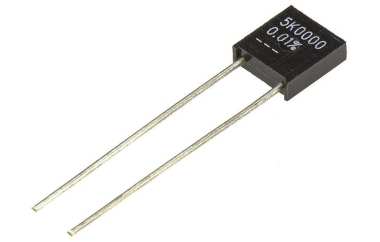
In the modern electronic components industry, metal foil resistors have emerged as the ideal choice for high-precision measurements and signal processing, thanks to their exceptional performance and wide range of applications. This article will delve into the definition, working principle, characteristics and advantages, as well as applications of metal foil resistors.
Catalog
I. What Are Metal Foil Resistors?
III. Characteristics and Advantages
I. What Are Metal Foil Resistors?
Metal foil resistors are precision resistors that use thin metal foil as the resistive element. Compared to traditional carbon film or metal oxide resistors, metal foil resistors offer higher accuracy and stability. They are typically encapsulated in materials that are resistant to high temperatures and chemical corrosion, making them suitable for use in various environmental conditions.
II. Working Principle
The working principle of metal foil resistors is based on Ohm's law. When current flows through the resistor, the free electrons in the metal foil collide with atoms in the lattice, generating heat and limiting current flow. The resistance value is determined by the material, thickness, and area of the metal foil. The design of metal foil resistors allows them to maintain stable performance over a wide temperature range.
III. Characteristics and Advantages
· High Accuracy: Metal foil resistors typically have tolerances as low as ±0.01%, making them ideal for demanding measurement applications.
· Low Temperature Drift: They feature very low temperature coefficients, ensuring stable resistance values even with temperature changes, which is essential for precision equipment.
· Excellent Stability: These resistors exhibit good resistance to aging and environmental changes, ensuring reliability over long-term use.
· Low Noise: They produce minimal electrical noise, making them suitable for signal processing and measurements, thus ensuring data accuracy.
· Compact Design: Modern metal foil resistors are small in size, catering to the needs of compact electronic devices.
IV. Applications
Metal foil resistors find extensive applications across various fields, including but not limited to:
· Medical Equipment: Used in ECG machines and monitors, metal foil resistors are essential for precise measurement and control.
· Communication Devices: In high-frequency signal processing and data transmission, metal foil resistors help reduce signal interference and improve data transmission quality.
· Industrial Automation: They are employed in control systems for accurate current and voltage measurements, enhancing production efficiency.
· Automotive Electronics: In automotive control units, metal foil resistors ensure accurate signal transmission, enhancing safety.
· Measurement and Instrumentation: In research and laboratory equipment, metal foil resistors provide reliable performance for high-precision measurements.
V. Conclusion
Due to their high accuracy, low temperature drift, excellent stability, and wide range of applications, metal foil resistors are a crucial component in the electronic components industry. As technology continues to advance, the demand for high-performance resistors is expected to grow, and the market outlook for metal foil resistors remains promising. Whether in the medical, communication, or industrial sectors, metal foil resistors will continue to play an indispensable role.


